In a quiet corner on the outskirts of Paris, far from any coastline, a team of specialists monitors screens that could mean the difference between safety and catastrophe for thousands on France's southern shores. This is the CENALT (CENtre d'ALerte Tsunami), the national nerve centre for tsunami warnings, operating around the clock to detect a threat many Europeans consider remote.
While the devastating 2004 Indian Ocean tsunami remains an extreme benchmark, tsunamis are a recurrent, if underestimated, feature in European waters. Since 1900, approximately one hundred tsunamis have occurred in the Mediterranean and its connected seas, representing about ten percent of the global total for that period. The north-east Atlantic accounts for another five percent.
The Historical Precedent: Lisbon, 1755
The most catastrophic event in the region's memory was triggered by the 1755 Lisbon earthquake. "The most powerful tsunami that we know about in the Atlantic was the one triggered by the Lisbon earthquake of 1755," explains Hélène Hébert, national coordinator of the CENALT. She notes the earthquake's magnitude was close to 8.5, a strength seen several times a century in the Pacific but exceptionally rare in the Atlantic.
"Although the French coasts were largely protected by the Iberian Peninsula, the tsunami destroyed most of Lisbon and Cadiz and parts of Morocco, with several thousands of victims," Hébert states. Waves from that event reached as far as Cornwall and Ireland. "This is the kind of major tsunami that we can expect to happen every three to five centuries. So, it could happen tomorrow—or it could happen in the next century—but we know that it will happen."
The Fifteen-Minute Mission
Established in 2012 following the 2004 disaster as part of a UNESCO-led global initiative, CENALT has a dual, urgent mandate. First, to detect any earthquake with tsunami potential and alert French civil protection authorities within fifteen minutes. Second, to provide estimates for wave arrival times and amplitudes if a tsunami is generated.
The centre is staffed by geophysical data analysts from the French Alternative Energies and Atomic Energy Commission (CEA). They monitor a network of several hundred seismic stations, displayed on a vast screen in the main gallery. When a tremor is detected, the system evaluates the threat, assigning a yellow, orange, or red alert level.
"When one of the seismic stations flashes red, it means that it detects a signal," says Pascal Roudil, the centre's technical coordinator. The signal could be mundane—a strong wind or a passing truck. But if multiple stations flash simultaneously, it indicates a seismic wave. The system then triangulates the epicentre, displaying it on a map with a circle whose size and colour denote magnitude and depth.
"Our aim is to alert the relevant authorities within 15 minutes because the tsunamis can arrive quite quickly," Roudil emphasises. "In the western Mediterranean, for instance, if we have an earthquake near Algeria, it will cross the sea within an hour and 15 minutes. So, it doesn't leave much time." He adds a crucial point about scale: "While our tsunamis are not as big as in the Pacific, you don't need waves that are 30 metres high to have damage and injuries. Even 50cm can be dangerous to swimmers."
Assessing the Risk to France's Coasts
To date, CENALT's alerts have been precautionary. Between its launch and 2022, it issued 84 'information level' alerts (indicating no risk) and only two 'warning level' alerts for waves under one metre. The most recent, in March 2021, caused a five-centimetre sea level rise in Toulon.
Yet the risk is persistent and geographically specific. "The French Riviera is probably one of the most hazardous areas in mainland France, with the greatest threat coming from the North African coast," says Hébert. She tempers expectations of Pacific-scale waves but highlights different dangers: "We don't expect waves of 20m, like in Japan, Chile or Sumatra, but more like one to two metres. However, what is extremely hazardous is not only the altitude of the tsunamis but the flows and fluxes of the water—and the flooding coming into the shore—which can cause damage to beaches, harbours and streets."
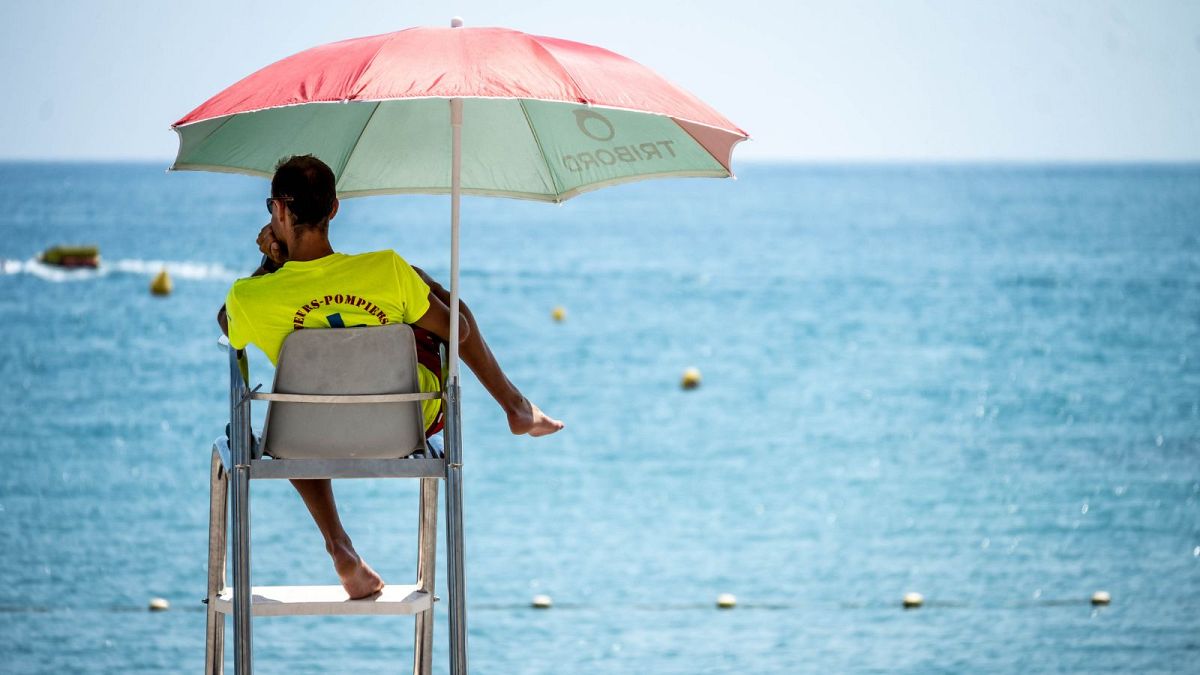
This looming threat has spurred local action. Highly populated tourist destinations on the Côte d'Azur, like Cannes and Antibes, are conducting public evacuation exercises and establishing digital alert points to prepare residents and visitors.
The work at CENALT intersects with broader European security and environmental concerns. Just as coastal nations must prepare for geophysical threats, other regions grapple with complex crises, from enduring humanitarian disasters to geopolitical tensions that affect global stability. Furthermore, regional conflicts can have direct economic repercussions for Europe, as highlighted when the EU Energy Chief Warns of Prolonged Price Hikes from Middle East Conflict.
Looking ahead, the analysts at CENALT continue to refine their technology and protocols. Their quiet vigilance in a Parisian suburb underscores a sobering reality for Mediterranean Europe: the sea's destructive potential is ever-present, and preparation is a continuous, critical endeavour.