France is enduring its most destructive wildfire season on record for the first half of July, with the European Forest Fire Information System (EFFIS) reporting that more than 42,000 hectares have been scorched across the country. That figure already exceeds the previous record set in 2022 and is roughly four times the area of Paris. The total burned area so far in 2026 has also far surpassed the entire 2025 season, which saw 66,300 hectares lost for the full year.
Two Firefighters Killed Near Bordeaux
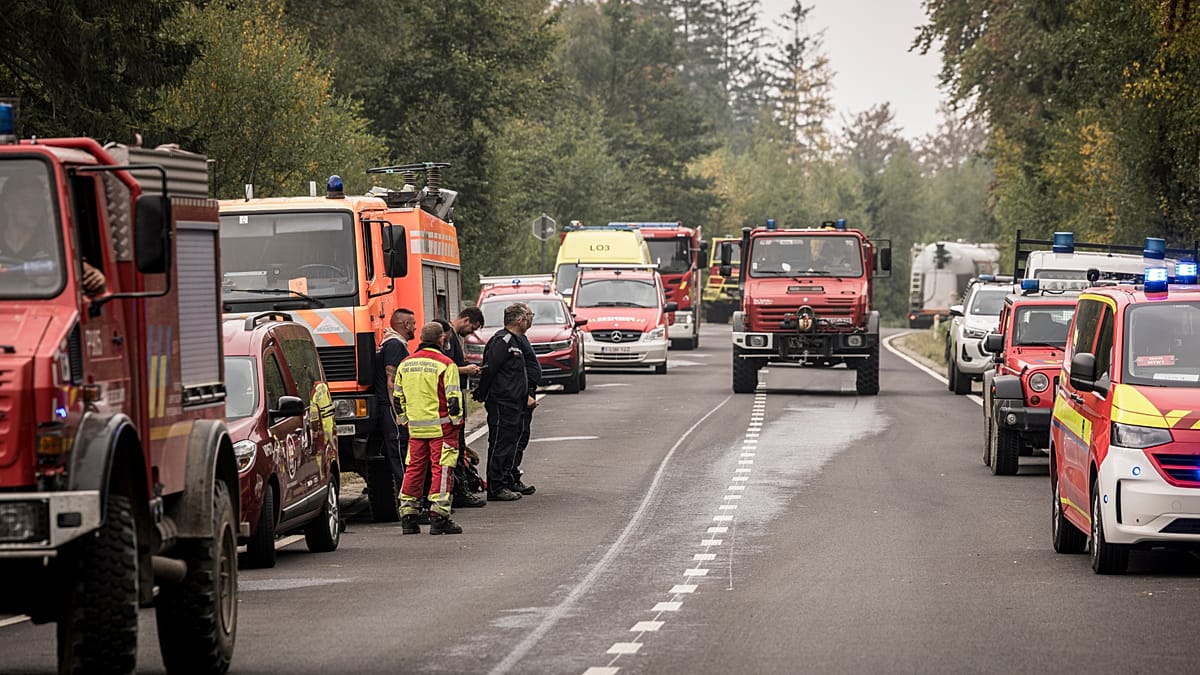
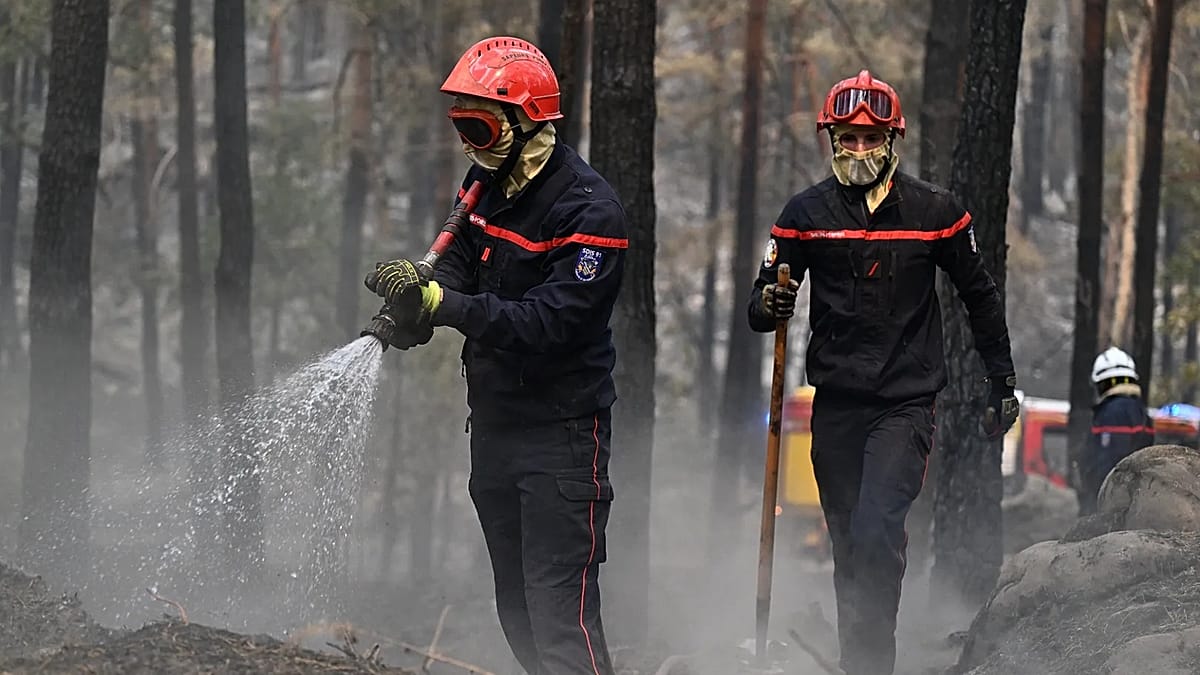
On Tuesday, two firefighters died while battling a blaze that broke out near Bordeaux–Mérignac International Airport. According to French media, the fire started as a brush fire in a parking lot before spreading to a nearby building. Around a hundred firefighters, twenty ground vehicles, and several Dash aircraft and helicopters were deployed. Access routes to the airport were closed to facilitate emergency operations, and the airport reported delays to some flights.
Interior Minister Laurent Nuñez expressed his “immense sadness” and sent “sincere thoughts to their families, their loved ones, their brothers and sisters in arms, as well as to all the staff of the Gironde Departmental Fire and Rescue Service.” He added, “I also want to commend the exceptional work done by their colleagues on the ground who are demonstrating exemplary courage and dedication in these particularly difficult conditions.” Nuñez said he would travel to the scene “as soon as possible.”
President Emmanuel Macron offered “the condolences, recognition and support of the Nation” to the families and loved ones of the two victims, as well as to all firefighters in France. Earlier, Macron had stated that France had not faced so many simultaneous fire outbreaks since the end of World War II.
Southern France Blaze Forces Evacuations
On the same day, a separate wildfire erupted in southern France, forcing hundreds of residents from their homes and leaving many without electricity. The fire moved rapidly down the Gros Bessillon mountain, surprising authorities. “The fire is moving down Gros Bessillon mountain at a very fast speed, which was not at all anticipated given the climatic conditions and weakening wind,” said Simon Barbre, prefect for the region between Marseille and Nice.
Météo-France attributed the extreme forest-fire risk to persistent dry conditions. The first two weeks of July alone saw nearly 15,000 hectares burned, including in the Fontainebleau forest near Paris, as well as in southern France and Corsica.
The scale of destruction has reignited debate about climate adaptation and land management across Europe. France’s all-time annual record of 66,300 hectares burned in 2022 now appears likely to be broken. For context, Spain is also battling major wildfires, pushing its burned area toward 50,000 hectares.
As the continent faces increasingly severe fire seasons, the European Union has stepped up coordination of firefighting resources. The bloc’s Civil Protection Mechanism has been activated multiple times this summer, with member states sharing aircraft and personnel. France has also introduced emergency measures, including a law allowing the conditional return of two banned pesticides to protect crops, though environmental groups have criticized the move.
The tragedy near Bordeaux underscores the risks faced by firefighters across Europe. With climate projections indicating more frequent and intense heatwaves, the continent’s fire seasons are expected to lengthen and intensify, putting additional strain on national and EU-level response systems.