More than half of humanity now lives in cities, concentrating people and critical infrastructure in places increasingly vulnerable to heatwaves, floods, drought and other climate-related shocks. Across Europe and its neighbourhood, planners are rethinking how urban areas are built, powered and adapted. Two countries offering contrasting approaches are Turkey and Uzbekistan, both of which are embedding resilience into their cities in very different ways.
Turkey: rebuilding with resilience in mind
The devastating earthquakes that hit southern Turkey in February 2023 destroyed or damaged hundreds of thousands of homes and displaced millions. Reconstruction has gone beyond simply replacing housing. According to Yasir Yılmaz, General Manager of Turkish developer Emlak Konut, the rebuilding effort has also covered wastewater systems, streams and transport networks.
“While rebuilding the cities and 450,000 homes, we've restored every city complete with its infrastructure and social amenities,” Yılmaz said, adding that special attention was paid to the climate resilience of the buildings.
Resilience also depends on the energy that powers those cities. Turkey’s energy market operator, EPİAŞ, runs the Renewable Energy Guarantees of Origin system, known as YEK-G. This voluntary scheme uses blockchain to issue electronic certificates, each representing one megawatt-hour of renewable electricity, tracking generation from source to consumption.
Mustafa Aydin, Vice President of Energy Exchange Istanbul, highlights electric vehicles as a key application. “With the YEK-G certification system, we can prove that the electricity produced by renewable energy plants actually reaches consumption,” he said. Charging an EV can thus be matched with solar, wind or hydropower generation.
But physical infrastructure and technology are only part of the picture, argues Chris Mensah, Special Advisor to the Climate High-Level Champion. “The responsibility is not about whether it is the obligation of one or the other, but creating awareness, knowledge and teaching right from the beginning,” he said. Mensah believes climate education should start early, with schools helping people understand the risks their cities may face.
New Tashkent: a city designed for the future
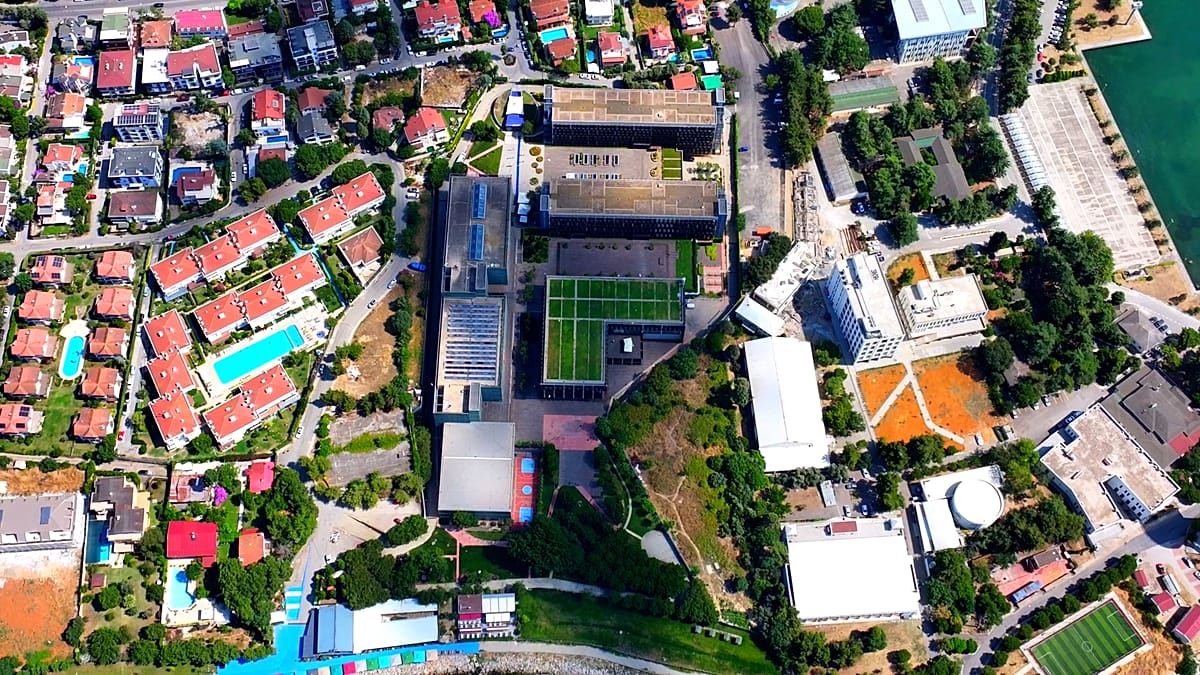
More than 3,000 kilometres east, a new city is rising on the edge of Uzbekistan’s capital. Construction of New Tashkent began in 2023, and while much remains a building site, the master plan allocates 2,000 hectares of green space and another 500 hectares of parks. Key infrastructure, including a trigeneration plant and an electrical substation, was commissioned in October 2026.
Building from scratch allows planners to integrate water, vegetation and energy decisions before residents arrive. That is particularly important for greenery, which can provide shade during Uzbekistan’s hot summers but also demands water. Saidazim Sharipov, Adviser to the Director for Urban Planning Projects at the New Tashkent Directorate, says species are being chosen with local conditions in mind.
“Particular attention has been given to trees that can withstand dry conditions and require less water,” Sharipov said. “Drip irrigation systems are being used to reduce water consumption.” The approach extends beyond irrigation: wastewater is to be treated for reuse as technical water and for landscaping, while buildings are expected to collect rainwater or reuse treated wastewater on their grounds.
Water requirements have also shaped the landscape. Planners are using locally adapted shrubs that need less irrigation than lawns, and canal beds have been lined to limit seepage, according to Sharipov.
Heating and cooling a new city
New Tashkent’s energy infrastructure is being assembled alongside construction. Sharaf Rajabov, Deputy Director of the New Tashkent Directorate, says rooftop solar panels are being incorporated into projects across the development. The trigeneration plant is intended to provide heating and cooling through a centralised network.
“In summer, the system provides hot water as well as chilled water for cooling homes. In winter, steam produced by the boiler plant is used to provide heating,” said Asiltürk Çakmak, the project’s General Engineer. Some infrastructure is already operating, while other elements remain under construction or at the planning stage. With much of New Tashkent yet to be occupied, these systems have not yet been tested under the demands of a fully populated city.
Adapting the existing capital
Inside Tashkent itself, the situation is different. Existing streets, buildings and neighbourhoods leave less freedom to redesign the urban landscape. Between 2022 and 2026, more than 1.35 million trees and shrubs were planted across the capital, according to Uzbekistan’s ecology authorities. Further green belts are planned, including new areas in Bektemir district and along the Chirchiq River corridor.
A project in Bektemir shows what that looks like on the ground. In spring 2026, a green belt covering 4.23 hectares was established there, according to Bekjon Egamov, Chief Specialist at the Tashkent City Department of Ecology. It contains 1,415 ornamental trees, watered using drip irrigation to reduce water use. Unlike New Tashkent, where green space can be planned before neighbourhoods are built, projects such as Bektemir have to find room for it within a city that is already there.
As cities across Europe and Central Asia confront the realities of climate change, these two approaches—rebuilding with resilience and designing from scratch—offer lessons in how urban planning can adapt. For more on Uzbekistan’s broader ambitions, see its tourism push and the recent US investment drive. Meanwhile, Turkey’s energy market innovations align with broader European efforts to boost renewable energy independence.