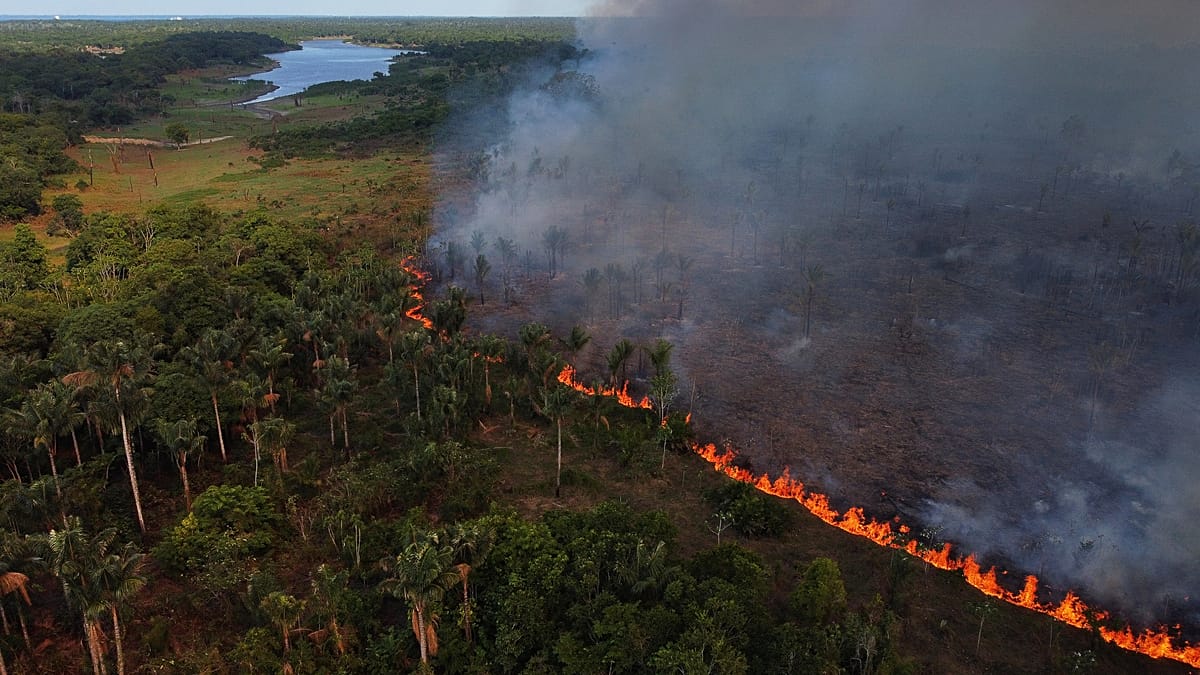
Brazil's government announced that deforestation in the Amazon rainforest dropped to its lowest level since satellite monitoring began in 1988. Between August 2025 and July 2026, the cleared area totalled 3,335 square kilometres, a 41.8% reduction from the 5,731 square kilometres lost the previous year.
The figures mark a significant victory for President Luiz Inácio Lula da Silva, who has made curbing forest loss a cornerstone of his third term. Under his predecessor, Jair Bolsonaro, deforestation surged by roughly 60% between 2019 and 2022, with more than 45,000 square kilometres destroyed. Since Lula took office in January 2023, annual deforestation has fallen by 71%, according to official data.
Reviving a proven plan
One of Lula's first acts was to resurrect the Action Plan for the Prevention and Control of Deforestation in the Legal Amazon (PPCDAm), a strategy originally launched in 2004 during his first administration. Bolsonaro had shelved the programme, but Lula brought back the environmental officials who had designed it, including Marina Silva, who led the Environment Ministry until she resigned in April to run for Congress, and João Paulo Capobianco, her former deputy and now the current minister.
The plan rests on four pillars: strengthening satellite monitoring and on-the-ground enforcement, promoting sustainable economic activities, managing protected areas and undesignated public forests, and using regulations and financial incentives to discourage land clearing. Key measures include reinstating fines for illegal deforestation detected by satellites—a practice halted under Bolsonaro—and barring properties with illegal clearing from receiving bank loans. The government also channelled extra funding to priority Amazon municipalities that demonstrated reductions in forest loss, and supported efforts to combat environmental crime and provide subsidised credit for sustainable businesses.
“The formula is always the same, and it works. We saw it work in Brazil years ago and we’re seeing it again now: determination, enforcement on the ground, fighting crime and enforcing the law,” said Márcio Astrini, executive secretary of the Climate Observatory, a network of Brazilian environmental groups.
Astrini added that the latest figures show Brazil's pledge to achieve zero deforestation by 2030 is realistic without harming the economy. “Agriculture has been setting production and export records while deforestation has fallen. Today’s figures disprove the false narrative that protecting the environment holds back Brazil’s development,” he said.
Climate and political threats loom
Despite the progress, the Amazon faces mounting threats from climate change, proposed legislation, and a possible change in government. Degradation from wildfires, logging, and drought now affects about 40% of the forest, outpacing clear-cutting in recent years. A strong El Niño—a periodic warming of the equatorial Pacific—could intensify these pressures in 2026 and 2027 by bringing hotter, drier conditions that fuel fires.
Fire counts across the biome were near historic lows earlier this year, but they have tripled since 4 October, when Brazilians voted in the first round of national elections. Authorities are investigating whether some fires were deliberately set for political reasons ahead of the 25 October presidential runoff. Environment Minister Capobianco said officials flying over protected areas observed fires arranged in geometric patterns, suggesting arson, though the perpetrators remain unknown. Smoke has closed schools in Manaus, the Amazon's largest city, and residents have been urged to wear face masks.
NASA scientists caution that official satellite counts may underestimate the damage. A preliminary analysis around Santarém found about 40% more fires than standard active-fire data shows. Satellite observations also revealed a sharp increase in fires and smoke emissions across the central and eastern Amazon beginning in September 2026, driven by severe drought linked to El Niño.
The political stakes are high. Senator Flávio Bolsonaro, son of the former president, won 47% of the first-round vote, while Lula received 45%. The two candidates offer starkly different visions for the rainforest. Conservation experts warn that a Bolsonaro victory could reverse the current policies, despite his pledge to end illegal deforestation by 2029—a year ahead of Brazil's existing target. Lula's re-election promise goes further: zero net deforestation by 2030.
The outcome of the runoff will not only determine Brazil's environmental trajectory but also have global implications, as the Amazon plays a critical role in regulating the climate. The coming months will test whether the recent gains can be sustained or whether the forest becomes a casualty of political change.