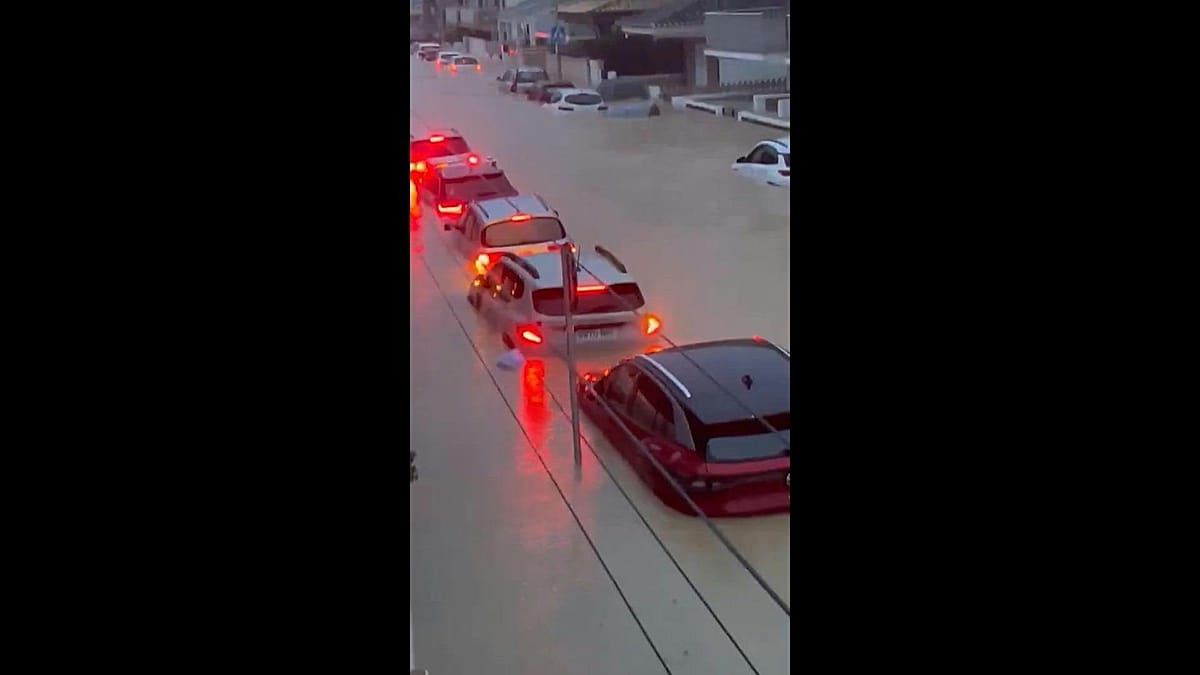
At least two people have died after torrential rain triggered flash flooding across eastern Spain, according to regional authorities. The storm, which struck on Monday, turned streets into rivers and submerged vehicles in several towns in the Valencia region, including Beniarbeig and Oliva, near Alicante.
Emergency services were deployed throughout the day to rescue residents trapped by rising water. In Oliva, local officials said around 2,000 people were evacuated from seven campsites as the Bullent River burst its banks. Helicopters were used to reach people in isolated areas, while many roads remained impassable late into the evening.
Valencia bears the brunt
The Valencia region was among the worst affected, with several municipalities cut off and communication lines down. Authorities urged residents to stay indoors and avoid unnecessary travel, warning that further downpours could complicate rescue efforts.
Footage shared on social media showed cars floating down flooded avenues and water pouring into ground-floor homes. In Beniarbeig, residents described the sudden onset of the flood as "terrifying," with water levels rising within minutes.
Spain's state weather agency, AEMET, issued red alerts for parts of the eastern coast, where more than 200 litres per square metre fell in less than 24 hours in some locations. The intense rainfall is part of a broader pattern of extreme weather that has affected the western Mediterranean in recent weeks.
This latest disaster comes as Spain grapples with the wider consequences of climate change, which scientists say is increasing the frequency and intensity of such storms. The country has experienced severe droughts and wildfires in recent years, and now faces the opposite extreme.
Local authorities have opened temporary shelters for those displaced, and the military's emergency unit (UME) has been mobilised to assist with clean-up operations. The regional government of Valencia has promised financial support for affected municipalities.
The flooding also disrupted transport, with several regional rail lines suspended and roads closed, including the AP-7 motorway near Oliva. Schools in the worst-hit areas were closed on Tuesday as a precaution.
Spain's prime minister, Pedro Sánchez, expressed solidarity with the victims and praised the work of emergency services. In a statement, he said the government would "provide all necessary resources" to help the region recover.
This event echoes similar flooding in other parts of Europe this summer, such as the deadly floods in Istanbul that killed two people. It also highlights the growing pressure on European governments to invest in flood defences and climate adaptation, a topic that is likely to feature in the upcoming Spanish election campaign, alongside debates over pension funding and fundamental rights.
As the waters recede, the focus will shift to recovery and the long-term resilience of communities in eastern Spain. For now, the priority remains the safety of those still affected and the search for any missing persons.