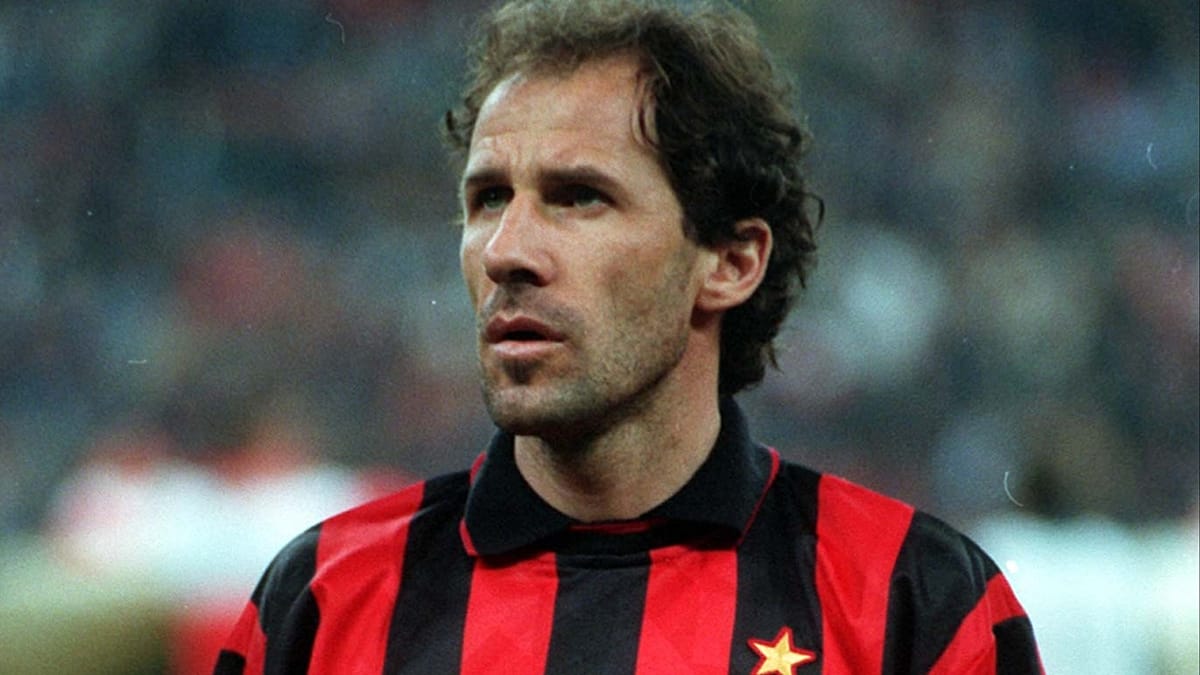
Franco Baresi, the iconic captain of AC Milan and the Italian national team, has died at the age of 66. The news was confirmed on Thursday morning by the Rossoneri, who posted a heartfelt tribute on their official channels. The club's statement read: "The entire history of AC Milan is in tears following the passing of Franco Baresi. His example and integrity will be forever etched into the Club's DNA, just as his iconic number 6 shirt is. The condolences AC Milan extends to Franco Baresi's family at such a difficult time are shared by every Rossonero, who feels this loss as their own."
Baresi's death marks the end of an era for Milan and for Italian football, which has lost one of its most revered figures. He was not merely a defender; he was the embodiment of a club and a style of play that dominated Europe for over a decade.
A one-club man
Born on 8 May 1960 in Travagliato, a town in the province of Brescia, Baresi joined Milan's youth academy as a teenager. He made his Serie A debut in 1978 at just 17, and over the next two decades he would become inseparable from the red and black stripes of the Rossoneri.
His career with Milan spanned the club's most turbulent and triumphant periods. He was part of the squad that won the scudetto in 1979, the club's tenth league title, which earned them the right to wear a star on their shirts. He then endured the dark days of the early 1980s, when the club was relegated to Serie B amid a match-fixing scandal. Baresi stayed loyal, helping Milan return to the top flight and then rise to unprecedented heights under Arrigo Sacchi and later Fabio Capello.
Under Sacchi, Milan conquered Europe with a pressing, attacking style that redefined the game. Under Capello, they were virtually unbeatable, going on a remarkable 58-match unbeaten run in Serie A. Throughout, Baresi was the calm, commanding presence at the heart of the defence, wearing the captain's armband and the number 6 shirt. He played more than 700 official matches for the club before retiring at the end of the 1996-1997 season.
In recognition of his immense contribution, Milan has announced that the number 6 shirt will be retired permanently, an honour reserved for the club's greatest legends.
Success with Milan and with the national team
Baresi's trophy cabinet tells the story of an extraordinary career. With Milan, he won six scudetti, three European Cups/Champions Leagues, two Intercontinental Cups, two UEFA Super Cups, four Italian Super Cups, two Serie B championships, and one Mitropa Cup.
His international career was equally distinguished. Called up by Enzo Bearzot for the 1982 World Cup, he was part of the squad that lifted the trophy in Spain, although he did not play in the tournament. He later became a mainstay of the Azzurri, finishing third at the 1990 World Cup on home soil and captaining Italy to the final of the 1994 World Cup in the United States. In that tournament, he suffered a serious meniscus injury but recovered in time for the final against Brazil, delivering a heroic performance before Italy lost on penalties.
Baresi remains the only Italian footballer to have finished his World Cup career with a first, a second, and a third-place finish.
Illness and the worsening of his condition
In 2025, Milan announced that routine tests had revealed a lung nodule. Baresi underwent a minimally invasive surgical procedure to remove the lesion, which was completed without complications, followed by consolidating immunotherapy. He spent his convalescence away from official club duties, reassuring fans with a message in which he explained that he needed time to recover.
In recent days, unfounded reports of his death circulated on social media. These were denied by Milan, which nevertheless confirmed how delicate the situation was. His condition subsequently deteriorated, leading to his death.
Baresi's legacy extends far beyond the trophies. He was a pioneer of the modern sweeper role, a defender who read the game with extraordinary intelligence and elegance. His influence can be seen in the generations of Italian defenders who followed, from Paolo Maldini to Alessandro Nesta. As European football continues to evolve, the passing of Franco Baresi reminds us of a time when loyalty, skill, and tactical brilliance defined the beautiful game. His memory will live on at San Siro and in the hearts of football fans across the continent.