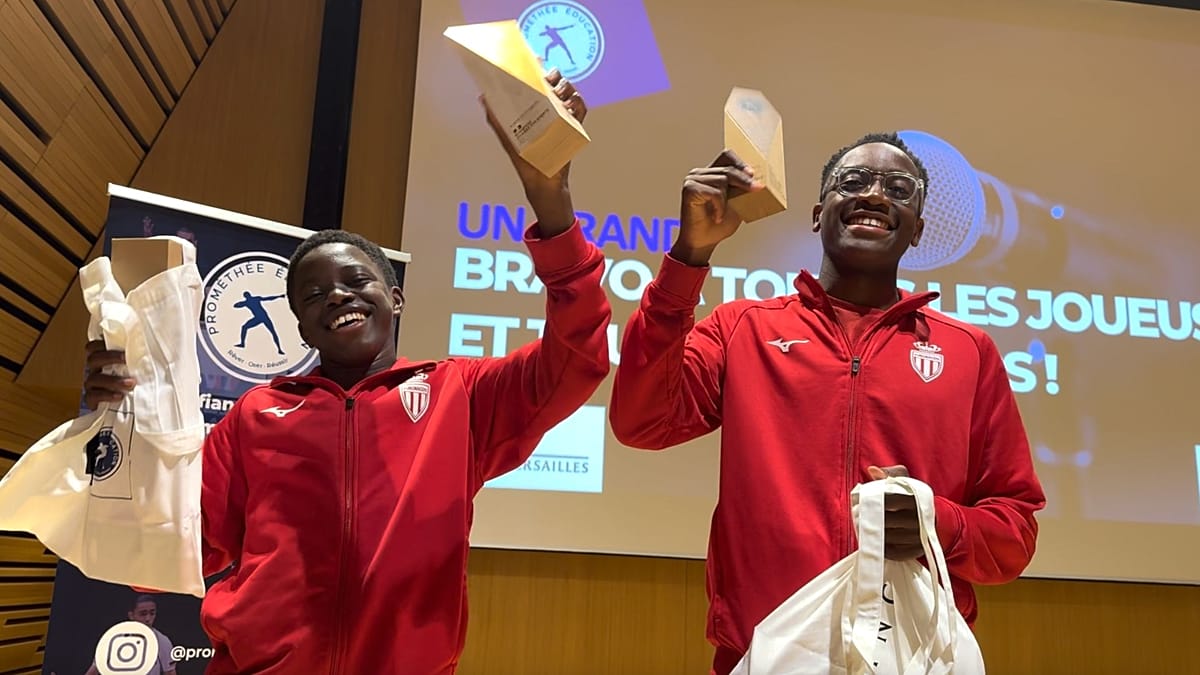
On 28 May, the Château de Versailles—a UNESCO World Heritage site—hosted an unusual contest. Twenty teenagers from ten elite French football academies, including Paris Saint-Germain, AS Monaco, and Olympique Lyonnais, took the stage not to dribble or score, but to deliver five-minute speeches on topics ranging from children's rights to the nature of luck. The event, organised by the non-profit Prométhée Éducation, is a national public-speaking competition designed to challenge the stereotype that young footballers are inarticulate.
“We each showed our talents, one by one, and proved that football doesn't make us idiots,” said Arthur Bar, a 16-year-old trainee at PSG's youth academy, after the final. “I think today we managed to break down stereotypes.” His teammate Zélie Merlaud, also 16, added that the experience will help them prepare for the oral baccalauréat exam required at the end of secondary school. Both hail from different corners of France—Bar from Paris, Merlaud from Mont-de-Marsan in the southwest—but share a determination to master public speaking.
From the Pitch to the Podium
The competition was judged not by referees but by a panel of prominent figures from sport, culture, and politics. Among them were Pascal Gentil, a double Olympic taekwondo medallist; Elisabeth Moreno, France's former minister for Gender Equality; and Karl Olive, a former sports journalist now serving in the National Assembly for the liberal Renaissance group. The jury evaluated the young athletes on tone, body language, use of props, and the ability to hold an audience.
Usuman Kebeh, a 16-year-old midfielder at AS Monaco, won over the jury with his speech answering the question: “Is luck just an illusion?” He told Euronews that the topic stirred deep emotion in him. “When I went up on stage, I thought about where I come from—Africa. I was representing my country, Gambia, or even all Africans, all Black people. Especially as I live on a housing estate, so for me, I really went against a stereotype.” Pascal Gentil noted that Kebeh “captured our attention through his tone of voice, his body language, the way he used his props—for example, his glasses—the fact that he used moments of silence and looked at us intently. He really managed to captivate us.”
Elisabeth Moreno described the experience as moving. “I spent two and a half hours listening to 15- and 16-year-olds presenting extremely powerful messages,” she said. “Hearing a young man talk about inequality between men and women gave me goosebumps. Taking the time to listen to them, to teach them public-speaking techniques, means giving them the chance to express their ideas.”
Building Skills Beyond the Game
The competition is the brainchild of Mohamed Slim, a graduate of Sciences Po Paris who volunteers his time to coach young footballers in rhetoric. “Many young footballers come from disadvantaged neighbourhoods and backgrounds,” Slim explained. “They do not all have the tools they need to master the exercise of speaking about football or even life outside the game. Athletes are role models for young people and they carry messages. So to be able to convey messages effectively, you have to be able to speak with ease.”
Over the years, Slim has coached talents such as LOSC Lille's Ayyoub Bouaddi, who will represent Morocco at the World Cup, and PSG midfielder Warren Zaïre-Emery. The programme has grown steadily, with clubs across France now integrating public-speaking training into their youth development. Karl Olive, the National Assembly member, called the initiative “a revolution,” noting that a decade ago, few professional footballers received such training.
The broader context is a growing recognition that elite athletes need more than physical prowess. In an era when players are increasingly expected to handle media scrutiny, engage with fans, and advocate for social causes, communication skills have become a competitive advantage. This trend is not limited to France; across Europe, football academies are beginning to invest in soft skills. However, the Prométhée Éducation competition remains unique in its scale and ambition.
For the participants, the experience was transformative. Arthur Bar and Zélie Merlaud may not have won a trophy, but they left Versailles with something perhaps more valuable: confidence in their own voice. As Bar put it, “We are going to keep working on our public speaking because this will not be the last big test we face.”
In a continent where football often dominates headlines for its commercial excesses or political controversies, this story offers a quieter but no less significant narrative: young athletes proving that the beautiful game can also be a platform for eloquence and self-expression.