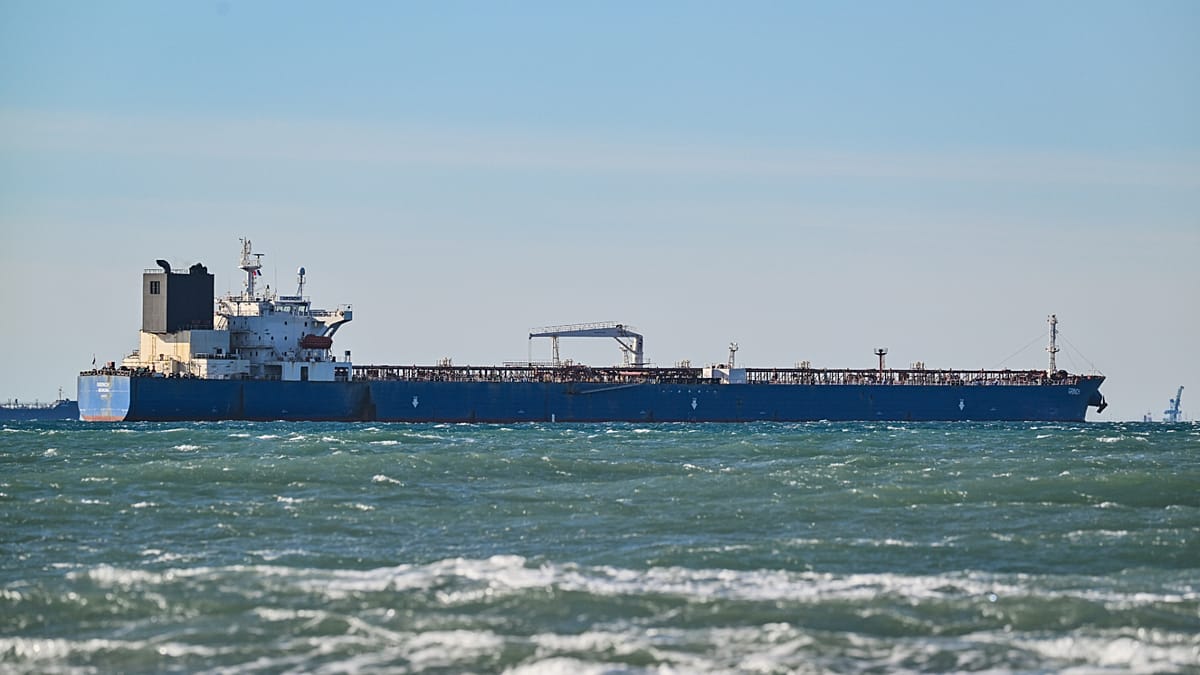
In a continued crackdown on sanctions evasion, the French navy boarded a tanker suspected of being part of Russia's so-called ghost fleet in the Mediterranean Sea. The operation, confirmed by French officials on Tuesday, is the fifth of its kind since September 2025, underscoring Paris's determination to enforce European Union and international sanctions linked to the conflict in Ukraine.
The vessel, whose name has not been officially released, was intercepted in international waters south of Sicily. French naval personnel conducted a boarding and inspection to verify the ship's cargo, ownership, and compliance with sanctions. The operation aligns with broader European efforts to disrupt the shadowy network of aging tankers that Russia uses to circumvent oil price caps and export restrictions.
Ghost Fleet: A Persistent Challenge
Russia's ghost fleet consists of hundreds of often poorly maintained tankers that operate without standard insurance or transparent ownership, frequently transferring cargo at sea to obscure its origin. These vessels have become a key tool for Moscow to maintain oil revenues despite Western sanctions imposed after the full-scale invasion of Ukraine in 2022. The European Union, along with the G7 and Australia, has imposed a price cap of $60 per barrel on Russian crude oil, but enforcement remains difficult.
France has taken a leading role in patrolling the Mediterranean, a critical chokepoint for Russian oil exports. The French navy's recent actions follow a pattern of increased vigilance. In a related development, President Emmanuel Macron previously confirmed that French forces intercepted a Russian shadow fleet tanker off the coast of Sicily, as reported in Macron: French Navy Intercepted Russian Shadow Fleet Tanker Off Sicily.
The latest boarding comes amid heightened tensions between Russia and European nations. The EU's defence chief recently warned of more potential Russian attacks on European soil, following an incident in Poland where a suspected sabotage plot was uncovered. This broader context of hybrid warfare, including energy infrastructure threats, has spurred European capitals to bolster maritime surveillance and interdiction capabilities.
Germany, for instance, has also taken action against suspected Russian-linked activities. In a separate operation, German police raided sites linked to an alleged Russian gas sabotage plot, as detailed in German Police Raid Sites Linked to Alleged Russian Gas Sabotage Plot. These coordinated efforts reflect a growing recognition among EU member states that sanctions enforcement must be proactive and multinational.
The ghost fleet poses not only a sanctions risk but also an environmental hazard. Many of these vessels are old and lack proper maintenance, increasing the likelihood of oil spills or accidents in busy shipping lanes. The International Maritime Organization has raised concerns, but regulatory gaps persist. France's actions in the Mediterranean serve as a deterrent and a signal that European nations are willing to use naval power to uphold international law.
Ukraine has also played a role in disrupting Russian logistics. Recent Ukrainian strikes on key infrastructure in Crimea, including a railway bridge, have further complicated Moscow's supply chains, as noted in Ukraine Destroys Key Crimea Railway Bridge, Disrupting Russian Logistics. These military actions complement economic sanctions, creating multiple pressure points on the Kremlin.
The French navy's boarding operation is a tangible demonstration of European resolve. As the war in Ukraine continues, the ghost fleet remains a critical loophole that European states are determined to close. With each interdiction, the message to Moscow becomes clearer: the cost of evading sanctions will only rise.