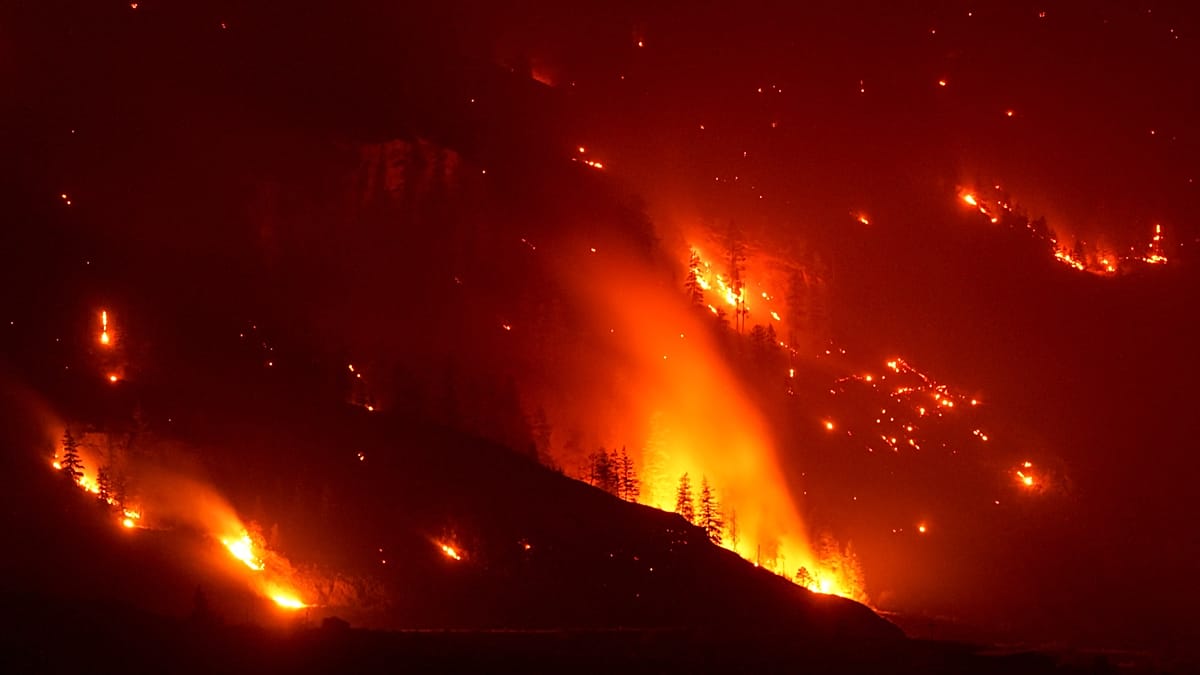
British Columbia has declared a state of emergency after fast-moving wildfires forced more than 20,000 residents to evacuate, with officials warning of “explosive” conditions that could threaten further communities. The fires, which erupted on Friday, have spread with alarming speed, nearly doubling in size overnight into Saturday.
The evacuation orders cover the towns of Summerland, home to roughly 12,000 people, and Peachland, with about 8,000 residents, both situated along the shores of Okanagan Lake in the province’s interior. The so-called Bald Range Fire, first detected on Friday, grew so rapidly that even emergency personnel had to flee.
“I had to leave the Emergency Operations Centre to come and get my family to leave this area. We’re heading south,” said Erick Thompson, an emergency official with the Regional District of Okanagan-Similkameen, in a video posted early Saturday.
At a news conference on Saturday, Premier David Eby described the fire’s intensity, quoting a firefighting official who compared it to a “bomb going off.” Eby recounted the official’s description: “The fire goes across the top of the trees… he described flames on 100-foot tree, flames going 200 feet above that, and the fire creating its own weather system, which creates lightning, which then feeds on itself.”
Search and rescue efforts continue
While tens of thousands have fled, search and rescue teams are working to reach residents who remain trapped by the advancing flames. “Air evacuations are underway for people who remain isolated behind the fire perimeter,” Eby said.
National police are investigating a possible death near Summerland, but hazardous conditions have so far prevented authorities from confirming the casualty. No official figures on injuries or property damage have been released yet.
Canada’s Prime Minister Mark Carney thanked firefighters and first responders on X, writing that they are “working tirelessly to keep people safe.” He added, “The federal government stands ready to help and support the Government of British Columbia in these efforts.”
As of early Sunday, the BC Wildfire Service reported 102 active wildfires across the province, many of them out of control amid extreme heat, strong winds, and prolonged drought. So far this year, wildfires have burned nearly 4 million hectares across Canada, according to the Canadian Interagency Forest Fire Centre.
The situation in British Columbia echoes the challenges faced in Europe, where wildfires in Spain and the Balkans have forced evacuations and strained resources. As climate change intensifies, both continents are grappling with more frequent and severe fire seasons.
In Europe, regenerative farming is emerging as a potential shield against wildfires, while European bison are being studied for their role in forest resilience. These approaches highlight the need for proactive measures to mitigate fire risks.
As British Columbia battles its worst fire season in recent memory, the province’s emergency declaration underscores the urgency of addressing climate-related disasters. With thousands displaced and more communities at risk, the coming days will be critical.