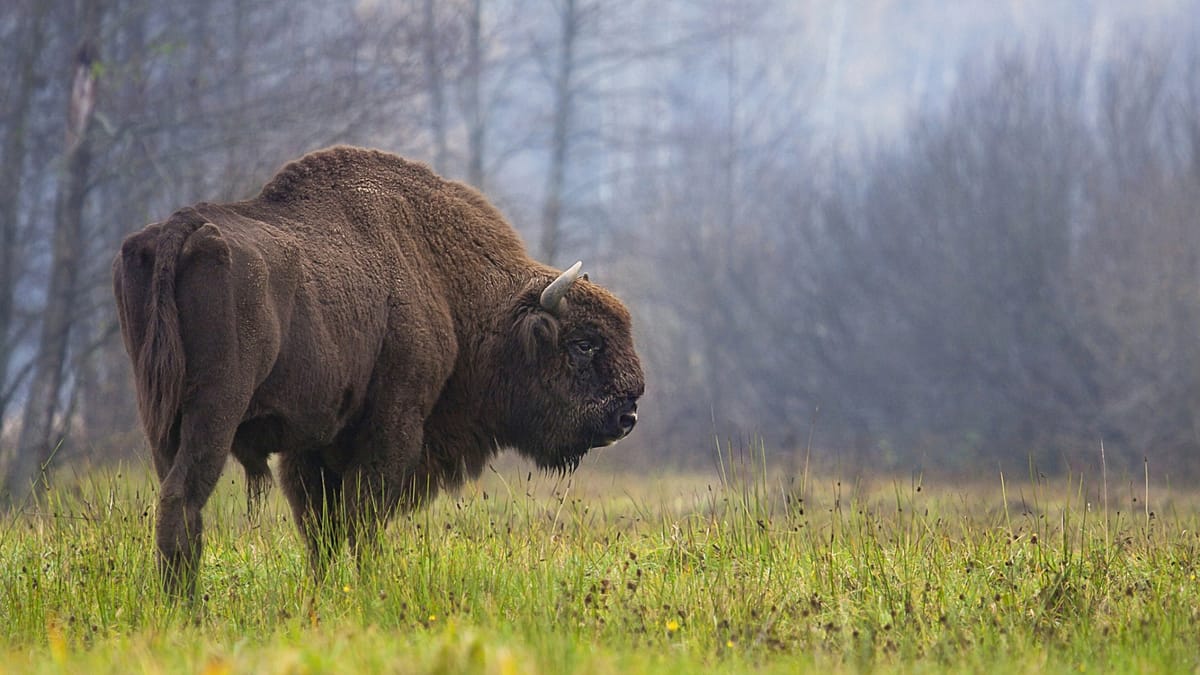
Spain is facing one of its most severe wildfire seasons on record, with climate change intensifying the frequency and ferocity of blazes. In response, scientists and land managers are exploring unconventional tools to reduce fire risk. Among them: reintroducing large herbivores like the European bison to manage the dense undergrowth that fuels flames.
The logic is straightforward—less combustible vegetation means fires have less material to spread through. Yet researchers caution that it's too early to quantify the bison's impact, and they stress that this approach complements, rather than replaces, conventional forest management.
Fernando Morán, a veterinarian and founder of the European Bison Reserve and Interpretation Centre, explained to Euronews that bison consume woody plants, scrub, leaves, and branches—all of which are highly flammable. "What it doesn't eat, it breaks, either by trampling it or hitting it with its head," he said, calling the animal a "natural firefighter appointed by nature."
A pioneering project in Spain
In January, Rewilding Spain launched a research initiative in El Recuenco, Guadalajara, in collaboration with the University of the Basque Country, the University of Manchester, and the Danish research centre Econovo. Nine European bison now roam a 400-hectare enclosure of Mediterranean forest, where scientists are studying their adaptation to the Iberian ecosystem and their effect on woody vegetation.
The animals are fitted with GPS collars, and researchers are analyzing their diet, stress levels, and the structural changes they induce in the plant community. The goal, according to the organization, is to generate data on how bison can contribute to ecosystem restoration and create "more resilient forests in the face of fires and other impacts of climate change."
This project is part of a wider rewilding movement across Europe, which aims to restore degraded ecosystems and boost their resilience to climate change while also creating economic opportunities for rural communities. The approach varies by country, but the premise is consistent: restoring the ecological role that large herbivores once played in shaping landscapes.
In the United Kingdom, the Wilder Blean project in Kent has introduced European bison alongside ponies, cattle, and pigs to restore natural woodland processes, combining ecological management with ecotourism and education. Germany hosts one of the few free-roaming bison populations in Western Europe, while Poland—where the species was saved from extinction in the 20th century—is working to increase genetic diversity and improve coexistence with farming and forestry.
Beyond bison: grazing as a fire-prevention tool
The use of animals to reduce fire fuel is not unique to Spain. Research highlighted by the World Economic Forum, based on a study from the Australian National University, notes that mammals, birds, and even insects can help by consuming the most flammable parts of trees and shrubs. A notable example is the herd of 500 goats that protected the Ronald Reagan Presidential Library in the United States by clearing surrounding vegetation.
Lidia Valverde, head of communications at Rewilding Spain, told El Salto: "Rewilding is a novel approach, complementary to the classic idea of conservation. It is based on the notion that it is not enough to conserve the nature we still have; we also need to put back the pieces that have been lost from ecosystems so that nature can recover its balance."
The European bison, the continent's largest wild land mammal, once grazed across much of Europe until it vanished after the First World War. Today's wild populations descend from a few pure-bred specimens preserved in zoos, according to the Cabárceno Nature Park in Cantabria, which participates in European breeding programs to maintain genetic diversity.
However, the species' genetic bottleneck—all current animals trace back to just 12 founder individuals—poses a significant challenge. Careful breeding management is essential to ensure long-term viability. The Rewilding Spain study aims to assess both the benefits and potential drawbacks of bison reintroduction before drawing conclusions, and it also seeks to address concerns about their impact on the landscape.
As Spain grapples with increasingly severe wildfires, as seen in recent heatwave-driven alerts, innovative solutions like this may offer a glimmer of hope. But experts agree that bison are not a silver bullet; they are one piece of a broader strategy that includes better land management, fire prevention, and climate action.