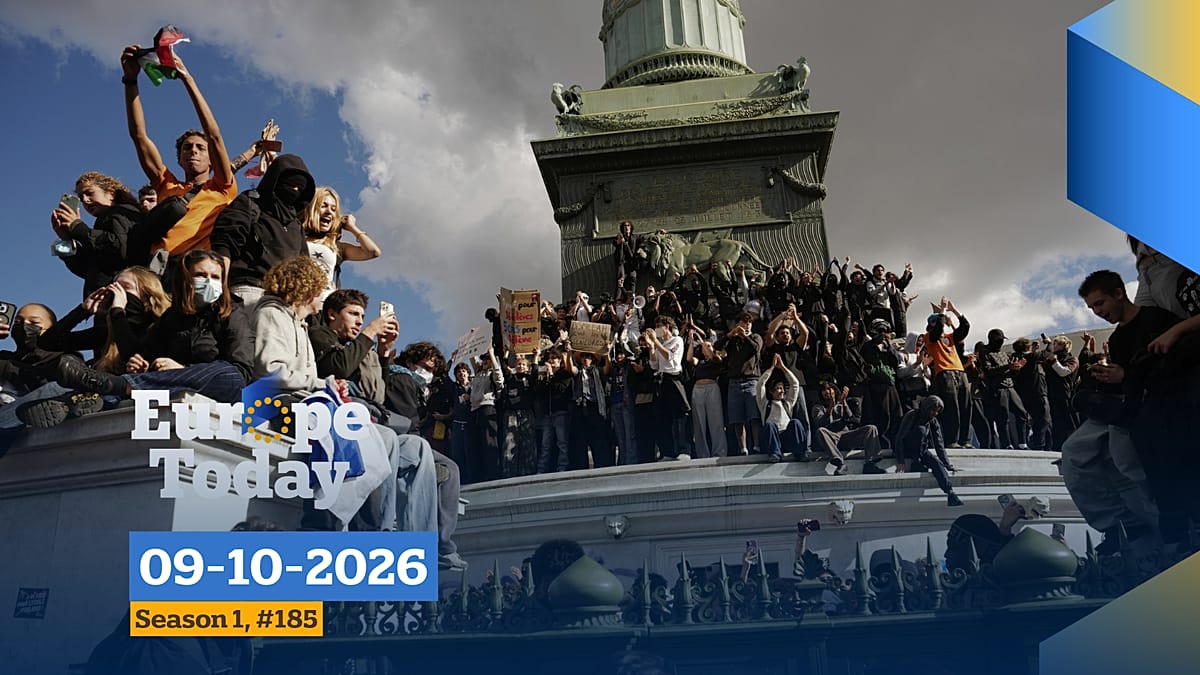
Paris witnessed a striking scene on Thursday as thousands of students converged on the Place de la Bastille, a square steeped in revolutionary symbolism. The protest, part of a wider movement over school conditions and education funding, drew a sharp response from Jean-Luc Mélenchon, leader of La France Insoumise, who proclaimed that "the Bastille has been retaken." The phrase, laden with historical resonance, underscores the intensity of feeling among younger French citizens about the state of their public services.
Emma Rafowicz, a French Socialist MEP, joined our programme to assess the significance of the protests. She noted that the movement reflects deep frustration with underfunded universities and a broader sense of precarity among students. "This is not just about classrooms," she said. "It is about the future of a generation that feels abandoned by the state." Rafowicz also addressed concerns about France's fiscal health, warning that the government's spending commitments, if not matched by structural reforms, could push the country toward a debt crisis.
Critical minerals and European energy security
While Paris was the focus of domestic unrest, Brussels hosted a major conference on critical raw materials, drawing over 1,000 delegates from more than 50 countries. The urgency of the discussions reflects Europe's determination to secure supply chains for the minerals essential to the green transition and digital economy. Helen Clark, former prime minister of New Zealand and outgoing chair of the Extractive Industries Transparency Initiative, spoke to us about the challenges ahead. She emphasised the need for transparent governance in resource-rich countries and for Europe to diversify its sources, reducing dependence on any single supplier.
Clark's remarks come as the EU pushes forward with its Critical Raw Materials Act, aiming to bolster domestic extraction and recycling. The scramble for lithium, cobalt, and rare earths has intensified amid geopolitical tensions, and European leaders are keen to avoid being left vulnerable. The conference in Brussels is a clear signal that the bloc intends to play a leading role in shaping global standards for responsible sourcing.
Ukraine accuses US of reluctance
In a separate development, Ukrainian President Volodymyr Zelenskyy has voiced sharp criticism of the United States, accusing it of an "unwillingness" to provide the support Kyiv desperately needs. The remarks come ahead of talks in Miami involving Jared Kushner and Steve Witkoff, which have raised eyebrows in European capitals. Yulia Klymenko, a member of the Ukrainian parliament, joined us to explain the gravity of the situation. She pointed to a recent Russian glide-bomb attack on Kramatorsk that killed at least 33 civilians, calling it a stark reminder of the human cost of the war.
Klymenko stressed that Ukraine's European allies have been more forthcoming, but that the gap left by the US is significant. "We are fighting for our survival, and we need every partner to step up," she said. The frontline cities are struggling to survive another winter, she added, as infrastructure continues to be targeted. The EU's own stance on China, which has been criticised for its continued economic ties with Russia, is also under scrutiny, with the European Parliament urging a tougher line.
Flags row in Strasbourg
Meanwhile, in Strasbourg, a controversy has erupted over the display of flags in the European Parliament. Rima Hassan, a French MEP of Palestinian origin, is at the centre of the dispute, which has raised questions about parliamentary rules and freedom of expression. Maia de la Baume spoke to Hassan about the incident and the potential disciplinary procedure that could follow. Hassan defended her actions, arguing that she was drawing attention to the plight of Palestinians, while critics accuse her of violating parliamentary norms.
The episode has reignited debates about the limits of political expression within EU institutions. Some MEPs have called for clearer guidelines, while others see the row as a distraction from more pressing issues. The Parliament's procedures will now determine whether Hassan faces any formal sanction, a process that could set a precedent for future cases.
As Europe navigates these multiple challenges—from student protests in France to the war in Ukraine and the politics of raw materials—the continent's leaders are being tested on their ability to respond to both domestic discontent and external pressures. The coming weeks will reveal whether they can turn these crises into opportunities for renewal.