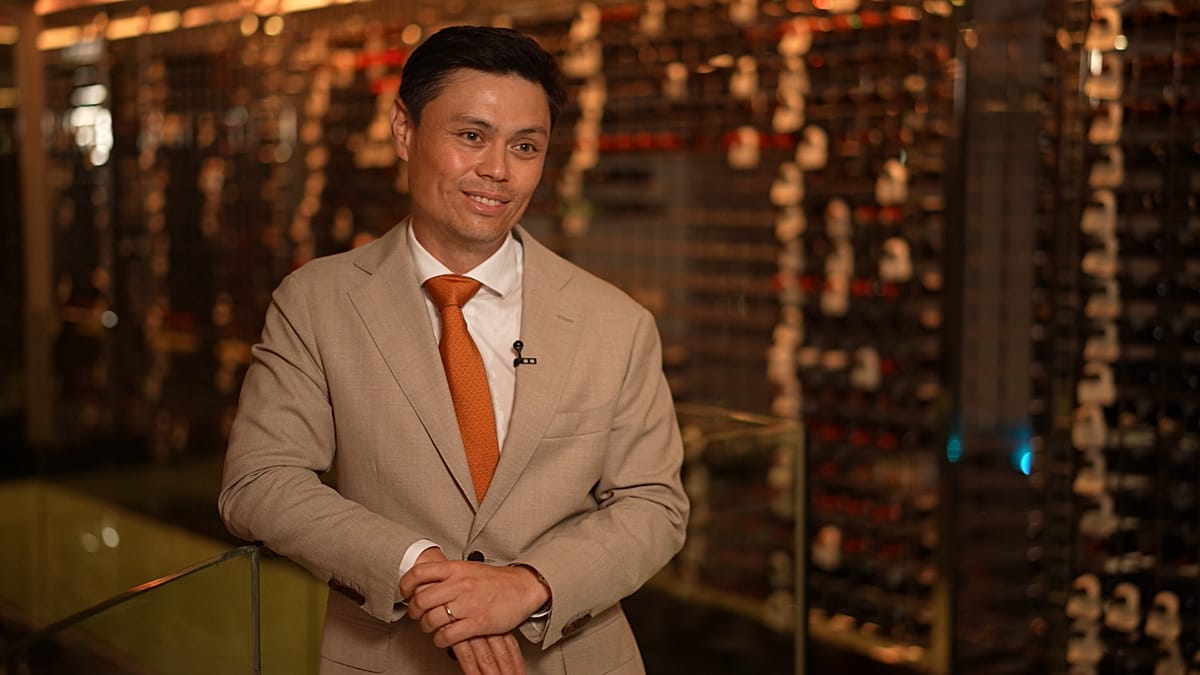
When Eddie McDougall first arrived in Macao, he expected a short stay tied to his wife's career. More than a decade later, the Australian winemaker has built a life and a business in the former Portuguese enclave, a territory that has quietly become one of Asia's most intriguing wine markets.
McDougall, who grew up in Melbourne and trained in winemaking in Australia and the United States, now splits his time between Macao and the wider region. His label, Eddie McDougall Wines, sources grapes from Australia, Europe, and beyond, but the heart of his operation is in this small city on the Pearl River Delta.
A city of contrasts
Macao is best known for its glitzy casino resorts, but McDougall says the city's real charm lies in its quieter corners. "People think of Macao as just gambling and luxury hotels," he explains. "But there's a deep Portuguese heritage here, and that shows up in the food, the architecture, and even the way people approach wine."
That heritage is a natural fit for a winemaker. Macao's culinary scene blends Cantonese traditions with Portuguese influences, creating a demand for wines that are both versatile and food-friendly. Independent restaurants, from family-run tascas to modern fusion spots, have become key clients for McDougall's portfolio.
"The independent restaurant scene is where you find the real wine culture," he says. "These are chefs and owners who care about pairing, who want something that tells a story. That's where I feel most at home."
Luxury resorts and a growing market
At the other end of the spectrum are Macao's luxury resorts, which have become major buyers of premium wines. McDougall has supplied several of the city's top hotels, a market that demands consistency and prestige. "The resorts are a different beast," he notes. "They want labels that carry weight, but they're also open to new producers if the quality is there."
This dual market—independent and institutional—has allowed McDougall to build a resilient business. While the pandemic hit Macao's tourism-dependent economy hard, the local wine scene has rebounded, helped by a growing interest in wine among younger residents and expatriates.
Macao's position as a gateway between China and the Portuguese-speaking world also gives it a unique role in the regional wine trade. McDougall has leveraged this, importing wines from Portugal and other European countries, and distributing them across Greater China. "Macao is small, but it's a window," he says. "It connects you to markets that are much bigger."
Life beyond the glass
For McDougall, Macao is not just a business base. He has embraced the city's slower pace, often escaping to the hills that surround the urban core. "There are quiet trails up in Coloane," he says, referring to the island's green expanse. "You can be in the middle of the city one minute and on a hilltop the next. That balance is important."
His family has also put down roots. "My wife's work brought us here, but we stayed because it felt right," he reflects. "The community is welcoming, and there's a sense of possibility that you don't find everywhere."
McDougall's story is part of a broader trend of international winemakers finding new homes in Asia. As European wine consumption stagnates, markets like Macao offer growth and excitement. For McDougall, the move has been both a professional and personal reinvention.
"I came for love, and I stayed for the wine," he jokes. "But really, it's the people and the place that make it work. Macao gave me a home, and it gave me a market. That's a rare combination."
As Macao continues to diversify its economy beyond gaming, its wine culture is likely to grow. For now, McDougall is happy to be part of that evolution, one bottle at a time.