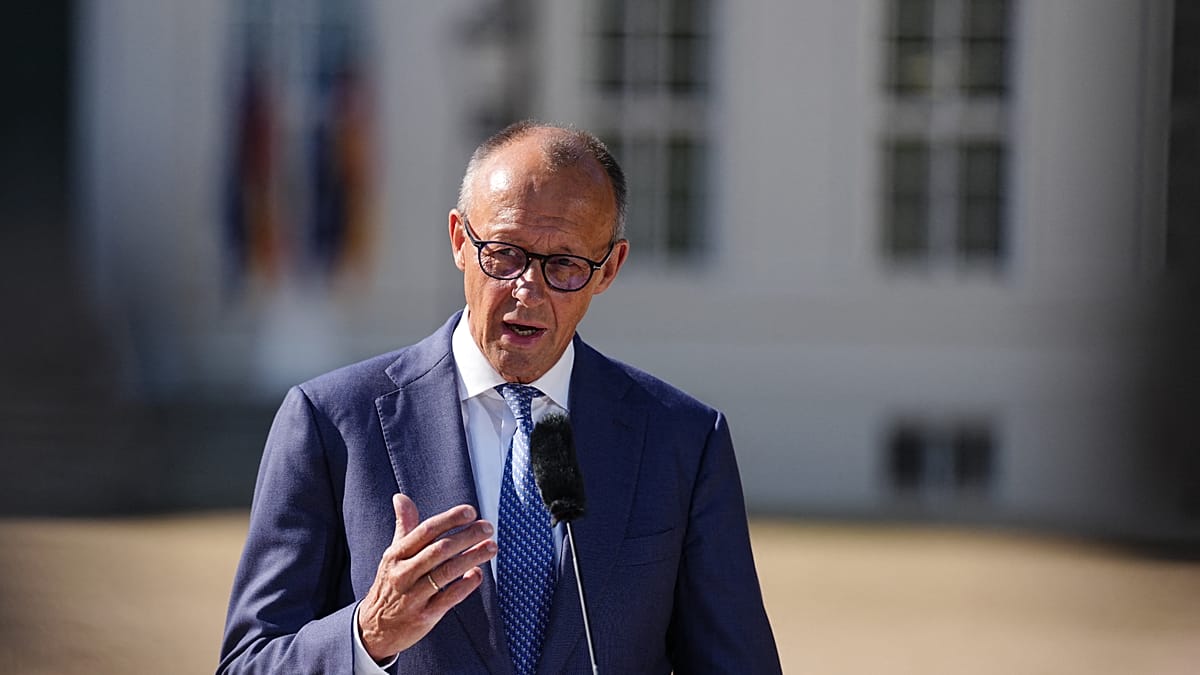
Six of the European Union's largest net contributors gathered in Berlin on Thursday to press for a leaner long-term budget, but left without a common figure for how much to trim. The meeting, hosted by German Chancellor Friedrich Merz, brought together the leaders of Finland, Austria and Denmark in person, with the Dutch and Swedish prime ministers joining by video link.
The so-called "frugals" — a bloc that also includes the Netherlands and Sweden — have long argued that the EU's next seven-year budget, proposed at €2 trillion by the European Commission, is too generous at a time when national treasuries are stretched by defence spending and support for Ukraine. Yet despite their shared goal, they have not converged on a specific reduction target.
"We will continue to handle this in the same way as a group," Merz told reporters after the meeting. "We agreed on this today because we share a common interest in advocating for realism and reforms in these negotiations." He noted that the six countries together finance around 40% of the EU budget, calling them "the group of major contributors."
Two camps, one budget
The Commission's proposal, tabled in July 2025, would cover the period 2027–2034. It has split the 27 member states into two broad camps. The "Friends of Cohesion," a group of 17 countries including Spain, Italy, Poland, Hungary and Portugal, want to protect agriculture, fisheries and regional funding — areas the Commission has proposed to cut compared with the current budget. The frugals, styling themselves as "modernisers," argue for a significantly smaller overall budget with spending redirected toward competitiveness and defence.
In June, Cyprus, which held the rotating presidency of the Council at the time, floated a compromise that would cut €32.8 billion from the Commission's proposal, focusing on programmes favoured by the modernisers. But the frugals dismissed that as insufficient. Cyprus, traditionally aligned with the Friends of Cohesion, had stayed neutral in line with its presidency role.
Danish Prime Minister Mette Frederiksen said the EU budget must "prioritise competitiveness and security" and be "responsible and understandable for our citizens." Finnish Prime Minister Petteri Orpo reiterated his commitment to reaching a deal by the end of the year, but "not at any cost."
No number on the table
Despite the show of unity, the group's joint statement remained vague, saying only that the Commission's "nearly €2 trillion" proposal must be reduced by "several hundred billion euros" in a balanced manner. German government spokesman Stefan Kornelius told Die Zeit that Berlin wants the total budget cut to €1.6 trillion — about €400 billion below the Commission's figure. The Dutch government has focused on national contributions, telling parliament it wants Dutch payments from 2028 onwards to increase by €1.6 billion less than currently proposed. Sweden, which faces an election next year, is pushing for national contributions to be capped at 1% of gross national income, compared with the Commission's proposed 1.26%.
The lack of a unified number complicates the task of Ireland, which now holds the rotating presidency and must produce a fresh compromise before the European Council summit in mid-October. European Council President António Costa has been touring capitals to build consensus, with a goal of securing a deal by the end of the year. His efforts are part of a broader diplomatic push that includes testing leaders' resolve on the budget.
Time is tight. 2027 is set to be a major election year in several member states, including France, Italy, Poland, Finland, Greece, Spain, Slovakia and Estonia. Leaders are under pressure to finalise the budget before campaigning begins, as a prolonged negotiation could spill into domestic politics.
Merz rejected accusations of stinginess. "We are not stingy, but allocations such as those proposed by the Commission are simply out of step with the times," he said. "We want a European budget that is commensurate with our aspirations for a sovereign and strong Europe."
The next few weeks will be crucial. If the frugals cannot agree among themselves, their leverage in negotiations with the Friends of Cohesion will weaken. As Costa's tour continues, the question remains whether a compromise can be found that satisfies both camps — or whether the EU heads into 2027 without a long-term budget in place.