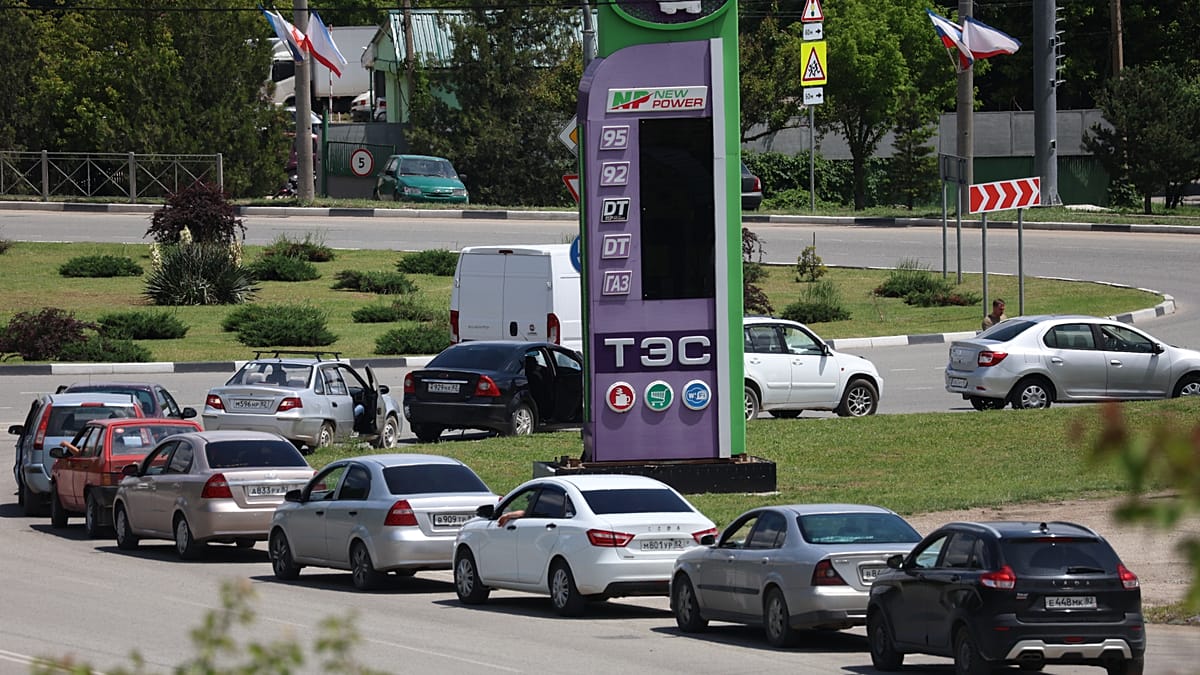
From Sunday morning, petrol sales in Russian-occupied Crimea will be suspended for cash, non-cash payments, and vouchers, as a severe fuel crisis grips the peninsula. Sergey Aksyonov, the Moscow-installed governor, announced the measure on Telegram, stating that fuel will now be reserved exclusively for government agencies responsible for the region's functioning and security. He urged residents to remain calm, but the move underscores the growing strain on occupied territories.
The crisis stems from Ukraine's intensified campaign against Russia's energy infrastructure. In recent months, Kyiv has struck refineries, terminals, depots, and fuel trucks bound for Crimea, disrupting supply lines. On Sunday, President Volodymyr Zelenskyy confirmed that Ukrainian forces hit facilities on both sides of the Kerch Strait Bridge, including maritime logistics used to transport oil in the Krasnodar region and an oil depot in occupied Kerch.
Ukraine's Strategy to Isolate Crimea
Mykhailo Fedorov, Ukraine's defence minister, outlined the broader strategy in an interview with the YouTube channel Pressing. He said Kyiv is using drone attacks to cut off logistics to Crimea. “Logistics are being cut off,” Fedorov explained. “It looks like, in the near future, Crimea will turn into an island. This could lead to some very unexpected consequences for the Russians.”
The fuel shortage has already caused long queues at petrol stations across the peninsula, with limited supply exacerbating public frustration. The suspension of sales marks a significant escalation, affecting both individuals and legal entities. Only government agencies tied to security and essential functions will have access to fuel, highlighting the prioritisation of military and administrative needs over civilian life.
This development comes amid broader economic pressures on Russia. The Bank of Russia held its key interest rate near 14% as war costs and the fuel crisis stoke inflation, reflecting the wider impact of the conflict on the Russian economy.
Meanwhile, Russian attacks on eastern Ukraine continue to exact a heavy toll. On Sunday, local authorities reported that three people were killed and 22 others wounded in strikes across the region. In Dnipropetrovsk, one person died and nine were injured following a wave of attacks on three districts, according to Oleksandr Ganzha, head of the Dnipropetrovsk Regional Military Administration. In Poltava, two businesses were struck on Saturday, as confirmed by Vitaliy Dyakivnych, head of the Poltava Regional Military Administration.
The fuel crisis in Crimea is part of a broader pattern of Ukrainian operations aimed at degrading Russia's logistical capabilities. By targeting energy infrastructure, Kyiv seeks to disrupt supply chains that support Russian military operations in southern Ukraine. The isolation of Crimea could have strategic implications, potentially complicating Russia's ability to sustain its forces in the region.
For the civilian population in occupied Crimea, the suspension of petrol sales adds to a growing list of hardships. Since the full-scale invasion began in 2022, the peninsula has faced sanctions, reduced tourism, and now a tightening fuel supply. The move also signals that Moscow's control over the region is becoming increasingly costly and difficult to maintain.
As the war enters its third year, both sides are adapting their tactics. Ukraine's drone campaign represents a cost-effective way to strike deep behind enemy lines, while Russia continues to bombard Ukrainian cities and infrastructure. The situation in Crimea remains a flashpoint, with potential repercussions for the broader conflict.