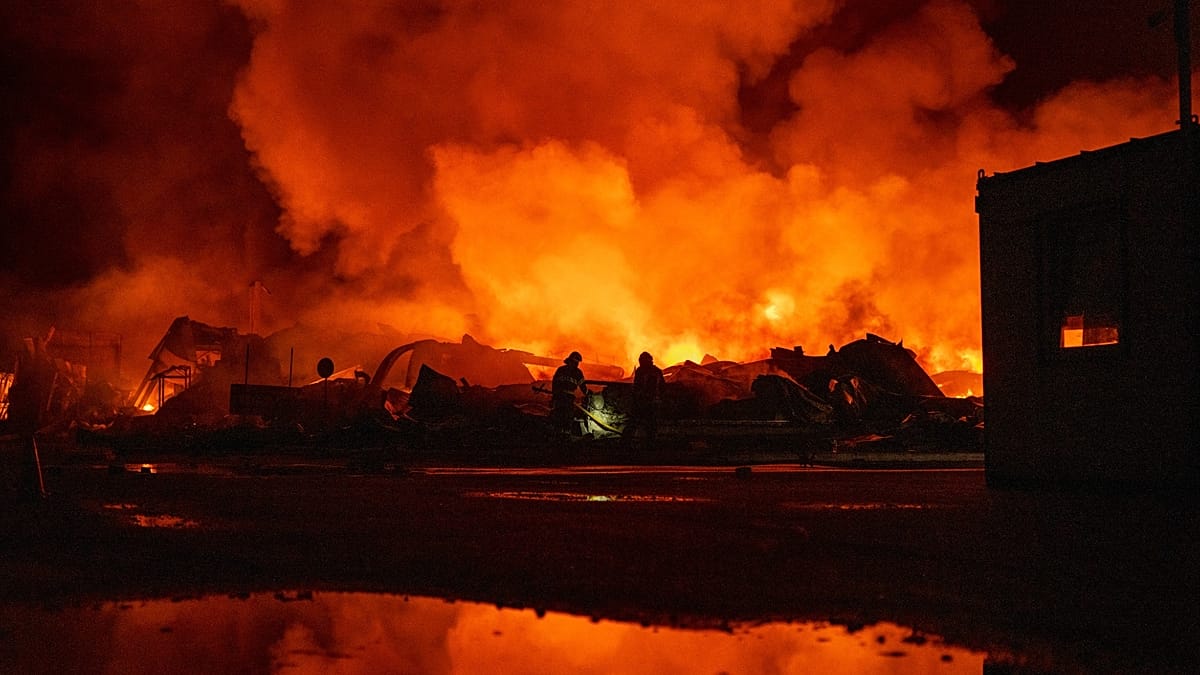
Ukraine's air force said on Wednesday that it failed to shoot down a single Russian missile during an overnight assault that killed at least 17 people in and around Kyiv. The attack involved 115 drones and 28 high-speed missiles, including ballistic types, according to the daily report. The disclosure underscores the acute shortage of anti-ballistic interceptors that Ukrainian officials have warned about for months.
President Volodymyr Zelenskyy, in a social media post, said the strikes targeted warehouses of civilian enterprises, as well as infrastructure and a railway station. He stressed that “ballistics interceptors are something that could have saved the lives of those who died today,” and added that delays in delivery or unwillingness to transfer such systems lead to “terrible victims and destruction.”
Civilian sites hit, no military targets
The deadliest incident occurred near the Kvitneva railway station in the Brovary district, east of Kyiv. According to Vitaliy Bigun, head of the Brovary District State Administration, eight people were killed when a delayed train left passengers stranded on the platform as the missiles struck. Emergency services battled fires across the region, with warehouses and logistics hubs engulfed in flames.
Prime Minister Serhii Koretskyi (the original name is Sergii Koretskyi, but the standard transliteration is Serhii) said Moscow deliberately avoided military facilities. “These strikes have no military purpose – this is terrorism,” he said. He added that Russia is “expanding its campaign of terror by deliberately targeting businesses that serve millions of people,” including manufacturers, commercial facilities, and logistics hubs.
The attack hit several major Ukrainian companies. Epicentre, the country's leading DIY retailer, saw key facilities destroyed. ROZETKA, the largest online marketplace, also suffered damage. Nova Poshta, the biggest private postal and courier operator, reported that its sorting centre in Kyiv was struck with cluster munitions. Supermarket chain Silpo said six of its employees died in fires at two distribution centres.
Ukraine's government is convening a meeting with affected businesses to coordinate recovery and assess the economic impact. The strikes come as Kyiv has repeatedly appealed to European and NATO allies for more advanced air defence systems, particularly Patriot batteries and other ballistic interceptors. The uncertainty over Patriot licences from Washington has added to the urgency.
The overnight barrage follows a pattern of escalating Russian attacks on civilian infrastructure. Earlier this week, similar strikes killed 15 people in the capital. The repeated assaults have prompted the European Union to channel €1.4 billion from frozen Russian assets to Ukraine, but officials say much more is needed.
Air defence experts note that intercepting ballistic missiles is particularly challenging, requiring sophisticated systems like the US-made Patriot or the Franco-Italian SAMP/T. Ukraine has received a limited number of such systems, but the sheer volume of Russian launches often overwhelms them. The air force report did not specify why no missiles were intercepted, but it likely reflects a combination of missile speed, saturation tactics, and a shortage of interceptor munitions.
In Brussels, EU foreign policy chief Josep Borrell condemned the attacks, calling them “indiscriminate and unacceptable.” He reiterated the bloc's commitment to supporting Ukraine's air defence, but concrete deliveries remain slow. Meanwhile, in Kyiv, residents spent another night in shelters, and the morning brought the grim task of counting the dead.
The human toll is not limited to Kyiv. In the southern city of Kherson, a Russian drone strike targeted a civilian at a market, according to police, in an incident that was captured on drone footage. Such attacks have become routine, yet each one deepens the trauma for Ukrainian civilians.
As the war enters its third year, the disparity in air defence capabilities remains a critical vulnerability. Zelenskyy's plea for more interceptors is not new, but the failure to stop any of the 28 missiles makes the argument starkly concrete. European leaders, meeting in Brussels later this week, are expected to discuss accelerating arms deliveries, but the gap between rhetoric and reality persists.