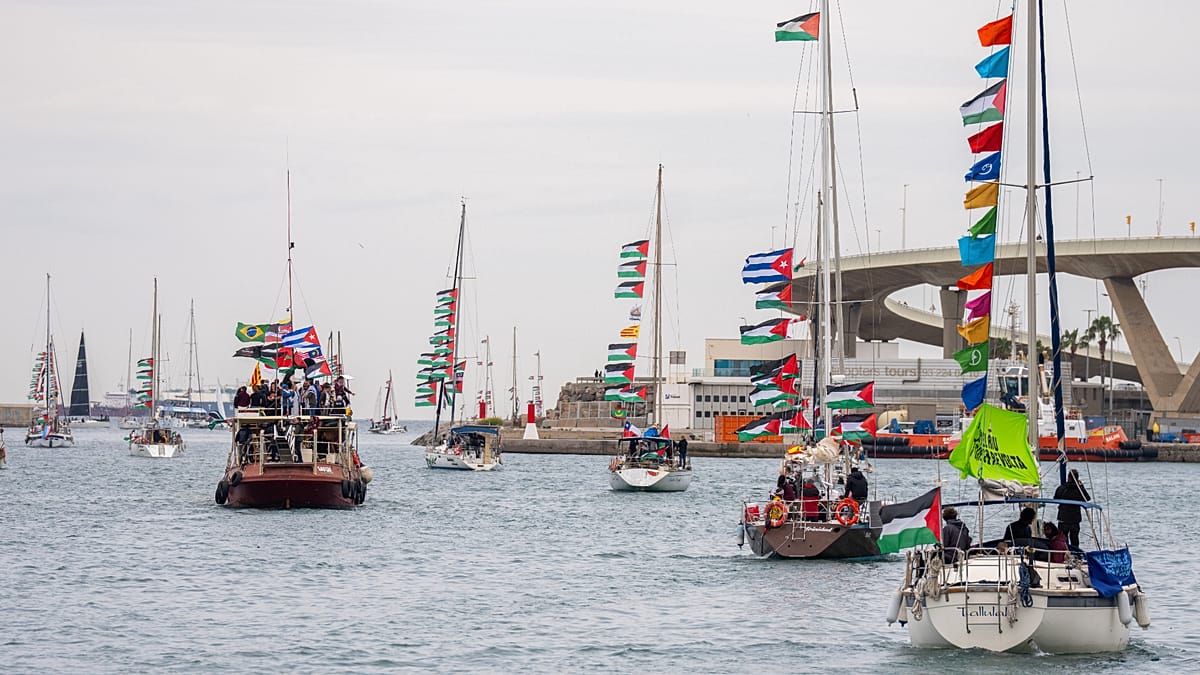
Dozens of activists from a Gaza-bound aid flotilla intercepted by Israeli forces in international waters off Crete have disembarked on the Greek island, ending a tense standoff that has drawn sharp criticism from several European capitals.
Escorted by Greek coast guards, approximately 175 activists were transported by bus to an undisclosed location on Friday, according to reports. The flotilla, organized by the Global Sumud coalition, had aimed to break Israel's naval blockade of Gaza and deliver humanitarian supplies to the Palestinian territory.
Israel's foreign ministry confirmed that around 175 individuals were removed from more than 20 vessels on Thursday, though flotilla organizers put the number at 211. Israeli Foreign Minister Gideon Sa'ar thanked Greece for its cooperation, stating on X that the activists would be disembarked on a Greek beach. The Greek foreign ministry issued a statement calling for restraint and respect for international law, including the law of the sea and international humanitarian law.
European Governments Demand Release
Several European Union member states with nationals among those detained have urged Israel to free the activists, describing the interception as a flagrant breach of international law. The incident has reignited debates over the legality of Israel's blockade and the rights of humanitarian missions in international waters.
The United States, however, backed Israel's actions. State Department spokesman Tommy Pigott dismissed the flotilla as a meaningless political stunt and called on allies to deny port access, docking, and refueling to participating vessels. This divergence between European and American positions underscores the transatlantic tensions over the Israeli-Palestinian conflict.
The flotilla initially comprised more than 50 boats, though many turned back or were delayed. Organizers insisted the mission was purely humanitarian, aiming to deliver aid to Gaza, where access remains severely restricted despite a fragile ceasefire between Israel and Hamas that has been in place since October.
This is not the first such interception. In 2010, Israeli commandos raided the Mavi Marmara, part of a Gaza flotilla, killing ten Turkish activists and sparking a diplomatic crisis. The current incident, while less violent, has again highlighted the risks faced by activists challenging the blockade.
For Greece, the episode poses a delicate balancing act. Athens maintains close economic and military ties with Israel but also faces domestic pressure from pro-Palestinian groups and its obligations under EU law. The Greek foreign ministry's careful language reflects this tightrope walk.
The European Union has consistently called for an end to the Gaza blockade, which it deems illegal under international law. However, internal divisions remain, with some member states like Hungary and Austria taking a more pro-Israel stance. The flotilla incident could amplify calls for a unified EU position.
As the activists disembark in Crete, their fate remains uncertain. Some may face deportation, while others could pursue legal challenges. The episode serves as a reminder of the enduring tensions in the Eastern Mediterranean and the complexities of enforcing international norms in a region marked by conflict.