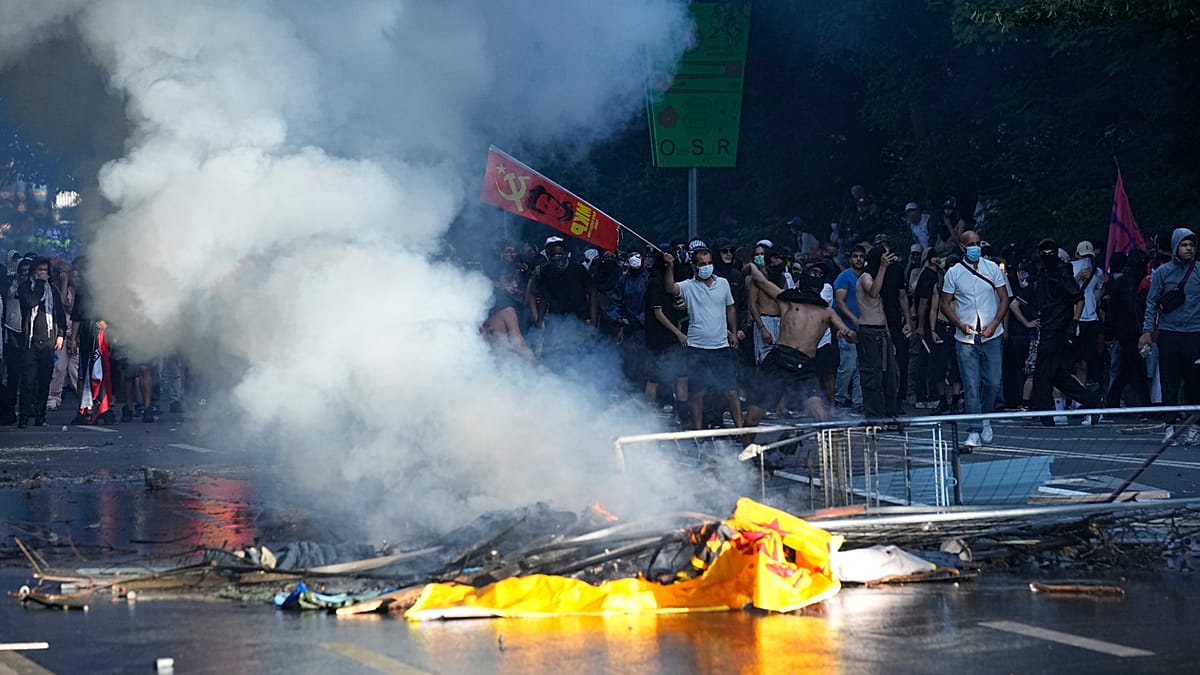
Geneva saw violent confrontations on 14 June when a protest of approximately 20,000 people, held ahead of the G7 summit in nearby Évian-les-Bains, France, escalated near the United Nations district. The demonstration, organized by a coalition of Swiss and international civil society groups, targeted the policies of the world's leading industrialised nations, accusing them of perpetuating economic inequality and environmental degradation.
Swiss police deployed water cannons and tear gas after a minority of protesters began throwing projectiles and setting fires. Several arrests were reported, though official figures remain unconfirmed. The unrest occurred despite a generally peaceful march that wound through central Geneva earlier in the day.
Why Geneva?
Geneva, home to the European headquarters of the United Nations and numerous international organisations, has long been a focal point for global justice movements. The city's proximity to Évian—just across the French border on Lake Geneva—made it a natural gathering point for those seeking to voice opposition to the G7 agenda. The summit, which brought together leaders from Canada, France, Germany, Italy, Japan, the United Kingdom, and the United States, focused on issues including artificial intelligence regulation, trade tensions, and the war in Ukraine.
Protesters carried banners reading "Tax the Rich" and "Climate Justice Now," reflecting broader discontent with the G7's perceived failure to address wealth concentration and the climate crisis. Many also criticised the summit's host, French President Emmanuel Macron, whose domestic reforms have sparked parallel protests in Paris over social inequality and police conduct.
The demonstration in Geneva was one of several across Europe timed to coincide with the G7. In Brussels, thousands marched against austerity measures and alleged police brutality, while in Athens, a separate summit used ancient philosophy to discuss modern governance. The Swiss protest, however, drew the largest crowd and the most intense police response.
G7 Agenda Under Fire
The G7 summit in Évian, which concluded on 15 June, produced agreements on AI safety standards and a renewed commitment to support Ukraine, but activists argue these measures fall short. "The G7 is a club of the rich that dictates global rules while ignoring the needs of the majority," said a spokesperson for the Swiss protest coalition. "They talk about climate but continue to subsidise fossil fuels."
This sentiment echoes broader European frustration with the pace of international cooperation. The summit's discussions on the Iran nuclear deal and potential trade tariffs with the United States also drew criticism from protesters who see the G7 as an exclusive forum that bypasses democratic processes.
The violence in Geneva is likely to reignite debates about protest policing in Switzerland, a country known for its direct democracy but also for strict public order laws. Similar tensions have emerged in other European cities, including Belfast, where anti-immigration protests turned destructive, and Brussels, where education cuts sparked mass demonstrations.
As the G7 leaders departed Évian, the legacy of the Geneva protest remains uncertain. What is clear is that the gap between global governance and public sentiment continues to widen, with European cities serving as the stage for this ongoing confrontation.