Deep beneath the Tyrolean Alps, tunnel-boring machines are grinding through the mountain massif around the clock. This is the heart of the Brenner Base Tunnel, a multi-billion-euro project that will become the world's longest railway tunnel once completed. But the scale of the undertaking extends far beyond the underground works: the excavated rock has to go somewhere, and the chosen site is a remote valley that is being reshaped on a monumental scale.
The Padaster Valley, a side valley of the Wipptal in Austria, was once a sharp V-shaped incision with steep slopes. Today, after about a decade of work, it is a wide, U-shaped stony wasteland. The transformation is the result of 7.7 million cubic metres of spoil being deposited there, making it the largest excavation dump by volume in the European Union. The company behind the tunnel, BBT SE, promises that in ten years' time this barren landscape will be a blossoming Alpine valley again, setting a global benchmark for renaturation.
An engineering feat with an environmental price
To appreciate the sheer mass of debris, consider the Great Pyramid of Giza. Now imagine three of those pyramids being crushed into rubble – that is roughly the volume of rock that workers must dispose of in an environmentally responsible way. Sebastian Reimann, project manager for construction section H53 (the Pfons/Brenner segment), explains the scale: “We have a huge construction site here with a landfill volume of 7.7 million cubic metres of excavated material.”
During peak phases, four tunnel-boring machines advanced simultaneously underground. “Every month more than 250,000 cubic metres of spoil were brought up from underground and placed here on the dump,” Reimann recalls. “The effort is gigantic, both logistically and in terms of manpower, but it is simply great fun to be involved.”
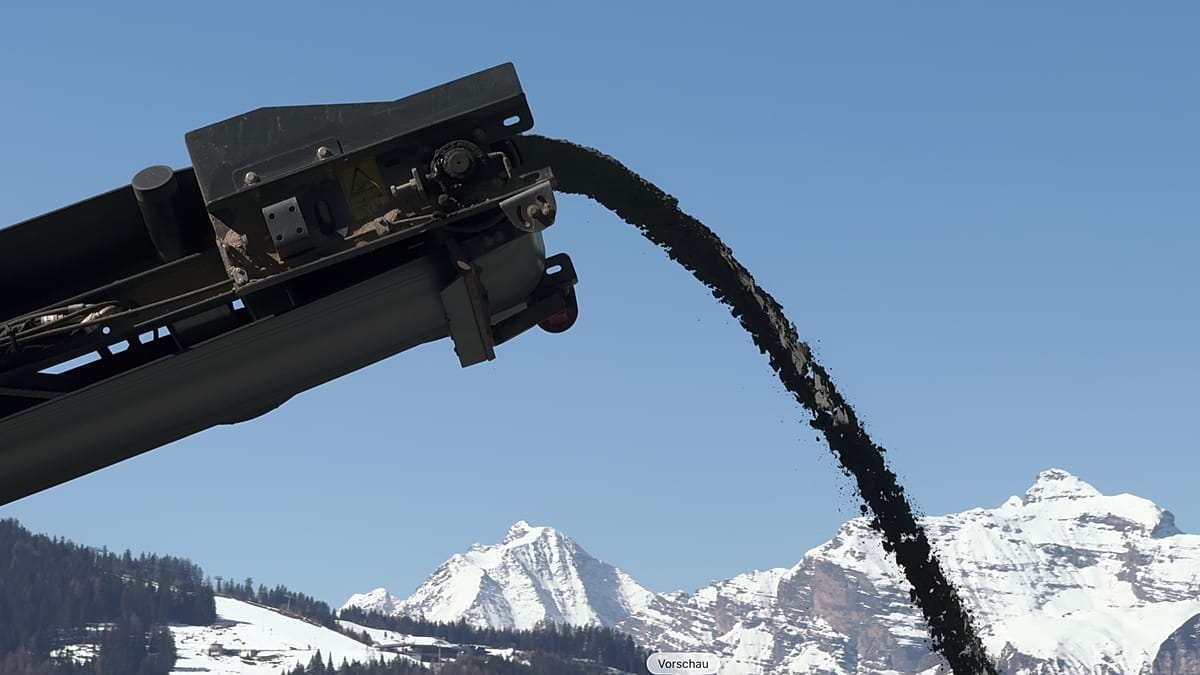
The logistics are indeed remarkable. To avoid burdening local villages with heavy lorry traffic, the project installed a 30-kilometre-long conveyor belt system that carries the rock from deep inside the mountain to the Padaster Valley. At its longest, the belt stretched 30 kilometres, and it remains a key piece of infrastructure. An additional access tunnel was driven to connect the landfill site directly to the underground works, allowing the spoil to travel uphill on belts while workers descend via a four-kilometre ramp.
For residents of nearby towns like Steinach am Brenner, the conveyor belt is a welcome alternative to the constant rumble of trucks. “Having 100 lorries loaded with rock debris thundering along the village road every day, for several years, would have been unacceptable,” Reimann notes. The decision to use conveyors is one of the ways the project is trying to minimise its impact on the local community and environment.
Diverting a stream to reshape a valley
The Padasterbach river, which once flowed through the idyllic valley, has been temporarily diverted through a 1,500-metre tunnel to make way for the landfill. Andreas Ambrosi, a colleague of Reimann, acknowledges the current state: “At the moment it is still a grey stony desert.” But he insists the river has not disappeared – it has only been rerouted for a limited period.
The long-term goal is to restore the valley to a natural state, though it will not look exactly as it did before. The U-shape will remain, but the slopes will be stabilised and replanted with native vegetation. The company aims to create a model of renaturation that could inspire similar projects across Europe and beyond. The challenge is considerable: the valley floor is now composed of crushed rock, which must be shaped and covered with soil before any plants can take root.
This project is part of a broader European effort to improve rail connectivity and shift freight from road to rail. The Brenner Base Tunnel, once completed, will provide a high-capacity link between Austria and Italy, cutting travel times and reducing the environmental footprint of transalpine transport. The tunnel is a flagship of the EU's TEN-T network, and its construction is being watched closely by engineers and environmentalists alike.
While the immediate landscape is stark, the promise of renaturation offers a glimmer of hope. The project's managers are confident that the valley can be transformed again, this time with a gentler profile that still supports a thriving ecosystem. As Reimann puts it, the effort is gigantic, but so is the potential reward – not just for the tunnel's users, but for the Alpine environment that surrounds it.
For now, the Padaster Valley remains a testament to the scale of modern infrastructure projects. Whether it becomes a green showcase or a cautionary tale will depend on the success of the restoration efforts in the coming years. The world will be watching, and the lessons learned here could shape how Europe handles the waste from its largest construction sites.