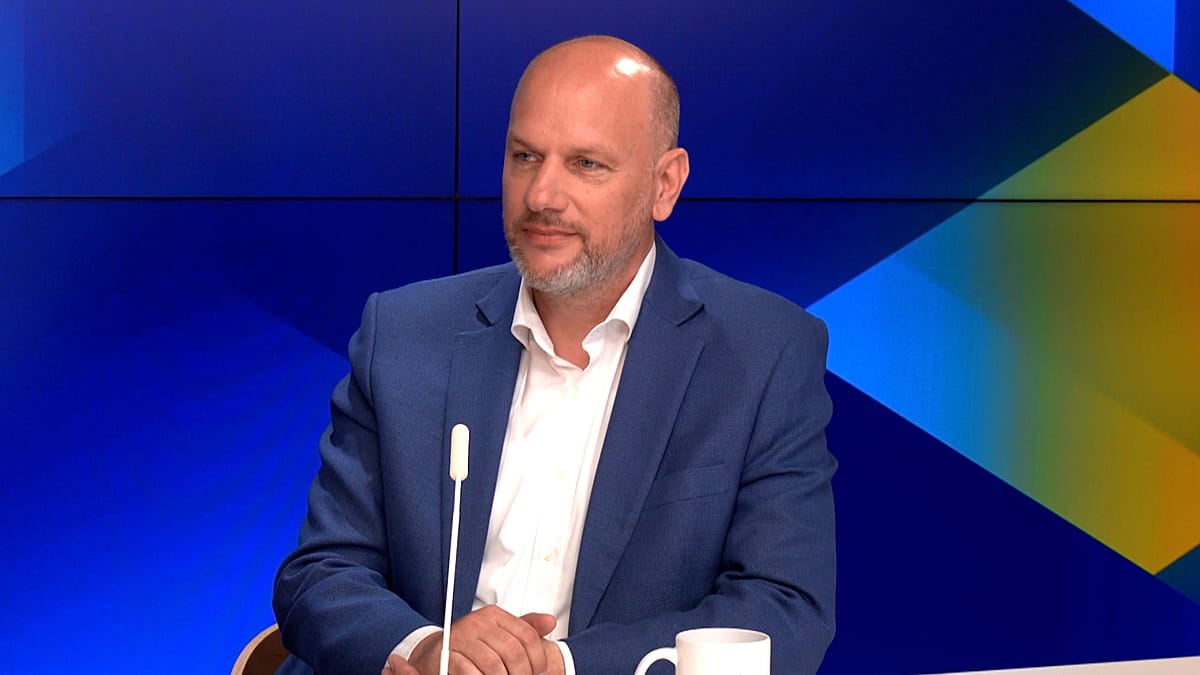
In a recent interview, Niclas Herbst, a German Member of the European Parliament from the centre-right European People's Party (EPP), weighed in on the ongoing debate over Germany's military legislation and its implications for citizens. Herbst urged the government in Berlin to strike a delicate balance: avoid stoking unwarranted 'fear of war' while being transparent about the current geopolitical tensions.
Herbst's comments come amid a broader European push to bolster defence capabilities, particularly in light of Russia's full-scale invasion of Ukraine. Germany, under Chancellor Olaf Scholz, has announced a historic Zeitenwende (turning point) in defence policy, including a €100 billion special fund for the Bundeswehr. However, the practical implementation of these measures, including potential changes to military service obligations, has sparked public debate.
Resilience as a Societal Imperative
Herbst emphasised that the conversation should not be limited to military hardware or budgetary allocations. 'We need a discussion about resilience in society,' he said, pointing to the need for citizens to understand their role in national and European security. This includes everything from civil defence preparations to the psychological readiness for potential crises.
The MEP's remarks align with a growing recognition across EU capitals that security is not solely a matter for armed forces. In countries like Finland and Sweden, which have long maintained conscription and robust civil defence systems, societal resilience is deeply embedded. Germany, by contrast, suspended conscription in 2011 and has since struggled to maintain troop numbers and public engagement with defence issues.
Herbst's call for honesty without alarmism reflects a delicate political calculus. The German government has been cautious about rhetoric that might unsettle a population historically wary of militarism. Yet, as the war in Ukraine grinds on and hybrid threats—from cyberattacks to disinformation—multiply, officials acknowledge that a more informed and prepared citizenry is necessary.
The debate also touches on broader European defence cooperation. Recent discussions between German Chancellor-in-waiting Friedrich Merz and French President Emmanuel Macron in Cologne have highlighted the need to salvage Franco-German defence collaboration, a cornerstone of EU security. Meanwhile, the EU's Defence Commissioner has backed a military mobility plan, with MEPs pushing for a 2028 deadline to streamline troop and equipment movements across the bloc.
Herbst's intervention underscores a key tension: how to prepare society for potential threats without undermining democratic stability. 'It's about being honest about the situation without creating panic,' he said. This approach resonates with EU-level efforts to enhance strategic communication and public awareness, as seen in the European Commission's recent initiatives on hybrid threats.
For Germany, the path forward may involve revisiting models of civic service or expanding voluntary military programmes. The debate also has implications for the EU's broader defence posture, as member states grapple with the challenge of integrating national policies into a cohesive European framework. As Herbst noted, resilience is not just a national issue but a European one, requiring coordination across the continent.