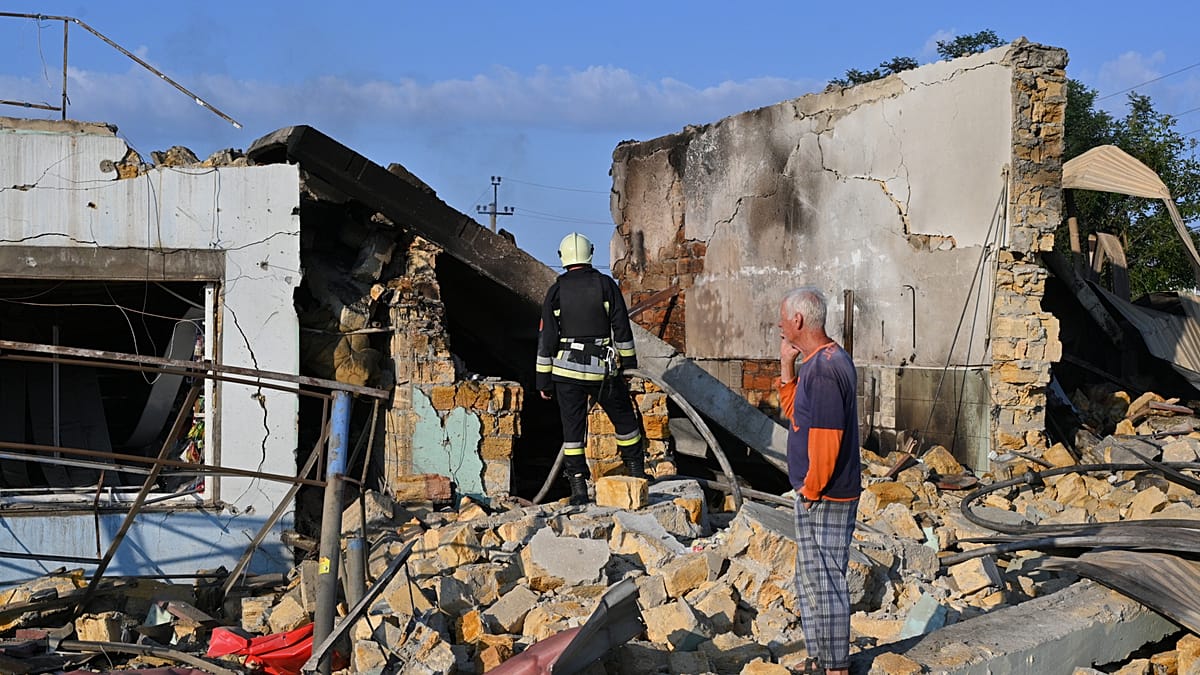
Russian forces launched a fresh wave of missile and drone strikes across Ukraine over the past 24 hours, killing seven people and wounding at least 67 others, according to Ukrainian officials. President Volodymyr Zelenskyy reported on X that the attacks hit multiple regions, including Odesa, Sumy, Zaporizhzhia, Kharkiv, Kherson, Donetsk, and Dnipro.
Ukraine's state grid operator, Ukrenergy, confirmed that the strikes caused power outages in Odesa, Zaporizhzhia, Dnipropetrovsk, Kharkiv, and Sumy regions. The Ukrainian Air Force said its air defence systems intercepted five of eight missiles and 115 of over 130 drones launched by Russia overnight into Friday morning, targeting the north, south, and east of the country.
Political Reshuffle Sparks Protests
The attacks came just hours after President Zelenskyy announced a major government reshuffle on Thursday, appointing Serhii Koretskyi, former head of state gas operator Naftogaz, as the new prime minister. The move was overshadowed by the dismissal of Defence Minister Mykhailo Fedorov, a decision that has reportedly left the military leadership unsettled.
Protests erupted in Kyiv and other cities, with demonstrators holding signs reading "Don't mess with what works," "Hands off Fedorov," and "Power still belongs to the people." The protests reflect growing unease over the stability of Ukraine's wartime government, especially as the country faces relentless Russian aggression. For more on the political fallout, see our report on Fedorov's accusations against the army chief.
Separately, the Russian Defence Ministry claimed it had downed 243 Ukrainian drones overnight, though this could not be independently verified. The escalation comes as EU-Ukraine relations deepen, with European Commission President Ursula von der Leyen recently visiting Kyiv to advance a drone pact and accession talks, as covered in our earlier piece.
The strikes underscore the ongoing humanitarian and energy crisis in Ukraine, with winter approaching and infrastructure under constant threat. The appointment of Koretskyi, who has experience in the energy sector, is seen as a strategic move to address the power grid's vulnerabilities, but critics argue that the reshuffle may distract from urgent military needs.
As Europe watches, the situation remains fluid. The EU's defence chief has urged negotiations, suggesting Ukraine's military gains should force Putin to the table, as detailed in this analysis. Meanwhile, the protests in Kyiv signal that domestic political stability is as crucial as battlefield success for Ukraine's resilience.