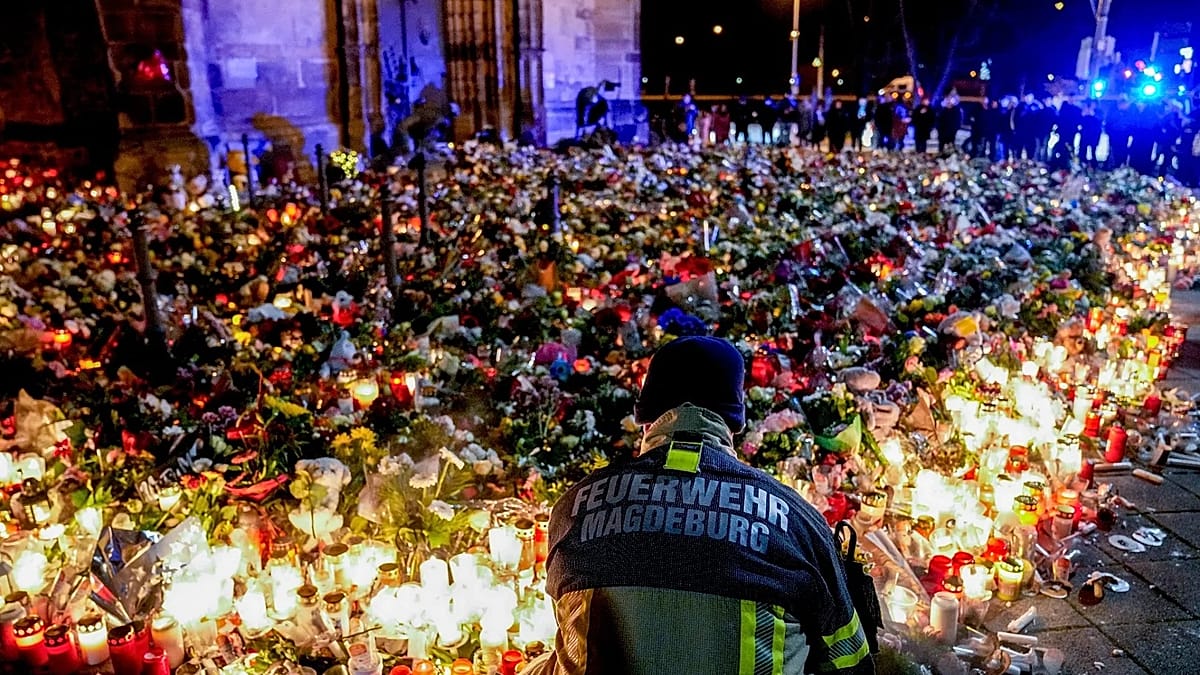
German prosecutors on Thursday demanded a life sentence for Taleb Jawad al-Abdulmohsen, the Saudi-born man on trial for driving a car into a crowded Christmas market in Magdeburg in December 2024. The attack killed six people and injured more than 300, prompting a nationwide reckoning over security at one of Germany's most beloved traditions.
Prosecutor Matthias Boettcher told the court in Magdeburg that the ramming "defies human comprehension" and was "planned long in advance." He described the ongoing suffering of victims and their families as "simply indescribable," arguing that the harshest possible penalty is warranted.
Abdulmohsen, a psychiatrist and anti-Islam activist who had lived in Germany for years, admitted to driving the SUV into the market but denied deliberately running people over. His testimony has been erratic, punctuated by conspiracy theories and references to fringe far-right ideas. At the trial's opening in November, he acknowledged being behind the wheel but then launched into incoherent diatribes about Saudi politics, violence against women, and alleged police cover-ups.
Motive and Charges
According to Boettcher, Abdulmohsen's motive stemmed from a legal dispute with a Cologne-based refugee organization, against which he had lost a civil suit. The defendant, who had expressed anti-Islam views online, is charged with six counts of murder and 338 counts of attempted murder. The prosecution argues the attack was a calculated act of revenge.
The rampage has revived painful memories of the 2016 Berlin Christmas market attack, when an Islamic extremist drove a truck into a crowd, killing 12. That event led to heightened security measures, but the Magdeburg incident has exposed persistent vulnerabilities. German authorities have since faced questions about how Abdulmohsen, who had a history of online threats and mental health issues, was able to carry out such an attack.
The case has also fueled broader debates about migration and integration in Germany, particularly given the defendant's Saudi origins and his activism against Islam. Critics argue that the attack underscores gaps in the country's security apparatus, while others caution against conflating the actions of an individual with entire communities.
As the trial continues, the court is expected to hear from dozens of victims and witnesses. A verdict is anticipated later this year. The case has drawn international attention, highlighting the challenges European nations face in balancing public safety with civil liberties during large public events.