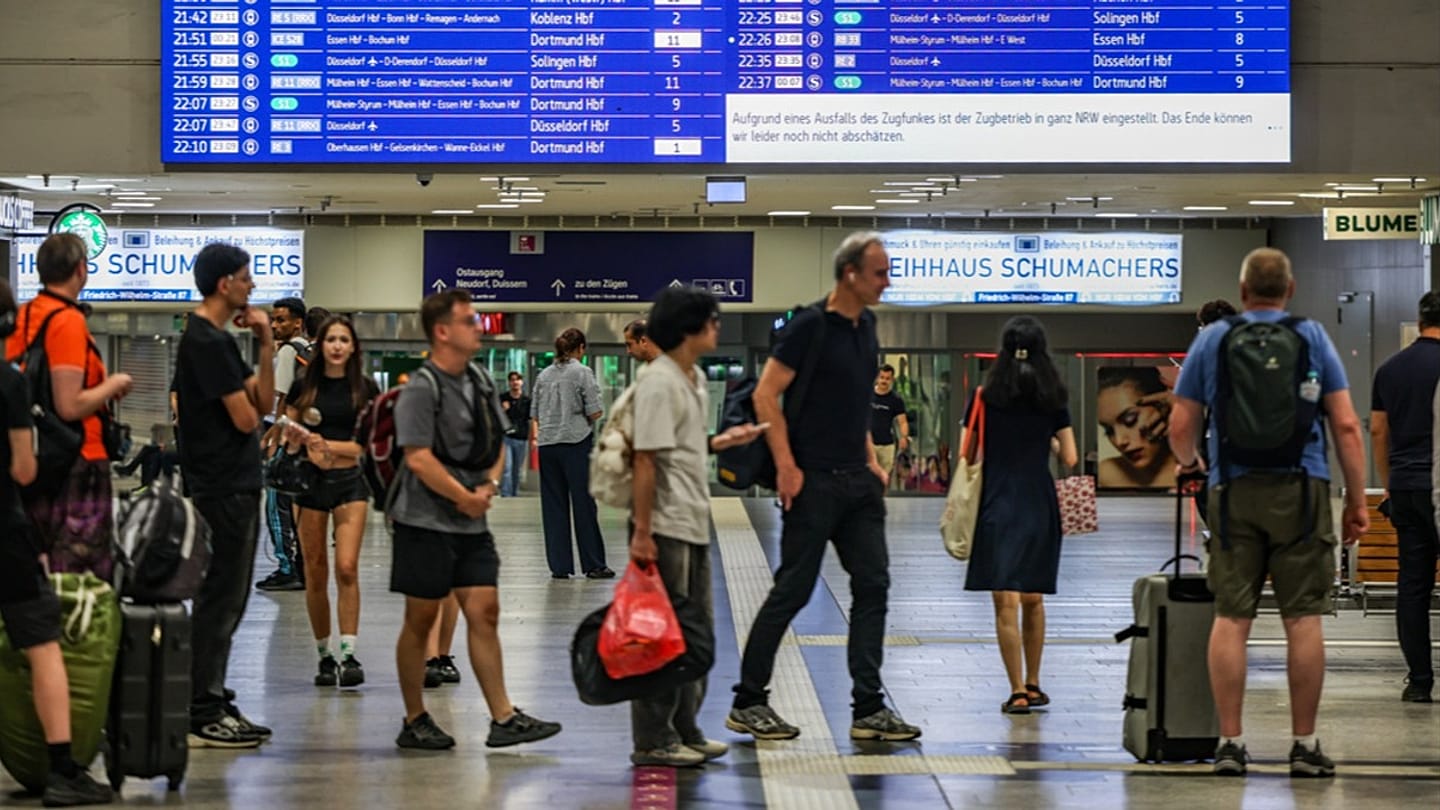
Germany's rail network came to a complete standstill on [date] after a technical malfunction in Deutsche Bahn's communications system froze all operations across the country for nearly three hours. The disruption, which began in the morning, left passengers stranded at stations from Berlin Hauptbahnhof to München Hauptbahnhof, as trains were unable to move or communicate with control centers.
Deutsche Bahn confirmed that the issue stemmed from a failure in its digital communications infrastructure, which is critical for coordinating train movements, signaling, and safety protocols. The company stated that services were resuming “step by step” after engineers managed to restore the system, but warned of residual delays and cancellations throughout the day.
Widespread Impact on Travelers
The outage affected all long-distance, regional, and S-Bahn services, making it one of the most extensive disruptions in recent years. Passengers at Frankfurt am Main, Hamburg, and Köln reported chaotic scenes as departure boards went blank and announcements were limited. Many travelers were forced to seek alternative transport, including buses and rental cars, while others waited for updates in crowded stations.
Deutsche Bahn apologized for the inconvenience and said it was investigating the root cause of the failure. The company emphasized that safety systems had functioned correctly, preventing any accidents during the blackout. However, the incident raises questions about the resilience of Germany's railway infrastructure, which has faced criticism for aging equipment and frequent delays.
This is not the first time Deutsche Bahn has grappled with technical issues. In recent years, the state-owned operator has invested billions in modernizing its network, but critics argue that progress has been slow. The outage also comes amid broader discussions about European rail connectivity and the need for standardized digital systems across borders.
For context, Germany's rail network is a backbone of European transport, linking major cities like Berlin, München, and Frankfurt with neighboring countries. Disruptions here can have ripple effects across the continent, affecting international services such as the ICE to Paris or the Nightjet to Vienna. The incident underscores the vulnerability of complex infrastructure to single points of failure, a concern shared by other European rail operators.
As Deutsche Bahn works to restore normal operations, travelers are advised to check real-time updates and consider flexible travel plans. The company has offered ticket refunds and free rebooking for affected journeys. Meanwhile, industry experts are calling for a thorough review of backup systems to prevent similar outages in the future.
This event also highlights the broader challenges facing European transport networks, from aging infrastructure to cybersecurity threats. While Germany's rail system remains one of the most advanced in Europe, this breakdown serves as a reminder that even the best-engineered systems can falter. For now, passengers are left hoping for a swift return to reliability.