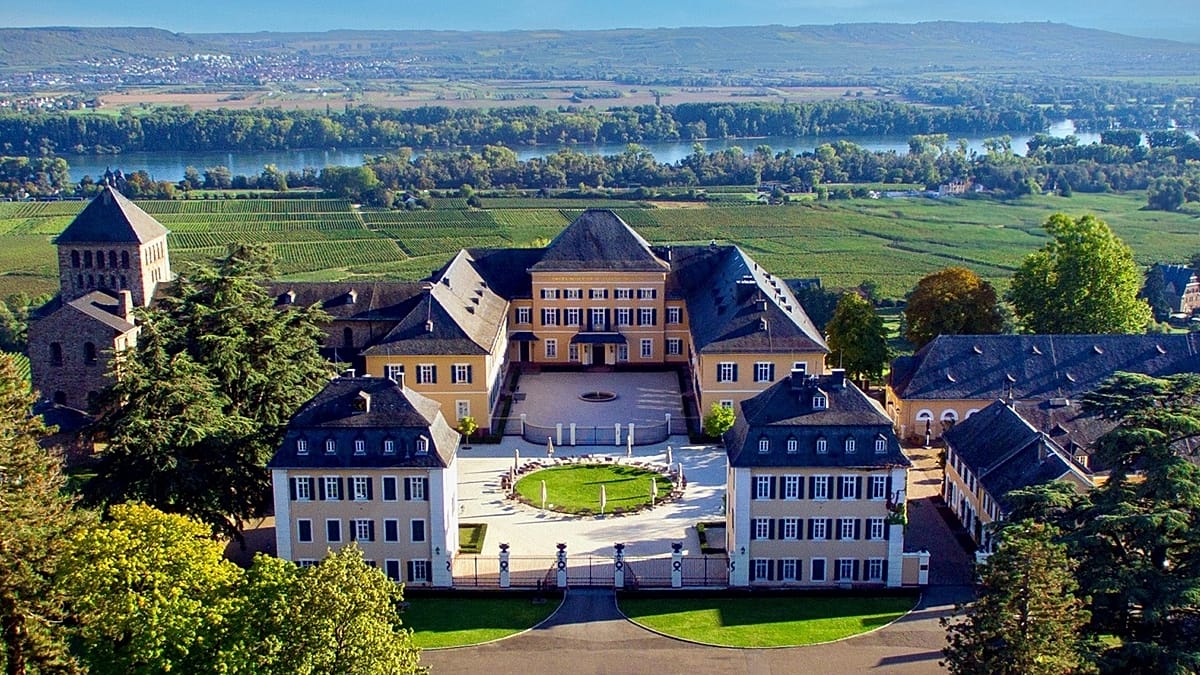
The World's 50 Best Vineyards 2026 ranking has been announced, and for the first time, a German estate takes the crown. Schloss Johannisberg, nestled in the Rheingau region of the state of Hesse, impressed the academy with its blend of historic charm and modern hospitality.
The estate, which traces its winemaking roots back over 1,200 years, offers visitors a journey through its palace grounds, terraced vineyards, and historic cellars, including the Bibliotheca Subterranea. Rikki Tidball, managing director of awards and rankings for The 50 Best Vineyards, said: "Schloss Johannisberg is a truly deserving No.1 winner, combining more than 1,200 years of winemaking heritage with exceptional hospitality, a strong sense of place and an immersive visitor experience that brings the story of riesling to life."
Europe's strong showing
Europe dominated the top ten, with half of the entries coming from the continent. Spain's Bodegas Ysios in the Rioja region took second place, praised for its striking architecture and panoramic vineyard views. Three French vineyards also made the top ten: Maison Ruinart in Champagne (fourth), and Château Smith Haut Lafitte (eighth) and Château d'Yquem (ninth), both from Bordeaux.
The ranking is decided by an academy of more than 700 experts, including sommeliers, wine journalists, and grape enthusiasts. Voters are split into 20 regions, with each asked to nominate seven vineyard experiences based on hospitality, atmosphere, activities, and wine offering. This year, vineyards from 31 regions across 15 countries made the list.
Five vineyards debuted in the top 50, including Champagne Philipponnat in France, which landed at 47th place. The inaugural One to Watch Award went to Aya Estate in Bulgaria's Struma Valley, an emerging vineyard recognised for making a significant impact in the industry and likely to break into the top 50 in the future.
Germany's success in the wine world comes amid broader economic and policy debates in the country, from its digitalisation push to criticism of its startup bureaucracy. But the Rheingau's victory offers a reminder of the country's strengths in traditional industries.
The full top ten list is as follows:
- Schloss Johannisberg, Rheingau, Germany
- Bodegas Ysios, Rioja, Spain
- Montes, Colchagua Valley, Chile
- Maison Ruinart, Champagne, France
- Creation, Walker Bay, South Africa
- Clos Apalta, Colchagua Valley, Chile
- Klein Constantia, Western Cape, South Africa
- Château Smith Haut Lafitte, Bordeaux, France
- Château d'Yquem, Bordeaux, France
While the list celebrates global wine tourism, it also highlights the enduring appeal of European vineyards. For travellers planning a wine-focused trip, the Rheingau's win is a strong argument to explore Germany's wine routes, which are increasingly competing with more established destinations like Bordeaux or Tuscany.
As the wine world looks ahead, the 2026 ranking underscores a broader trend: Europe remains the heart of wine tourism, but emerging regions in Bulgaria and beyond are starting to make their mark.