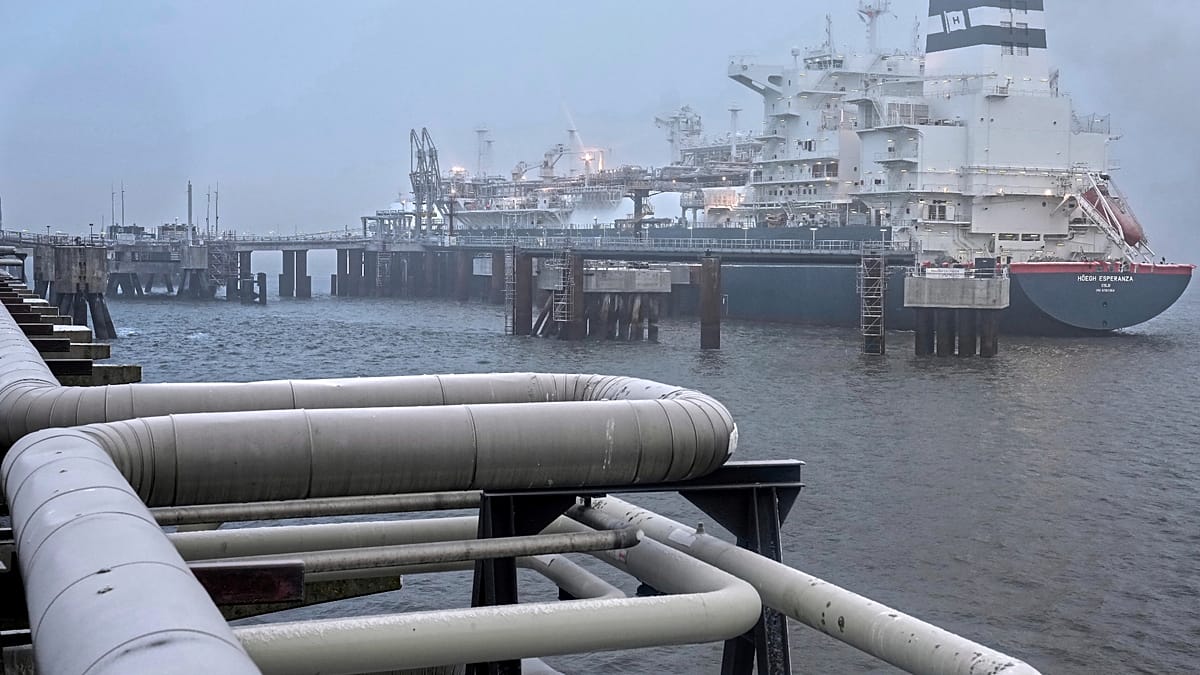
Germany is deepening its energy partnership with Canada as Europe’s largest economy seeks to secure alternative gas supplies amid the ongoing war in Ukraine and escalating conflict in the Middle East. On Wednesday, Berlin’s state-owned energy company SEFE — Securing Energy for Europe — will sign an agreement to import up to 1 million metric tonnes of liquefied natural gas (LNG) annually from the proposed Ksi Lisims export facility on the coast of British Columbia, according to sources familiar with the matter.
The planned exports represent roughly one-eighth of Germany’s total LNG imports last year, which stood at 106 terawatt hours, according to the Bundesnetzagentur, the federal energy regulator. The deal is a strategic move to replace Russian pipeline gas, which Berlin relied on heavily before the war in Ukraine. After European countries backed Kyiv, Moscow sharply reduced supplies, triggering an energy crisis that fuelled inflation and forced some factories to scale back or shut down.
Energy Security in a Time of Multiple Crises
Germany’s energy strategy has been under strain since Russia’s invasion of Ukraine. The nationalisation of SEFE — formerly the German subsidiary of Gazprom — in 2022 was a clear signal of Berlin’s determination to break free from Russian energy dependence. Now, with the war in Iran adding further instability to global energy markets, concerns are mounting that Europe’s largest economy could face renewed shocks. In April, the German government halved its 2026 growth forecast to 0.5% of GDP, citing the impact of energy disruptions linked to the conflict in Iran.
“This agreement is a critical step toward diversifying our energy sources and ensuring stable supplies for German industry and households,” a senior German official said on condition of anonymity. The deal also comes as the Strait of Hormuz remains a flashpoint, with advisers warning that instability there poses a direct threat to European energy security.
Canada Looks Beyond the US Market
For Canada, the agreement marks a significant push to reduce its overwhelming reliance on the United States as an export destination. Prime Minister Mark Carney has set a target of doubling non-US trade within a decade. Currently, almost all of Canada’s oil and gas exports go south of the border. British Columbia Premier David Eby said on Tuesday that securing long-term offtake agreements like this one is essential before the consortium behind the CA$10 billion (€6.6 billion) Ksi Lisims project can take a final investment decision.
“This deal demonstrates that Canadian LNG can compete globally and help our allies meet their energy needs,” Eby said. The terminal, located on Pearse Island near the border with Alaska, has already secured the necessary permits, but construction cannot begin until the consortium gives the green light.
The agreement also reflects a broader European push to diversify energy sources. While Germany has invested heavily in renewable energy, LNG remains a crucial bridge fuel during the transition. The deal with Canada is part of a wider strategy that includes imports from the United States, Qatar, and other producers.
Economic and Geopolitical Implications
The German economy is showing signs of strain. Latest indicators suggest that both manufacturing and services remained under pressure in May, pointing to continued contraction in the private sector. However, the ifo Business Climate Index unexpectedly rose during the same month, offering a glimmer of hope. The energy deal could provide a boost to investor confidence by signalling that Berlin is taking concrete steps to secure affordable energy.
Yet challenges remain. The Ksi Lisims project is still in the planning phase, and a final investment decision has not been made. Environmental groups have raised concerns about the impact of LNG exports on Canada’s climate goals, while some German politicians question the long-term viability of fossil fuel investments. Nevertheless, for now, the agreement represents a tangible step toward energy independence for Germany and a new trade corridor for Canada.
As Europe navigates a volatile energy landscape, partnerships like this one are likely to become more common. The deal also underscores the importance of grid upgrades and regulatory reforms that Brussels is pushing to accelerate the energy transition. For Germany, the road to energy security is long, but each new agreement brings it a step closer.