Speaking at the GLOBSEC security conference in Prague, Dr Anwar Gargash, diplomatic adviser to the UAE president, delivered a stark warning to European leaders: the escalating instability in the Strait of Hormuz is not a far-off regional conflict but a direct threat to Europe's energy security and trade routes.
“We did not arrive at where we are in 2026,” Gargash said, tracing the roots of the current crisis to long-standing discontent in both the international system and the Middle East. He stressed that Gulf states had worked hard to avoid conflict, but the war with Iran had created “subsets of crisis” that now endanger global commerce.
Europe’s Stake in the Strait
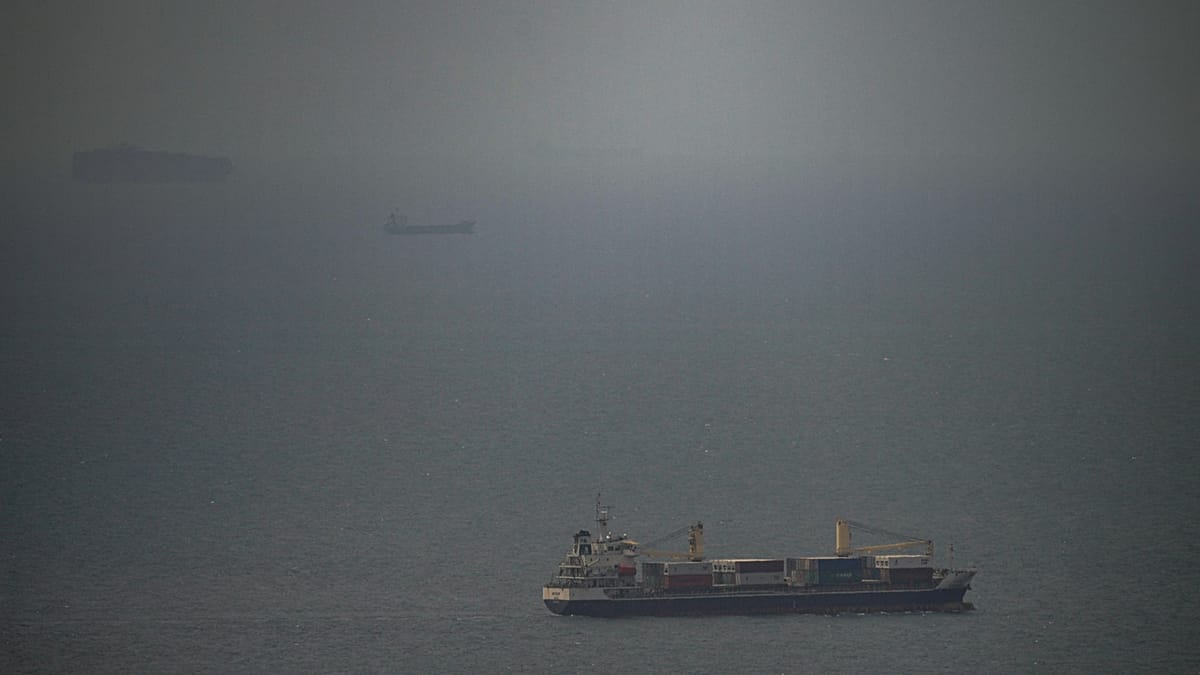
Gargash emphasised that the Strait of Hormuz, through which a significant portion of the world’s energy supplies transit daily, has become a central theatre of the broader conflict. “Today, any change in the status of Hormuz will have serious implications on all of Europe,” he warned. He urged European capitals to see the issue “not only as a distant problem, but a problem very much connected with their energy, with their trade.”
The warning comes as European governments grapple with renewed concerns over energy resilience and supply chains. The EU has already slashed its 2026 growth forecast partly due to the crisis, which has driven inflation and disrupted maritime routes.
Gargash described Iran as “a much-weakened state today” but cautioned that the war had produced wider instability, including attacks on Gulf infrastructure and pressure on shipping lanes. He revealed that the UAE had faced its “worst-case scenario” during the conflict: “The total number is around 3,300 missiles and drones that targeted the UAE in 40 days and plus.” When asked how many penetrated the country’s air defences, he replied, “Very little, I think about 4% or something like that.”
While the UAE is not seeking direct European military intervention, Gargash called for greater engagement in safeguarding navigation routes. “I don't think we are asking the Europeans to get involved in an active conflict,” he said. “But I think we are asking the Europeans also to look at their national interest in terms of the free navigation in the strait.” He specifically praised France and Greece for their support during Iranian attacks on Gulf states.
The crisis has also taken on a legal dimension. Iran has imposed transit fees on vessels passing through the strait, a move that has escalated tensions with Gulf states and Europe alike. Meanwhile, Tehran has published a new map claiming waters belonging to the UAE and Oman, prompting protests from Gulf capitals.
Despite the regional turmoil, Gargash argued that the UAE’s economic and social foundations remain resilient. “The fundamentals of the UAE are strong,” he said. “Our societies are quite attractive societies. This is also a country of opportunities in many ways.” He also stressed that diplomacy with Tehran remains essential, even amid the current tensions.
For European policymakers, the message is clear: the Strait of Hormuz is not a distant problem but a pressing concern that affects energy prices, trade flows, and overall economic stability across the continent. As Gargash put it, the crisis is “very much connected with their energy, with their trade.”