Germany and Poland are expected to sign a new defence agreement on Wednesday, marking a significant step in bilateral military cooperation against the backdrop of heightened tensions with Russia and growing uncertainty over the United States' military commitment to Europe. The pact, which focuses on practical aspects of joint defence, underscores a pragmatic evolution in relations between the two neighbours.
Relations have become more functional since Russia launched its full-scale war on Ukraine in February 2022 and Poland’s liberal government took office in 2023. With the US considering a partial drawdown of its forces in Europe, Warsaw is pushing for major European allies to assume a greater role in securing the continent’s eastern flank.
Germany’s Military Revival and Poland’s Strategic Role
German Chancellor Friedrich Merz is seeking partners to revitalise the Bundeswehr after years of underinvestment, aiming to build the strongest conventional army on NATO’s European side. This effort positions Germany as a central pillar of European defence in the coming years. Poland, meanwhile, has emerged as a compelling partner due to its role as a logistics hub for Ukraine, its growing economy, and heavy defence spending.
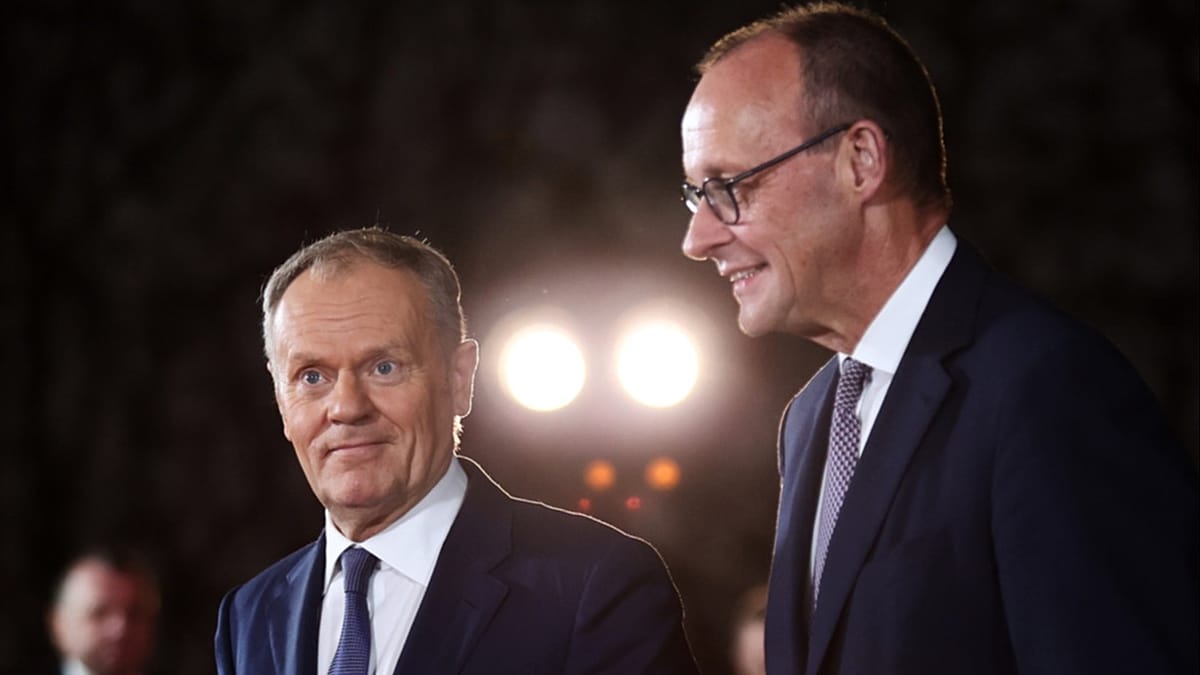
“We Germans need a strong Poland as an equal partner,” Merz said in Berlin after meeting Polish Prime Minister Donald Tusk in December. “This is in our fundamental interest.”
The agreement will include plans for protecting the Baltic Sea region, as well as cooperation on military mobility, infrastructure, cybersecurity, and new technologies. Both countries are bound by NATO’s defence plans, which assign Germany a key role in defending the Baltic states alongside Poland and other central and eastern European nations.
“Germany is largely responsible for the defence of the Baltic states and without cooperation with Poland, that will not happen,” said Justyna Gotkowska, deputy director of the Warsaw-based think tank Center for Eastern Studies. The Baltic countries are widely seen as the most likely target for Russia if it were to attack NATO territory beyond Ukraine.
Practical Cooperation Without Political Guarantees
Unlike bilateral treaties Germany and Poland have each signed with France and the United Kingdom in recent years, this agreement is inter-ministerial. It focuses on operational details and does not include mutual political defence declarations. Polish Foreign Minister Radosław Sikorski explained to Polish media that President Karol Nawrocki, backed by the national-conservative Law and Justice party, would never approve such a treaty. “Hell would break loose here,” Sikorski said, if a German-Polish treaty were signed.
Despite Poland’s rising importance in Europe’s security architecture, Germany has often made major decisions on Ukraine or Iran together with France and the UK, leaving Warsaw out. On June 7, the three Western European countries hosted Ukrainian President Volodymyr Zelenskyy in London to discuss potential roles in future peace negotiations with Russia. Tusk later said at a press conference in Warsaw that he had complained to Merz about Poland’s exclusion from such discussions.
The new defence pact reaffirms mutual security obligations under NATO and EU treaties, but its practical focus reflects the political constraints in Warsaw. As Europe grapples with an evolving security landscape, the agreement signals a step toward more integrated continental defence, even as historical sensitivities linger.