For decades, Marbella has drawn travellers to the Costa del Sol with its beaches, climate, and hotels. But over the past fifteen years, a new magnet has emerged: music. Yet Starlite Occident Marbella is not merely a concert series. It has become a complete sensory journey that begins before the first note and stretches into the early hours.
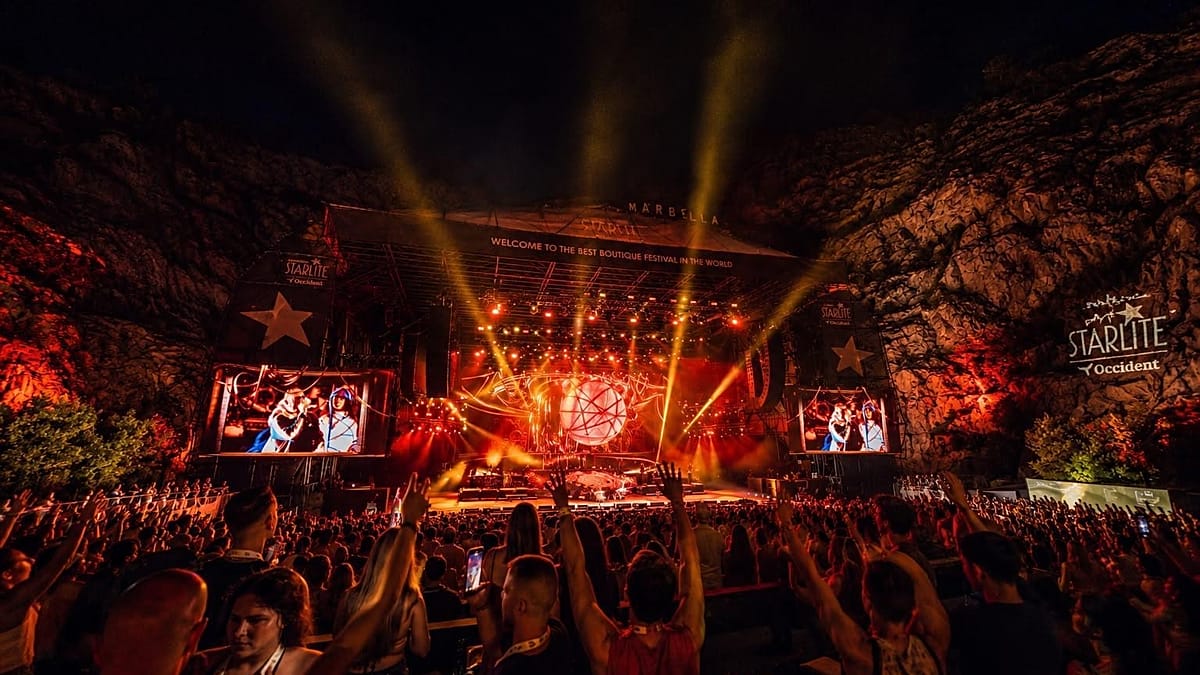
Held each summer in the Cantera de Nagüeles, a natural amphitheatre carved into the rock minutes from Marbella's centre, Starlite has carved out a unique niche in Europe's crowded festival landscape. Unlike the sprawling multi-stage events that pack dozens of acts into a single weekend, Starlite dedicates each night to one headliner. The season runs for nearly three months, allowing visitors to plan their holidays around a specific artist.
“We are much more than a festival,” says Sandra García-Sanjuán, founder and CEO. “Music is the common thread, but the experience begins long before the concert.” That philosophy is reflected in the venue's daily rhythm. Gates open around 8 p.m., and guests can dine in one of five restaurants, explore food stalls, or soak in the open-air atmosphere against the quarry's dramatic rock walls. After the concert, the space transforms into a nightclub with DJ sets until dawn.
“Our visitors spend an average of between four and a half and five hours inside the venue,” García-Sanjuán explains. “They come to have dinner, to enjoy themselves with friends, to experience the concert and then to carry on the night. That is all part of the Starlite experience.”
Closeness as the new luxury
With a capacity of just 3,500, Starlite deliberately rejects the mega-festival arms race. “We do not want to compete to be the biggest. We want to offer closeness,” says García-Sanjuán. Every attendee has a seat, can dance or step out without losing their place, and enjoys a level of proximity to international stars that is rare at stadium shows.
This human connection is central to García-Sanjuán's vision for the future of tourism. “We live surrounded by screens and artificial intelligence. It will be increasingly important to share real experiences, to look the artist in the eye, to feel the energy and to live something that no technology can replace,” she says.
The economic ripple effect is substantial. A PwC study estimates that each edition generates around €315 million for the Costa del Sol. Over the three-month season, visitors from 93 countries fill hotels, restaurants, golf courses, and shops, often extending their stays to catch multiple concerts.
“When a destination sells only sun and beach, visitors always think they can come back another summer,” García-Sanjuán notes. “But when it also offers the chance to see an international artist in a unique setting, the trip takes on the feel of something unrepeatable.”
Starlite works closely with hotels and tour operators to offer packages that combine holidays with concerts, a model that has become a benchmark for experiential tourism in Spain. The concept has already expanded to Madrid as a winter edition, and international interest is growing—Saudi Arabia, Mexico, and other Latin American markets have expressed interest.
Yet expansion will be selective. “We do not want to be everywhere. Disney is not everywhere either,” says García-Sanjuán. “We are the closest thing to Disney, but with music.” The comparison is deliberate: just as families travel to Disney for an immersive world, Starlite aims to be a destination in its own right, regardless of the night's lineup.
Starlite's rise reflects a broader shift in European travel toward emotion-driven experiences. As travellers increasingly plan trips around concerts, festivals, or sporting events, destinations like Marbella are repositioning themselves. The trend is visible across the continent, from Czechia, Iceland, and Spain leading 2026's trending destinations to the rise of short breaks among Greek travellers. Even as wildfire smoke poses hidden health risks across Europe, the pull of live experiences remains strong.
Starlite's success is not just about music; it is about crafting a complete, memorable escape. In an era of digital saturation, that tangible, face-to-face magic is becoming the ultimate luxury.