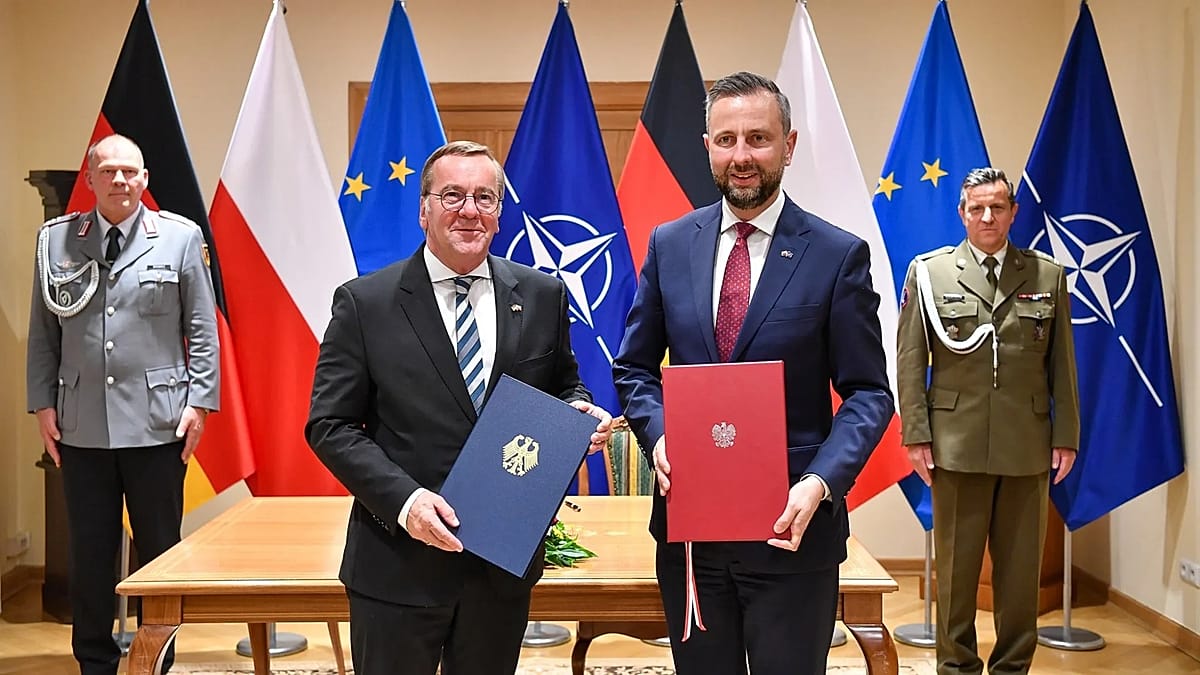
Germany and Poland signed a new defence agreement on Wednesday, setting aside a complicated shared history to reinforce European military cooperation as tensions with Russia persist and uncertainty over US engagement in Europe mounts.
Relations between the two neighbours have become increasingly pragmatic since Russia's full-scale invasion of Ukraine in 2022 and the election of a liberal government in Poland in 2023. Polish Defence Minister Władysław Kosiniak-Kamysz acknowledged the past but stressed future priorities: "We are not forgetting the past. But the politics of the future, development and security are our obligation."
A Shifting Balance of Power
With the United States weighing a partial drawdown of its military footprint in Europe, Poland is pressing for major European allies to assume a larger role in defending the continent's eastern flank. Germany, meanwhile, is seeking partners as it works to revitalise its armed forces after years of underinvestment, aiming to build the strongest conventional army on NATO's European side.
Poland's importance as a logistics hub for Ukraine, combined with its growing economy and heavy defence spending, has made it an increasingly attractive partner for Berlin and other core European capitals. Poland leads NATO in defence spending as European divide widens, a trend that underscores its rising military clout.
"Poland started building a strong army much earlier than other countries in Western Europe," said Cezary Tomczyk, Poland's deputy defence minister. "So we are ahead when it comes to capabilities." He added: "We definitely don't accept that any agreements about this part of Europe are made without Poland."
German Chancellor Friedrich Merz acknowledged the shift during a meeting with Polish Prime Minister Donald Tusk in Berlin last December. "We Germans need a strong Poland as an equal partner," Merz said. "This is in our fundamental interest."
Defence Cooperation and the Baltic Region
The new agreement covers plans for protecting the Baltic Sea region, military mobility, infrastructure, cyber defence, and new technologies. Both countries are bound by NATO's defence plans, which assign Germany a central role in securing the Baltic states alongside Poland and other central and eastern European nations.
"Germany is largely responsible for the defence of the Baltic states and without cooperation with Poland, that will not happen," said Justyna Gotkowska, deputy director of the Warsaw-based Centre for Eastern Studies. The Baltic countries are widely seen as the most likely target for any Russian aggression against NATO territory.
Tomczyk confirmed that German soldiers would help develop Poland's Eastern Shield, a system of enhanced fortifications built since 2024 along the borders with Belarus and Russia. This cooperation reflects a broader trend: Germany's long-range strike gap highlights the need for joint capabilities.
Poland's Role Still Limited in Core European Decisions
Despite its growing importance, Poland has not yet been included in the inner circle of European powers making key decisions on Ukraine or Iran. On 7 June, leaders of Germany, France, and the United Kingdom hosted Ukrainian President Volodymyr Zelenskyy in London to discuss potential peace negotiations with Russia, leaving Warsaw out.
Tusk told reporters after the London meeting that he had informed Merz Poland should be part of any future discussions about Ukraine and the region. "Any arrangements made without our participation will not be respected or binding for us," Tusk said.
Rolf Nikel, a former German ambassador to Poland and vice president of the German Council on Foreign Relations, noted that Poland's role and significance within Europe and NATO have grown. "So Poland must be taken more seriously today and, above all, must be respected more than we have seen in the past," Nikel said.
Gotkowska observed that Germany's economy has stagnated while Poland's economy and military strength have risen. "The balance of power has changed in Europe in recent years," she said. The defence pact is a tangible sign that Berlin is adjusting to this new reality, even as the continent's internal power dynamics remain in flux.