Since Russia's full-scale invasion of Ukraine in February 2022, Kyiv's pleas for air defense systems have been a constant refrain. Among Western allies, Germany has emerged as a key supplier, providing three Patriot systems from Bundeswehr stocks and pledging two more, alongside a dozen IRIS-T systems manufactured by Diehl Defence. Yet as global demand for Patriot interceptors surges—driven by conflicts in Ukraine and the Middle East—questions are mounting about Europe's ability to fill the gap.
IRIS-T: A Flexible Complement, Not a Replacement
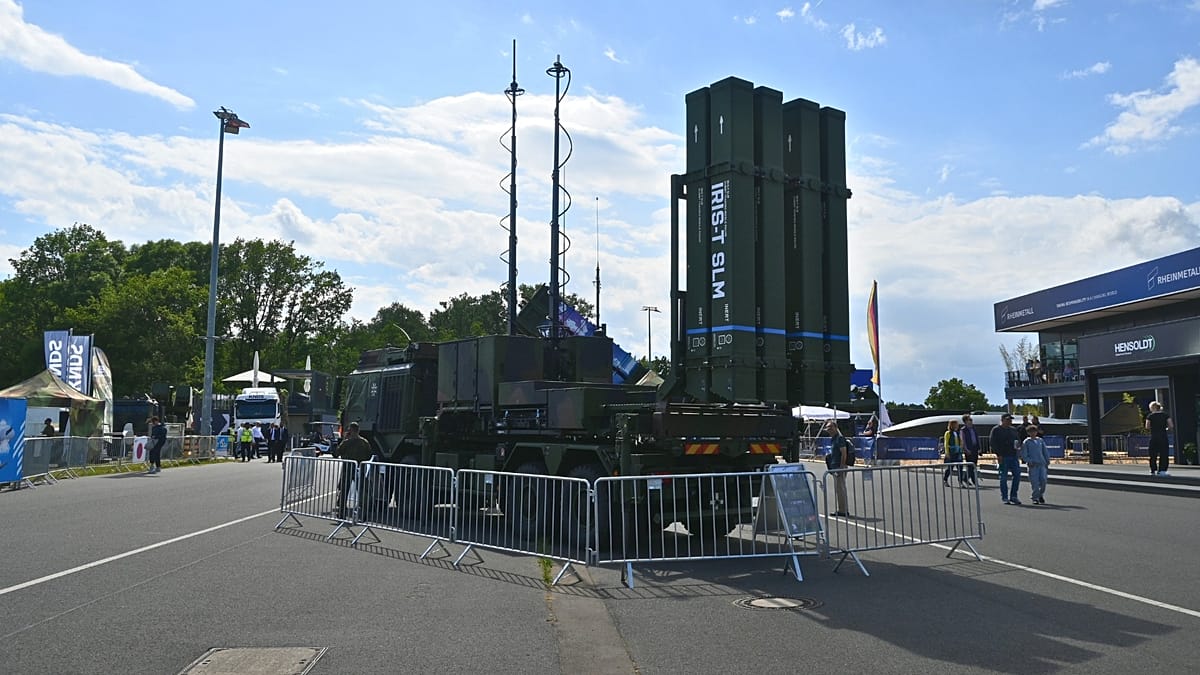
At this year's International Aerospace Exhibition (ILA) in Berlin, Staff Sergeant Thomas, a Bundeswehr maintenance specialist, demonstrated the IRIS-T SLM system. Unlike the Patriot, which orients its radar and launchers toward a predicted threat sector, the IRIS-T SLM features a rotating 360-degree radar and vertically mounted launch canisters. "We can provide air defence coverage in every direction," Thomas explained. "It doesn't matter whether a target approaches from the front, the rear, the left or the right."
A complete IRIS-T SLM battery comprises a radar unit, a command-and-control centre, and three launchers. Thomas noted that operation is relatively straightforward: "In practice, there are only a few buttons to press and a handful of prompts to confirm. The system guides you through the set-up process."
However, Thomas cautioned against viewing the IRIS-T as a direct substitute for the Patriot. "It's not better – it serves a different purpose," he said. The Patriot's key advantages are its longer range—depending on the interceptor, it can engage targets far beyond the IRIS-T SLM's 40-kilometre reach—and its ability to intercept ballistic missiles using PAC-3 and PAC-3 MSE interceptors. "Because Patriots can engage targets at much greater distances, there is also a lower risk of debris falling into populated areas," Thomas added.
Global shortages of Patriot PAC-3 interceptors, reported by the Financial Times and The Guardian, have forced allies to ration supplies. Lockheed Martin, the manufacturer, is struggling to meet delivery timelines, and both the Pentagon and White House have pressed for increased production. In this context, Germany's IRIS-T offers a stopgap for medium-range threats, but it cannot fill the Patriot's role in defending against ballistic missiles or covering large urban areas.
Germany's Long-Range Strike Void
Beyond air defense, Germany faces a more fundamental gap: the absence of deep-strike capabilities—precision weapons capable of hitting targets hundreds or even thousands of kilometres behind enemy lines. This shortfall has become a strategic concern as NATO confronts Russia's revanchism.
To address this, former Chancellor Olaf Scholz and then US President Joe Biden agreed in 2023 to deploy Tomahawk cruise missiles to Germany from 2026. But recent reports suggest the deployment may be shelved. Politico, citing European and US officials, reported that members of the Trump administration feared Russia would view the move as escalatory. For Berlin, the cancellation would remove a key element of its planned deterrence enhancement.
Against this backdrop, Diehl Defence has announced an expansion of its cooperation with Ukrainian manufacturers, including the production of Flamingo long-range drones. These loitering munitions, already used by Kyiv, could offer a bridge for Germany's own deep-strike needs. Yet without a domestic long-range missile program or a reliable US commitment, the Bundeswehr remains reliant on allies for strategic reach.
The broader European context is worrying. The US pullback of long-range strike assets from NATO has deepened the rift between Washington and European capitals. Meanwhile, Ukraine's push to license Patriot production could reshape the continent's defense industrial base, but it will take years to materialize.
For now, Germany's air defense relies on a patchwork of systems: Patriots for high-altitude and ballistic threats, IRIS-T for medium-range coverage, and short-range systems like the Ozelot. The long-range strike gap, however, remains a glaring vulnerability—one that Berlin must address if it is to credibly deter future aggression.