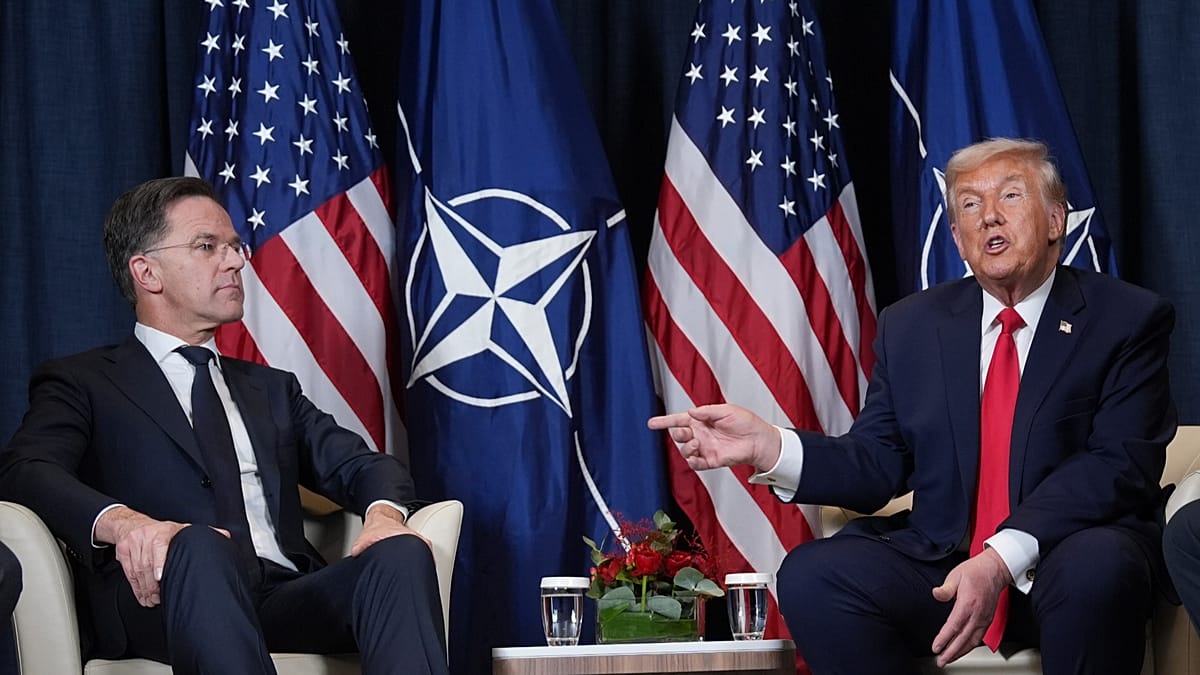
The United States is scaling back its military commitments to NATO by withdrawing deep strike capabilities previously available to European allies, according to sources familiar with the plans. The decision, which affects bombers, naval assets, and support aircraft, marks a significant shift in Washington’s posture toward the continent and comes at a moment of heightened transatlantic friction.
Under the changes, the Pentagon will no longer make available to NATO its long-range bombers, including the B-2 Spirit and B-52 Stratofortress, as well as naval strike platforms such as missile-launching submarines and aircraft carriers. These assets will be redirected to other theatres, notably the Indo-Pacific, as part of a broader strategic pivot.
The adjustments are being implemented through NATO’s Force Model system, which allows allies to identify troops and capabilities for joint operations based on deterrence needs. The US European Command confirmed the move in a statement last week, saying it would “right size” its contributions to the model. The New York Times reported that the US also plans to reduce the number of F-16 and F-15E fighter jets available to NATO from roughly 150 to 100, cut maritime reconnaissance aircraft from 26 to 15, and withdraw all eight aerial refuelling tanker jets previously stationed in Europe.
‘Paper tiger’ warning
NATO Secretary General Mark Rutte has publicly downplayed the implications, arguing that European allies have increased their own defence spending and can fill the gap. “We know that adjustments will take place, the US has to pivot toward, for example, Asia,” Rutte told journalists last month. However, the timing of the announcement has fuelled concerns about the health of the alliance.
President Donald Trump has repeatedly expressed anger at European nations, including Spain, Italy, and France, for refusing to allow US aircraft headed for Iran to use their airspace or bases. In a social media post in March, Trump wrote: “The solution would be to open the Strait of Hormuz,” adding that allies “don’t want to help” and warning that “Without the U.S.A., NATO IS A PAPER TIGER!” He concluded: “COWARDS. We will REMEMBER!”
The withdrawal of deep strike capabilities is the latest in a series of US moves that have unsettled European capitals. Earlier this year, the UK Defence Secretary resigned over disagreements with Prime Minister Keir Starmer’s military spending plans, highlighting the domestic pressures European governments face as they try to bolster their own defences.
European defence officials have been planning for a reduced US footprint for months, but the scale of the cuts has surprised many. The EU’s defence chief recently estimated that replacing US military assets would cost Europeans €500 billion, a figure that underscores the financial challenge ahead. Meanwhile, Bulgaria has halted direct military aid to Ukraine, calling for a diplomatic solution, a sign that unity among European states on security matters is fraying.
The US decision also complicates NATO’s posture in the Black Sea region and the Balkans, where Russia’s war in Ukraine continues to demand attention. Poland and Ukraine are locked in a deepening rift over the naming of a military unit after a controversial nationalist organisation, further straining the alliance’s eastern flank.
For now, NATO officials insist that the alliance remains robust. But the removal of long-range strike assets, combined with Trump’s public attacks, raises questions about the reliability of the US security guarantee. European leaders are now grappling with the prospect of a future in which they must shoulder far more of the continent’s defence burden—whether they are ready or not.