Bulgaria's Prime Minister Rumen Radev confirmed on Wednesday that his government will cease supplying weapons from national army stocks to Ukraine, marking a significant shift in Sofia's posture toward the conflict. Speaking before a cabinet meeting, Radev argued that Bulgaria had already contributed enough and that the war was exacting a heavy socio-economic toll on the country.
"We have already given enough, while our country continues to suffer socio-economic damage from this bloody war," Radev told reporters. He stressed the need for a comprehensive and realistic approach, calling for "the pursuit of a diplomatic solution" to end the hostilities.
Radev, who took office in May after his party secured a parliamentary majority, is widely perceived as having a Russia-friendly stance and has previously advocated for dialogue with Moscow. His comments align with those of Defence Minister Dimitar Stoyanov, who stated on Tuesday that the war had become a conflict of attrition with no military resolution in sight.
"What we are witnessing is a war of attrition, and no matter how much weaponry is amassed, its only result is the loss of human lives," Stoyanov said. He added that Ukraine needed more personnel, not additional arms, and that Bulgaria did not envisage further weapons deliveries to the Ukrainian army.
Continued Ammunition Supply and Domestic Debate
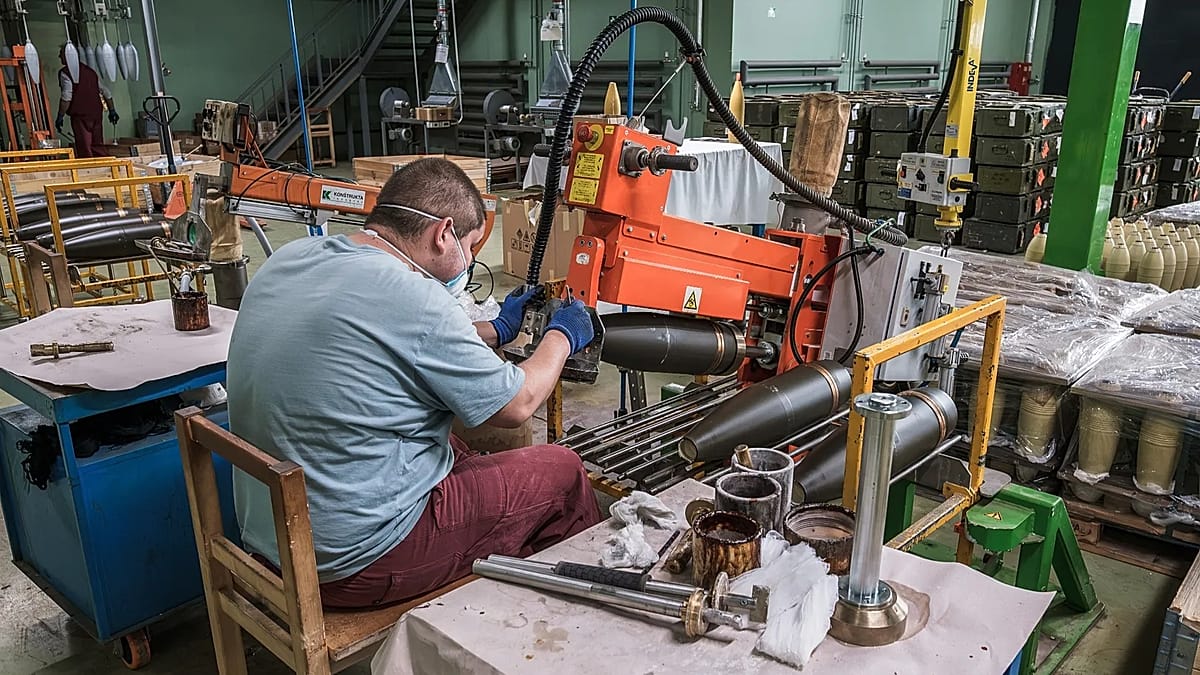
Despite the halt in direct military aid from army stocks, Bulgaria's defence industry will remain a key supplier of ammunition to Ukraine. This dual-track approach reflects the complex political landscape in Sofia, where successive governments have been reluctant to send weapons directly but have allowed commercial exports to proceed.
The shipments of Soviet-era weaponry from Bulgarian stocks, which included air-defence and surface-to-air missiles, were compensated through the EU's European Peace Facility. These deliveries played a crucial role in the early stages of the war, often routed through third countries to avoid domestic political controversy.
The centre-right GERB party, led by former Prime Minister Boyko Borissov, has criticised the decision to stop military aid, arguing that it erodes trust in Bulgaria as a reliable NATO and EU ally. The move also comes amid broader European debates over military support for Ukraine, as seen in the Poland-Ukraine rift over historical grievances and the UK, France, and Germany backing direct talks with Russia.
Stoyanov also announced plans to increase Bulgaria's defence spending to 5% of GDP by 2030, a significant rise that underscores the country's commitment to NATO obligations even as it scales back direct aid to Ukraine. He emphasised the importance of EU involvement in any future peace negotiations, though he acknowledged the bloc's role as a mediator would be complicated by its prior support for Kyiv.
"It would be difficult to assign this role to that of a mediator for the simple reason that the EU has also assisted Ukraine in its efforts in this war anyway," Stoyanov said.
The decision places Bulgaria among a small number of EU member states that have publicly scaled back military support for Ukraine, at a time when other nations are grappling with war fatigue and domestic political pressures. The broader European context includes ongoing debates over migration policy enforcement and food security, which continue to test the bloc's unity.
As the war enters its fourth year, Bulgaria's shift highlights the growing tension between allied solidarity and national interests, with Radev's government betting that diplomacy—not further arms deliveries—offers the best path forward.