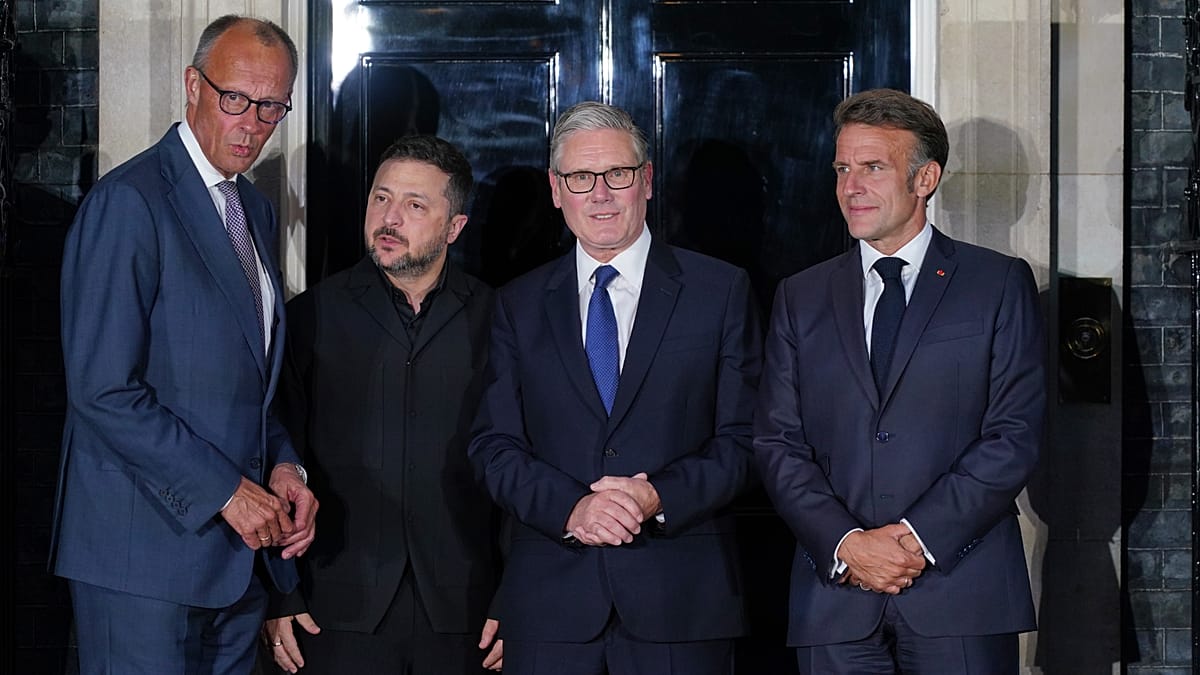
In a coordinated diplomatic push, the leaders of France, Germany, and the United Kingdom have thrown their weight behind Ukrainian President Volodymyr Zelenskyy's call for direct ceasefire negotiations with Russia. The endorsement came in a joint statement issued after defence talks held in London on Sunday, attended by British Prime Minister Keir Starmer, French President Emmanuel Macron, and German Chancellor Friedrich Merz.
The statement explicitly "supported the proposal for a direct dialogue between Ukraine and Russia, with active US and European participation, to bring about a ceasefire and support further negotiations." This marks a significant alignment among the so-called E3 group—the three largest European powers—on a path toward ending the conflict that has now entered its fifth year.
Negotiation Framework and Conditions
The leaders agreed that "the current line of contact should be the starting point for negotiations," a pragmatic acknowledgment of the territorial realities on the ground. They also reiterated a core principle: "international borders must not be changed by force." This formulation seeks to balance the need for a ceasefire with the long-standing Western position against recognizing Russia's annexations.
Zelenskyy had proposed a face-to-face meeting with Russian President Vladimir Putin in an open letter on Thursday. However, Putin dismissed the idea, stating he saw "no point" in meeting until a possible peace deal had been agreed. The Kremlin's stance underscores the deep mistrust between the two sides, even as European capitals push for dialogue.
The E3 leaders also condemned Russia's "large-scale missile and drone attacks—including the repeated use of the Oreshnik missiles—on Ukrainian cities with a tragic toll on civilians." These strikes have intensified in recent weeks, with Kharkiv's residential areas hit by drone barrages, further straining Ukraine's air defence capabilities.
Military Support and Security Guarantees
Beyond the diplomatic track, the leaders underlined the urgent need to scale up the production of interceptors and co-develop anti-ballistic missile and deep strike capabilities. This reflects Kyiv's persistent requests for more ammunition deliveries to counter daily Russian aerial assaults. The UK and France lead the "coalition of the willing" initiative, which aims to provide security guarantees for Ukraine as part of any peace process.
The joint statement also emphasized the importance of maintaining international pressure on Moscow. Russian Foreign Minister Sergey Lavrov has previously rejected talks, insisting that military action will decide the war's outcome. This hardline position makes the E3's call for direct dialogue all the more significant, as it seeks to create a diplomatic off-ramp despite Kremlin resistance.
The meeting in London comes amid broader European efforts to coordinate support for Ukraine. The E3's backing of direct talks with active US and European participation signals a desire to keep Washington engaged in the peace process, even as domestic political dynamics in the United States remain uncertain. For European capitals, the goal is to ensure that any negotiated settlement reflects both Ukrainian interests and the continent's security architecture.
As the war grinds on, the human cost continues to mount. Incursions into NATO airspace have also raised tensions, with Latvia recently intercepting a Russian drone over its eastern border. The E3's latest initiative represents a concerted attempt to break the diplomatic impasse, though success will depend on whether both Kyiv and Moscow are willing to engage seriously.



