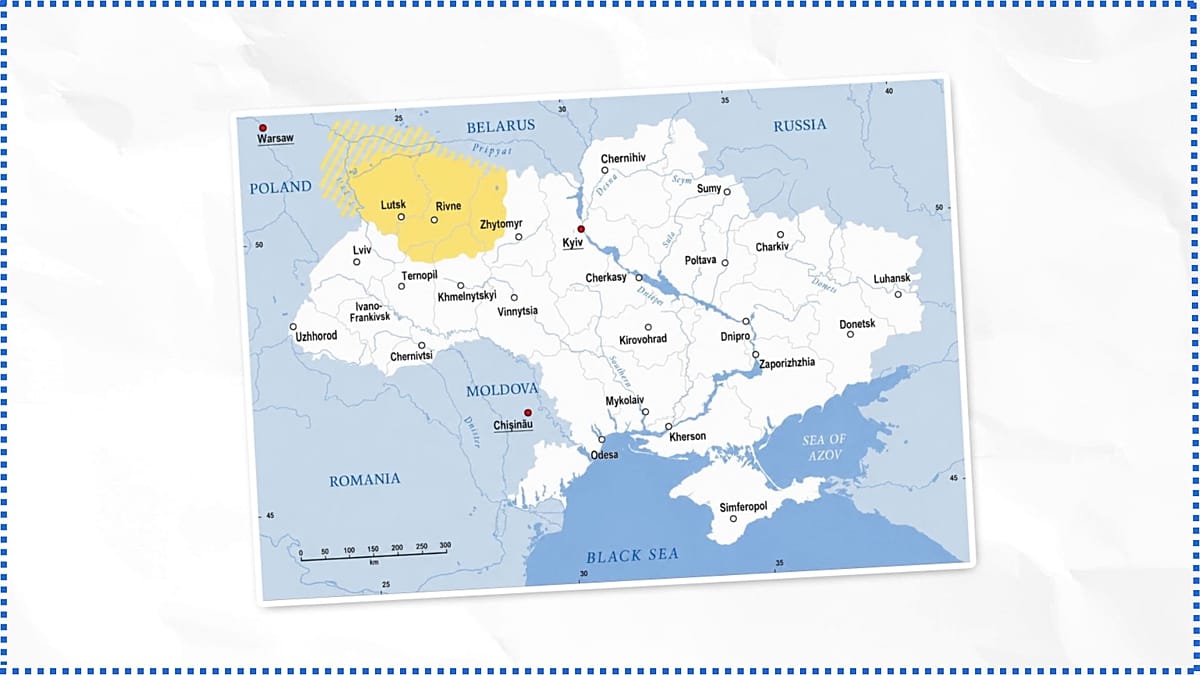
A seemingly symbolic military designation has ignited the most serious diplomatic crisis between Poland and Ukraine since the start of Russia's full-scale invasion. President Volodymyr Zelenskyy recently approved the naming of an elite special operations unit after the Ukrainian Insurgent Army (UPA), a force that fought for Ukrainian independence in the mid-20th century. For Warsaw, however, the UPA is synonymous with the mass murder of Polish civilians in Volhynia (Wołyń) during the Second World War.
Polish President Karol Nawrocki responded swiftly, announcing his intention to strip Zelenskyy of the Order of the White Eagle, Poland's highest state honour. The move underscores how deeply historical memory continues to shape bilateral relations, even as both countries face an existential security threat from Russia.
Two Nations, One Name, Two Histories
For Poland, the UPA is responsible for a campaign of ethnic cleansing that killed an estimated 100,000 Polish civilians in Volhynia between 1943 and 1944. The violence also targeted Jewish survivors who had escaped the Holocaust. Polish historians and officials describe these acts as genocidal, and the memory of the victims remains a non-negotiable element of national identity.
For Ukraine, the UPA is remembered as a heroic anti-Soviet resistance movement that fought for independence against both Nazi Germany and the Soviet Union. In the context of the current war against Russia, this legacy of defiance has become a powerful tool for public morale and resilience. Ukrainian officials have stressed that the decision to name the unit came as a grassroots request from front-line soldiers, with no anti-Polish intent.
Yet the timing could hardly be more sensitive. As Ukraine battles Russian forces in the east and south, it relies heavily on Polish political, military, and humanitarian support. Poland has been one of Kyiv's staunchest allies, hosting millions of refugees and serving as a key logistics hub for Western military aid. The current trust crisis threatens to unravel that partnership.
Strategic Stakes and EU Accession
The fallout has already reached Brussels. Some Polish politicians have suggested that Ukraine's EU accession process could be blocked over the dispute. Given that Poland is a major advocate for Ukrainian membership in the European Union, such a move would represent a dramatic reversal. The broader context includes ongoing debates about Ukraine's €90 billion EU loan and the conditions attached to it.
Polish Prime Minister Donald Tusk has urged both sides to prevent historical emotions from destroying their solidarity. In a carefully worded statement, Tusk warned that a prolonged conflict between Warsaw and Kyiv would ultimately serve only Moscow's strategic interests. His call for restraint reflects a recognition that the alliance is too valuable to sacrifice over a symbolic dispute—but also that Polish public opinion is deeply sensitive on this issue.
The crisis also highlights a broader challenge for European diplomacy: how to reconcile conflicting national narratives within the framework of shared security. The UPA will always remain a divisive symbol, but the security of both nations depends on managing that historical pain together. As Tusk implied, allowing the past to shatter the present alliance would be a gift to the Kremlin.
History offers some precedent. The journey of Polish-German reconciliation, which overcame centuries of conflict and the horrors of the Second World War, shows that even the deepest wounds can be healed through active cooperation. Whether Warsaw and Kyiv can follow that path remains an open question—and one with profound implications for the future of European security.



