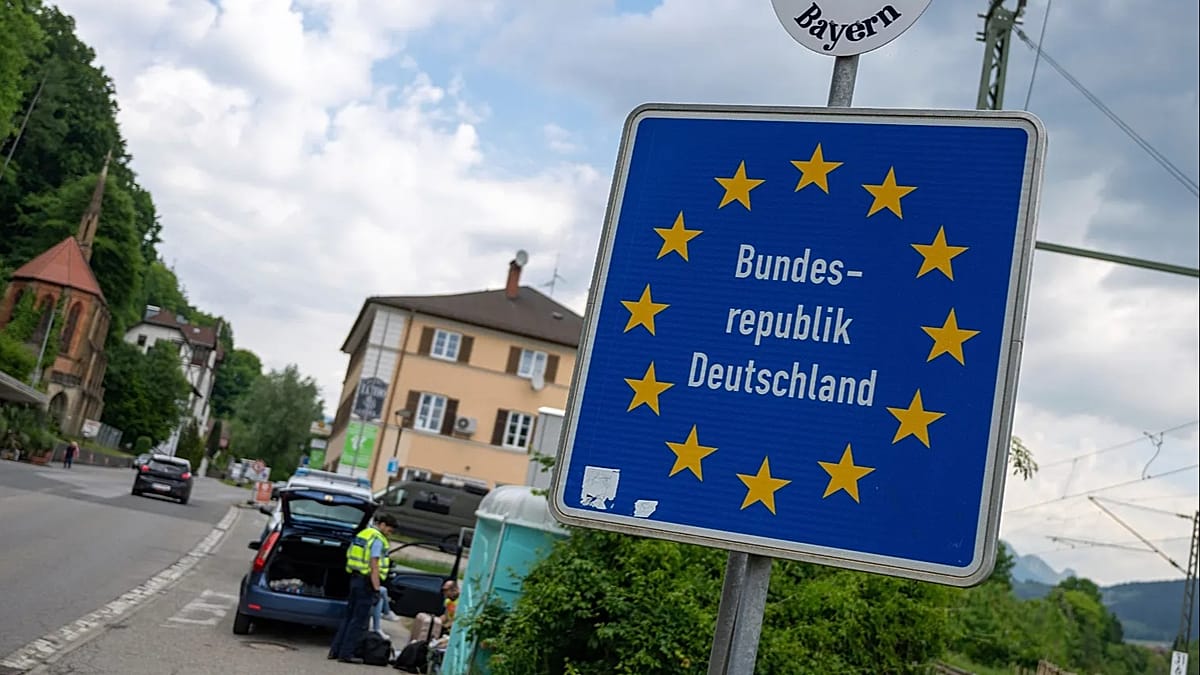
Germany has firmly rejected a European Commission request to dismantle its internal border controls, with Interior Minister Alexander Dobrindt insisting the measures remain “necessary” for managing migration. Speaking at a meeting of EU interior ministers in Luxembourg on Thursday, Dobrindt defended the checks as effective tools against illegal crossings and smuggling networks.
“The significant number of pushback, illegal migration, the seizure of smuggling gangs, all of this shows how effective these border roles are and that is why we want to continue them,” Dobrindt told journalists. He added that Berlin remains open to dialogue but stressed that border controls would be maintained and further developed.
EU Push for Normalisation
The Commission argues that sweeping reforms to the bloc’s migration policies—including a new law to accelerate deportations and controversial plans for detention centres outside the EU—make internal border checks obsolete. Ten EU countries currently enforce such controls, and seven of them, including Germany, cite migration as the primary reason. The Commission has formally asked Austria, Denmark, France, Germany, Italy, the Netherlands, Slovenia, Sweden, and non-EU member Norway to gradually phase out the checks. Poland, the tenth country with controls, was not included in the request.
EU Commissioner for Internal Affairs and Migration Magnus Brunner expressed confidence that the time is right to lift the measures. “Numbers…are going down. We’re on the right track. The reforms have been done. The external borders are better protected. The returns regulation has been decided,” Brunner said. “It’s the right time to gradually phase out these border controls.”
Dobrindt, however, countered that the bloc’s external border protections need “significantly improved” before internal checks can be removed. “The migration turnaround is working in Germany and it is also working at European level, and we are firmly determined that we will continue along this path consistently with our neighboring countries and partner countries,” he said.
Broader Migration Crackdown
The dispute comes amid the EU’s toughest migration policy shift in decades. On Monday, EU countries and the European Parliament agreed on the so-called Return Regulation, a law designed to speed up the return of migrants without legal status. A key provision allows member states to set up deportation centres—or “return hubs”—outside the bloc, provided they reach agreements with non-EU countries. These hubs can serve as transit points or long-term detention facilities, marking a significant departure from current rules.
Germany’s stance reflects a broader tension within the EU between national security concerns and the principle of free movement. While the Commission views internal border checks as a temporary exception, some member states have kept them in place for years. The standoff highlights the challenges of balancing sovereignty with Schengen Area integrity, especially as migration remains a politically charged issue across the continent.
For now, Berlin shows no sign of yielding. Dobrindt’s comments suggest that Germany will continue to prioritise domestic control measures, even as Brussels pushes for a unified approach. The outcome of this dispute could set a precedent for how other EU nations handle internal borders in the future.