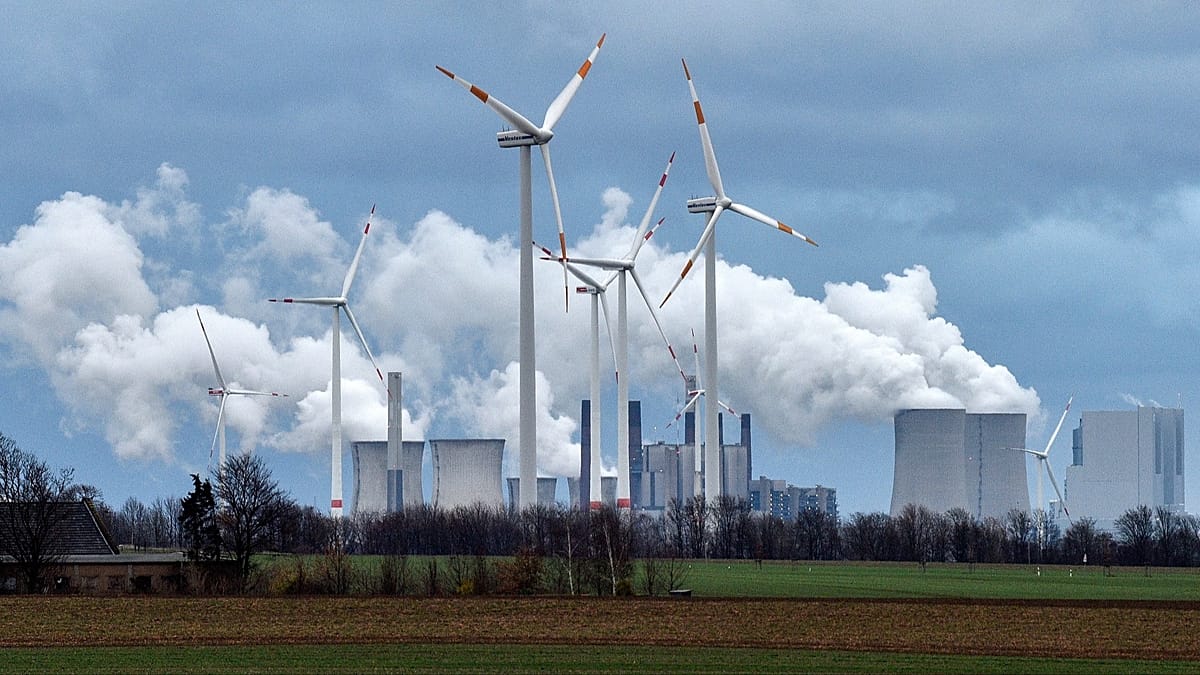
Germany has become the third country in Europe to publish a formal strategy for ending its reliance on fossil fuels, setting a target of 2045. The plan, announced by the Federal Environment Ministry on 23 September, aims to accelerate the expansion of renewable energy, boost electric vehicle adoption, and use the EU's carbon trading system to push industrial polluters away from coal, oil, and gas.
The move comes despite a global pledge at the UN climate summit in Dubai in 2023, where nearly 200 nations agreed to transition away from fossil fuels. Yet, as Germany's environment ministry pointed out, very few countries have followed up with concrete national roadmaps. The issue also dominated discussions at last year's COP30 talks in Belém, even though it was not on the official agenda. More than 90 countries supported the idea of letting each nation set its own phase-out targets, but references to fossil fuel phase-out were removed from the final agreement in the last hours of the summit, blocked by several oil-producing nations.
Why Germany is acting now
Germany, Europe's largest economy, says the plan will focus on building up renewable power and expanding the use of electric vehicles. It will also rely on the EU's emissions trading system to make fossil fuels increasingly costly for heavy industry. Environment Minister Carsten Schneider argued that the war in Iran, which has sent oil and gas prices soaring, demonstrates why dependence on fossil fuels is no longer acceptable.
“It's not just extreme weather events around the world that demonstrate how urgently we need to do more to protect the climate,” Schneider said. “If the situation in the Strait of Hormuz determines whether people can still afford their daily commute to work, that is not a good state of affairs.”
The German roadmap follows the UN Secretary-General's Climate Summit, where António Guterres urged all governments to adopt formal national plans with clear timelines aligned with the Paris Agreement. Jennifer Morgan, former German climate envoy, welcomed the initiative but cautioned that a roadmap alone is insufficient.
“Accelerating the shift from coal, oil and gas to clean renewables will bolster energy independence and insulate consumers from price shocks at a critical moment,” Morgan said. “However, a roadmap is only the starting line. To truly deliver, this strategy must be backed by a faster, more deliberate and just phase-out paired with the rollout of green electrification.”
How France and the Netherlands compare
France became the first European country to publish a fossil fuel phase-out roadmap earlier this year, pledging to end its reliance on oil and gas by 2050 — a less ambitious target than Germany's. Under the French plan, the country's last two coal-fired power stations will close by 2027, and two out of every three new cars sold in France should be electric by 2030, supported by expanded charging infrastructure and greater electrification of buses and heavy goods vehicles.
The Netherlands followed earlier this month with its own National Energy System Plan, which outlines a move away from fossil fuels but lacks a binding end date. Analysts say this is a significant weakness.
“The targets in the roadmaps by France, the Netherlands and Germany still fall short of what is needed to improve energy security by lowering the dependence on volatile and high fossil fuel imports,” said Linda Kalcher of the European think tank Strategic Perspectives.
Laurie Van Der Burg from Oil Change International acknowledged Germany's commitment but argued that the country's self-image as a climate leader is not matched by its actions.
“But Germany's government's efforts to play the role of climate leader are not commensurate with the reality of the crisis, or its responsibility as a wealthy, historic emitter,” she added.
Germany's plan also comes at a time when the country is grappling with broader energy challenges, including the prospect of a laser fusion power plant and ongoing debates over tariffs on Chinese electric vehicles. The success of the roadmap will depend on whether the government can translate its targets into concrete policies that survive political and economic pressures.
As Europe's largest economy, Germany's approach will be closely watched by other member states. The EU as a whole has committed to climate neutrality by 2050, but national roadmaps vary widely in ambition and detail. With only a handful of countries having published formal plans, the gap between rhetoric and implementation remains a central challenge for the continent's energy transition.