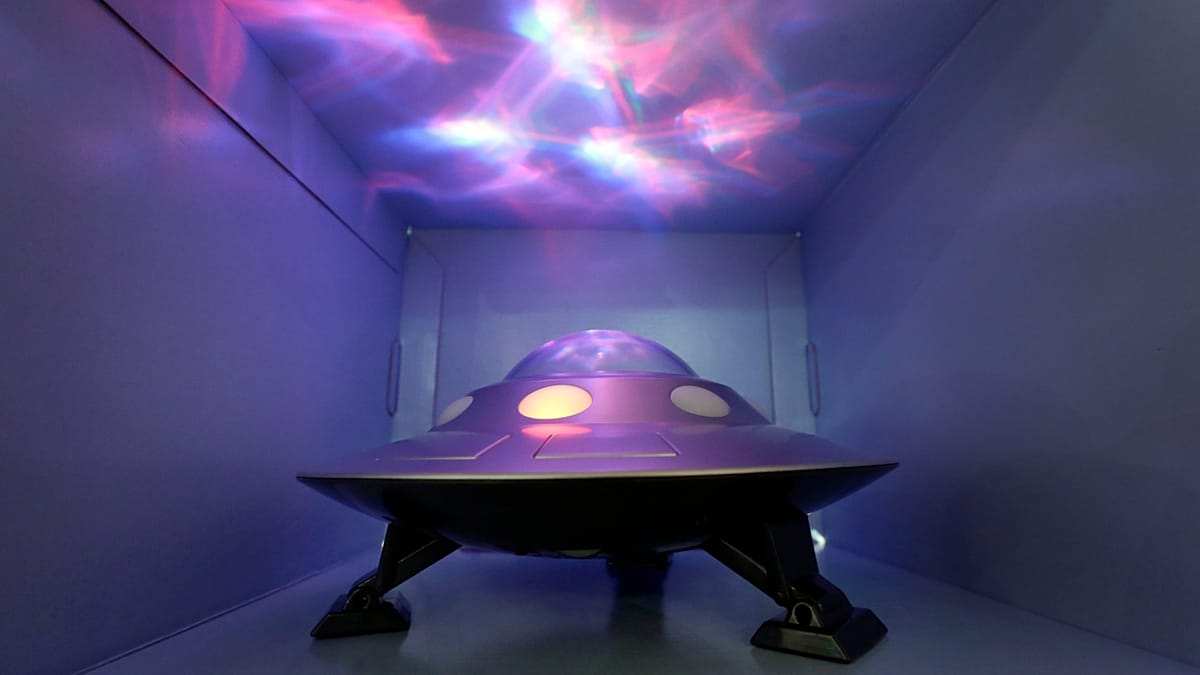
In the small town of Lützelbach, Hesse, a dedicated team fields a steady stream of reports from people across Germany who have spotted something unusual in the sky. The Central Research Network for Extraordinary Celestial Phenomena (CENAP) has become the country's busiest clearinghouse for UFO sightings, and its director, Hansjürgen Köhler, says the volume has never been higher.
“We receive between three and six reports a day,” Köhler told European Pulse. “Without question, we're the busiest reporting centre in the German-speaking world.” By August 2026, he and his team had investigated some 14,000 cases, offering explanations grounded in science rather than speculation.
From youthful curiosity to national authority
Köhler's journey began in the 1970s, when he and fellow amateur astronomers at an observatory grew tired of fielding constant calls about strange lights. “We were working at the observatory and expanding our knowledge there. Back then, lots of calls were coming in and the observatory was getting fed up with it,” he recalls. That frustration sparked a deeper dive into the UFO phenomenon.
His interest was seeded even earlier, at age 11, when he watched the Apollo moon landing on television. “It left a deep impression on me,” he says. “If I'd known back then what was coming, I wouldn't have done it; there really were a few annoying years, but these days I enjoy it because we can give people a sensible explanation.”
In 1973, the team obtained microfilms from the US military archives dating back to World War II, showing aerial objects that pilots had deemed inexplicable. “We realised that even back then, during the war, there were repeated natural phenomena,” Köhler explains. “Some of the images were quite striking – not least because of the pilots' reactions, as they asked themselves in astonishment what might just have flown past them.”
Pentagon files reignite the debate
The recent release of Pentagon UFO files has brought the topic back into the spotlight. In April 2020, the US Navy formally confirmed the authenticity of three videos from 2004 and 2015, showing encounters between military pilots and unidentified flying objects. In December 2022, the Department of Defense established the All-domain Anomaly Resolution Office (AARO) to systematically investigate such reports.
For Köhler, these revelations are nothing new. “We already know the archives anyway; there was nothing in them that was new to me,” he says. “For the younger generation, though, it is something new. We can only yawn when we see the old footage.”
One of the most famous clips, the “Gimbal” video, was recorded in January 2015 by a US Navy F/A-18 off the coast of California. The infrared footage shows an object that appears to rotate on its own axis, with pilots expressing astonishment. The Pentagon has confirmed the video's authenticity but has not identified the object. Köhler is convinced it was simply a balloon, its apparent speed a result of relative motion between the aircraft and the balloon. He also points to known technical issues with the F/A-18's tracking systems, which have required nine updates and still produce erroneous readings.
“All of that simply gets lost,” Köhler laments. “The film is shown again and again, and the debunking is like a drop in the ocean, it too just disappears. Above all on social media and on X, the kind of tall tales that are told there are so absurd. I don't even watch it any more because it annoys me; it runs counter to my work.”
Everyday explanations for extraordinary claims
Köhler boils down the reports he receives to a common theme: “Supposedly, visitors from far out there drop by every day to see what we're up to here. I do not deny that there is life out there. But are we really to believe that they travel across galaxies with highly advanced technology to our blue planet and then crash of all places here above the desert?”
CENAP's sceptical approach has drawn criticism from those who believe in extraterrestrial visitations, but supporters see it as a strength. The organisation aims to classify observations scientifically, distinguishing between genuine anomalies and misinterpretations. Köhler acknowledges the challenge: “I understand that people start puzzling over it; I can end up in that situation too. Some people call the police at 2:00 in the morning and say they can see something flashing in the sky. Then the officers call us because the people insist so strongly that there is something there. So you have two police officers standing there, looking up at the sky together with the caller, unable to explain it either and phoning us.”
His advice for puzzled observers is simple: use free astronomy apps. “You can point your phone at the sky and the name of the celestial body then appears.”
So what have CENAP's investigations revealed? The list is long and mundane: aircraft, helicopters, rocket stages, satellites, meteors, bright fireballs, planets, stars, weather balloons, and even XXL foil balloons from children's parties and weddings. Lasers used by event organisers also account for some reports, beaming into the night sky and creating illusions.
As the debate over UFOs continues to capture public imagination, CENAP remains a grounded voice, offering clarity in a field often clouded by speculation. For those who look up and wonder, Köhler and his team are ready to provide answers – even if they rarely involve little green men.