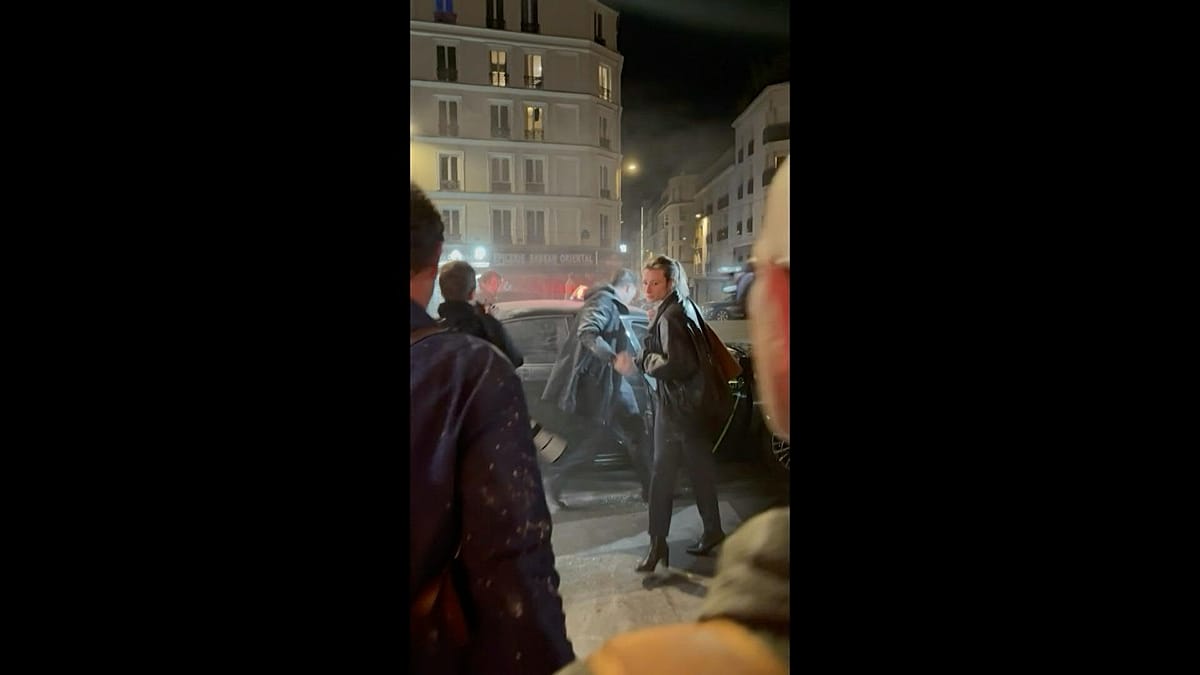
Raphaël Glucksmann, a Member of the European Parliament and leader of the social-democratic wing of France's left, was doused in flour on Sunday evening shortly after winning his party's presidential primary. The incident occurred outside La Cantine de Belleville, a bar in Paris's 20th arrondissement, where he had been celebrating with supporters.
Video footage shows an individual approaching Glucksmann from behind and emptying a packet of flour over his head as he was about to enter a taxi. The attacker fled immediately, and no injuries were reported. Glucksmann appeared startled but unharmed, and continued on his way.
The flour attack came just minutes after the European Parliament member secured a decisive victory in the primary, winning more than 66% of the vote. This makes him the official candidate of the social-democratic left for the 2027 French presidential election, a race that is already shaping up to be a pivotal moment for the country and for Europe.
A symbolic act with political undertones
Flour attacks are a recurring form of protest in French political life, often used to mock or humiliate public figures. While the motive behind Sunday's incident remains unclear, it adds a surreal note to an evening that was meant to be a triumph for Glucksmann. The 46-year-old, known for his pro-European stance and his criticism of both the far right and the far left, now faces the challenge of uniting a fragmented left.
The primary saw a turnout of over 60%, a figure that was notable given earlier cyberattack delays that disrupted voting. The high participation suggests a renewed interest in the left's ability to mount a credible challenge in 2027, after years of internal divisions and electoral defeats.
Glucksmann's victory is a significant milestone for the social-democratic camp, which has struggled to find a unifying figure since the decline of the Socialist Party. His platform, which emphasizes social justice, climate action, and a stronger European Union, resonates with voters who are disillusioned with both Emmanuel Macron's centrism and Marine Le Pen's nationalism.
The flour incident, while seemingly trivial, underscores the tense atmosphere surrounding French politics. The country has been rocked by student protests over education funding and police conduct, with clashes between demonstrators and law enforcement drawing international attention. Glucksmann has been vocal on these issues, and his primary win comes at a time when the left is trying to channel this discontent into electoral momentum.
In a statement after the attack, Glucksmann's campaign team downplayed the incident, saying it would not distract from the work ahead. "Raphaël is focused on building a broad coalition to defeat the far right and offer a credible alternative to the French people," a spokesperson said.
The road to the Élysée will not be easy. Glucksmann must now navigate a crowded field that includes Jean-Luc Mélenchon, the leader of the left-wing La France Insoumise, who has already declared his own symbolic candidacy. Mélenchon's recent Bastille rally drew thousands, highlighting the deep divisions within the left.
For now, Glucksmann can savor his primary victory, even if the flour in his hair serves as a reminder of the rough road ahead. As he prepares to take on the establishment and the far right, he will need more than just a clean suit—he will need the support of a united left and a clear vision for France's future in Europe.



