ATHENS — Greek authorities have placed the Ionian islands under a Code Red alert for wildfires, the highest warning level, as the country endures a prolonged spell of hot, dry weather that has already sparked dozens of blazes this summer.
The decision, announced on Wednesday by the Ministry of Climate Crisis and Civil Protection, reflects a Category 4 risk — defined as "very high" — for the island chain stretching from Corfu in the north to Zakynthos in the south. The alert comes at the peak of the summer holiday season, when beaches across the region are crowded with both Greek and international visitors.
Under the Code Red protocol, the National Civil Protection Mechanism is fully mobilised, with personnel, equipment and resources deployed to respond to any outbreak. The activation also includes short-term recovery and relief measures designed to cushion the impact of a potential disaster.
Meanwhile, a Category 3 (high) risk has been forecast for Attica, parts of the mainland, and all other Greek islands. This means that even areas not under the most severe alert remain on heightened watch, and local authorities have been instructed to step up patrols and public information campaigns.
Contained fires offer some relief
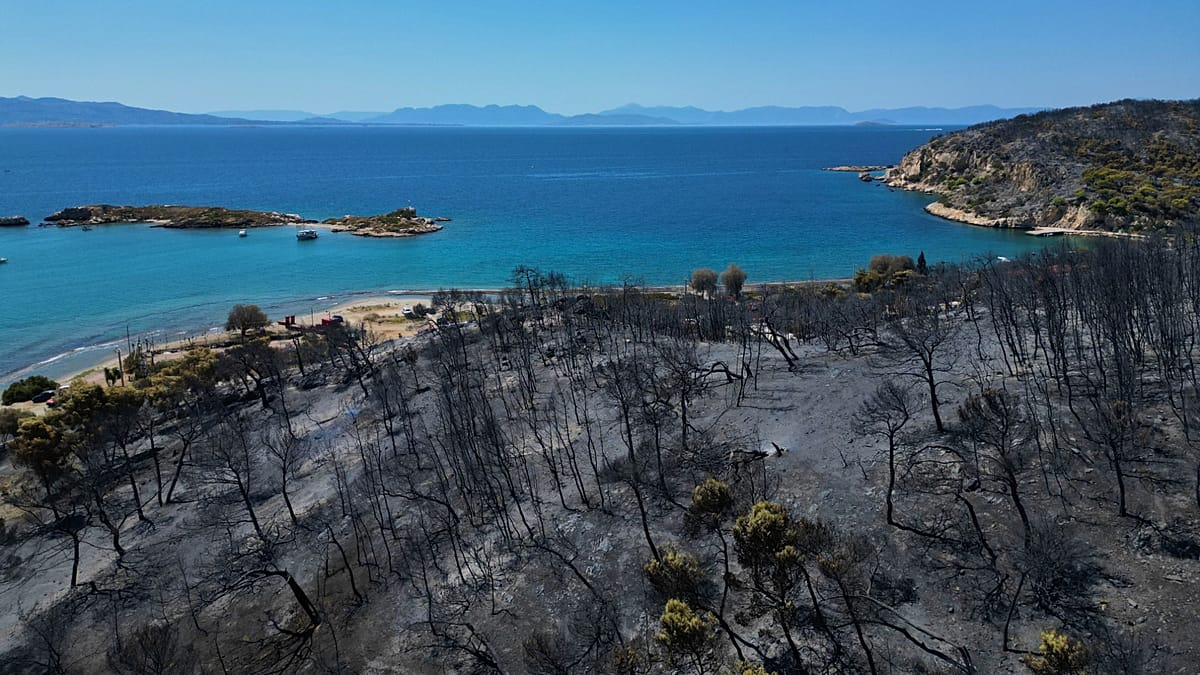
While the threat remains acute, the situation has improved at two significant fire sites. A blaze that broke out on Tuesday in a quarry filled with rubbish and low vegetation in the Elliniko area of Salamina, an island just off the coast of Piraeus, has been contained. According to the Fire Service, there is no longer any risk of further spread.
Another wildfire in the Agios Vlasios area of Viotia, in central Greece, has also been largely brought under control, though firefighters are still working to extinguish hot spots. Earlier, residents of the nearby Tsoukalades area were advised to evacuate towards Livadeia as a precaution.
The quick containment of these fires offers a measure of reassurance, but officials warn that the broader risk is far from over. Climate scientists have linked the increasing frequency and intensity of Mediterranean wildfires to rising temperatures and prolonged drought, a trend that has made the region one of Europe's most fire-prone zones.
For tourists and residents alike, the Code Red alert is a reminder to stay vigilant. Local authorities have urged people to avoid activities that could spark a fire, such as discarding cigarettes or using outdoor grills, and to report any smoke or flames immediately.
Greece's firefighting response has been bolstered in recent years by EU solidarity mechanisms, including the rescEU fleet of aircraft and ground teams. The country has also invested in early-warning systems and community preparedness, though the scale of this summer's challenge remains formidable.
As the season progresses, the focus will be on preventing new ignitions and ensuring that any fires that do break out are met with a swift and coordinated response. For now, the Ionian islands — a favourite destination for travellers from across Europe and beyond — remain on high alert.