Greece's marine fisheries recorded a productive year in 2025, with the country's fleet landing 42,100.8 tonnes of seafood worth €166.62 million, according to the Hellenic Statistical Authority (ELSTAT). The figures highlight a sector that remains vital to coastal communities and the national economy, even as it faces long-term sustainability challenges.
Fleet composition and fishing methods
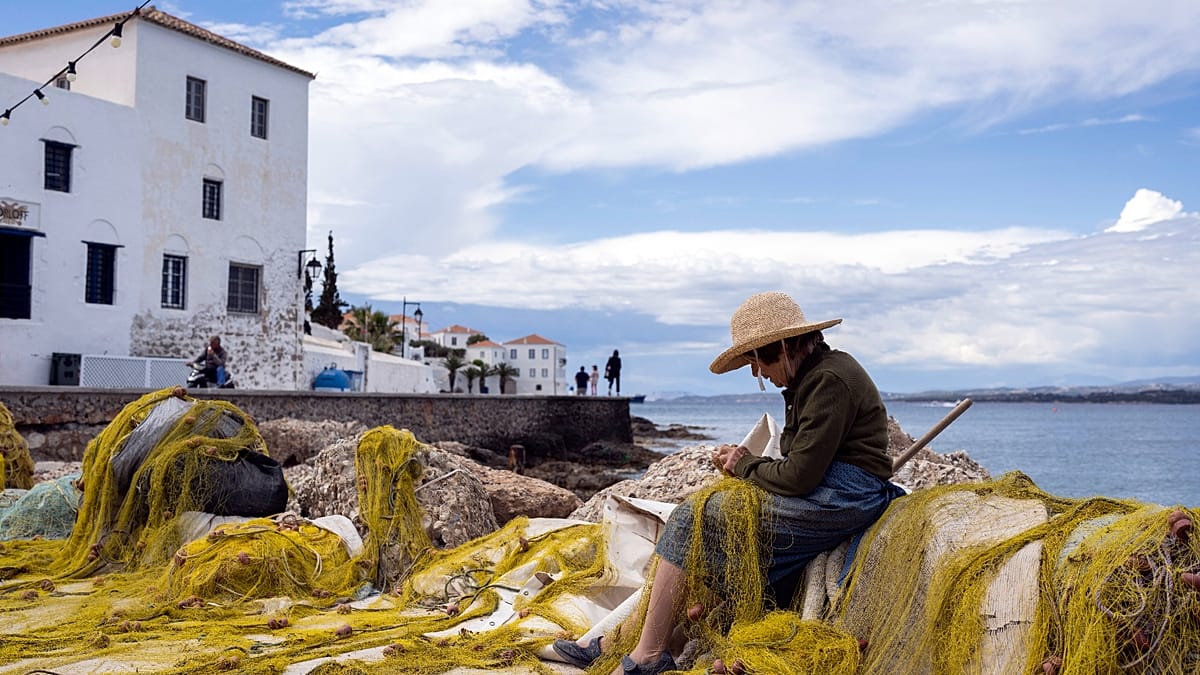
The Greek fishing fleet comprised 11,399 motorised vessels, the vast majority of which—10,949 boats—used other inshore fishing gear, such as gillnets, longlines, and traps. This category, often associated with small-scale, artisanal fishing, proved remarkably valuable despite its modest share of the total volume.
Purse seiners, which use large nets to encircle schools of fish, caught 21,667.5 tonnes—more than half of the total catch—but accounted for only 28.9% of the overall value. In contrast, vessels using other inshore gear landed just 23% of the volume but generated the largest share of value at 38.3%, or €63.88 million. Trawlers contributed 25.5% of the quantity and 32.8% of the value.
The disparity becomes even clearer when examining value per kilogram. Based on the published figures, purse seine catches averaged about €2.22 per kilo, while other inshore gear fetched around €6.60 per kilo—a reflection of the higher market prices commanded by species typically caught by small-scale fishers, such as red mullet and hake.
Anchovy dominates the catch
Anchovy was by far the most important species of the year, with production reaching 10,445.1 tonnes—equivalent to nearly one in every four tonnes landed in Greece (24.8%). It was followed by sardine (4,541.6 tonnes), round sardinella (2,603.6 tonnes), deep-water rose shrimp and caramote prawn (2,067.5 tonnes), and hake (1,949.2 tonnes). Together, these five species accounted for 51.3% of the total quantity caught.
Anchovy also topped the ranking by economic value, generating €19.55 million. Hake followed at €16.88 million, and sardine at €14.17 million. Red mullet, though caught in smaller quantities—just 1,066.8 tonnes—yielded €9.30 million, underscoring the wide differences in commercial value between species.
Fish dominate, but crustaceans and molluscs add value
Fish made up 83.3% of the total production volume, at 35,057.1 tonnes, and 75.8% of the total value. Crustaceans represented 8.1% of the volume and 10.8% of the value, while molluscs accounted for just 7.7% of production but 12.5% of the value—a sign of the premium prices that octopus, squid, and cuttlefish command in Mediterranean markets.
The geographical concentration of the catch is striking. The Northern Aegean Sea was the dominant fishing ground, with catches reaching 28,452.9 tonnes and worth €101.02 million. That means 67.6% of the country's total catch came from this region, which also accounted for 60.6% of the total value.
These figures come as Greek fisheries navigate a complex landscape of EU quotas, environmental pressures, and competition from imported seafood. The sector's reliance on small-scale inshore gear—which often has lower environmental impact than industrial trawling—could be a point of strength in the transition toward more sustainable practices, but it also means that many fishing communities depend on a narrow range of species.
For consumers, the data offer a snapshot of what's on Greek tables: anchovies and sardines remain staples, while higher-value species like hake and red mullet are prized delicacies. The economic gap between volume and value is a reminder that in fisheries, as in many sectors, quality often outweighs quantity.