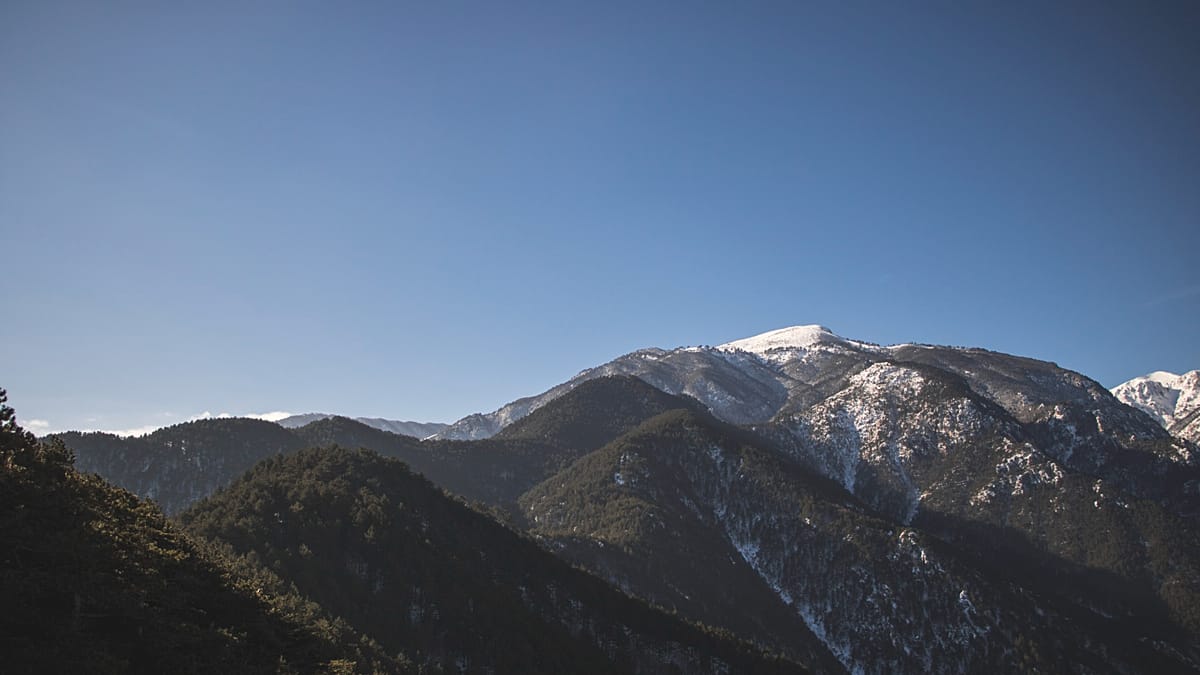
A new study led by the University of Cambridge has found that snow cover across Greece's mountain ranges has declined by 58 percent over the past four decades, with the rate of loss accelerating sharply since the turn of the century. The research, published by an international team including scientists from the British Antarctic Survey, the National Observatory of Athens, and the Hellenic Mountain Observatory, warns that the shrinking winter snowpack could push water supplies, agriculture, and natural ecosystems into crisis.
Using a combination of satellite imagery from NASA and ESA missions, climate data, terrain maps, and machine learning, the team developed a tool called SnowMapper. This tool produced daily snow cover maps at 100-metre resolution for ten of Greece's highest mountain formations, covering the period from 1984 to 2025. Because clouds and shadows often obscure satellite observations, the researchers used artificial intelligence to fill in the gaps, creating a continuous and reliable dataset.
Accelerating Loss Since 2000
The results show that Greece is losing winter snow cover faster than most other mountain ranges globally. The snow season now starts later and ends earlier, reducing the period during which snow accumulates and melts gradually. This is particularly concerning for a country like Greece, where catchments are small, winter temperatures hover near freezing, and snowmelt provides a critical buffer against drought during the hot, dry summer months.
“The loss of snow cover from the world's mountains is another important indicator of how climate change continues to put pressure on the natural environment,” said co-author Konstantinos Alexopoulos, a researcher at the Hellenic Mountain Observatory. “In Greece, the implications are especially severe because communities, agriculture, and natural ecosystems depend on this seasonal water storage.”
The study was co-authored by Alexopoulos and Professor Ian Willis of the Scott Polar Research Centre at the University of Cambridge. Funding came from the Bodossaki Foundation, the George & George Foundation, the National Geological Survey of Greece, Cambridge Trust, and the Royal Geographical Society.
Water, Agriculture, and Ecosystems at Risk
Snow cover in Greece's mountains serves as a natural reservoir, releasing water slowly into rivers and aquifers during the dry summer. With a 58 percent reduction in snow cover, the volume of meltwater available for irrigation, drinking water, and hydropower is significantly diminished. This could exacerbate existing water stress in regions such as Thessaly and the Peloponnese, where agriculture—particularly olive groves and vineyards—relies heavily on summer irrigation.
Ecosystems that depend on consistent snowmelt, including alpine meadows and wetlands, are also threatened. The study notes that the decline in snow cover is not uniform across all mountain formations; some peaks, such as Mount Tymphi and Gramos, have experienced more dramatic losses than others. The researchers emphasize that the trend is likely to continue as Mediterranean temperatures rise.
In a related development, Greek chefs and environmental groups have been urging diners to embrace invasive fish species as a climate adaptation strategy, highlighting the broader ecological shifts underway in the region. The loss of snow cover adds another layer of urgency to these efforts.
The findings underscore the need for adaptive water management policies across southern Europe. As snow cover diminishes, countries like Greece, Italy, and Spain may need to invest in alternative water storage, such as reservoirs and groundwater recharge, as well as more efficient irrigation technologies. The study also calls for continued monitoring using satellite and AI tools to track changes in real time.
For now, the data from SnowMapper provides a stark baseline: Greece's mountains are losing their winter cloak at an alarming rate, and the consequences will be felt far beyond the slopes.