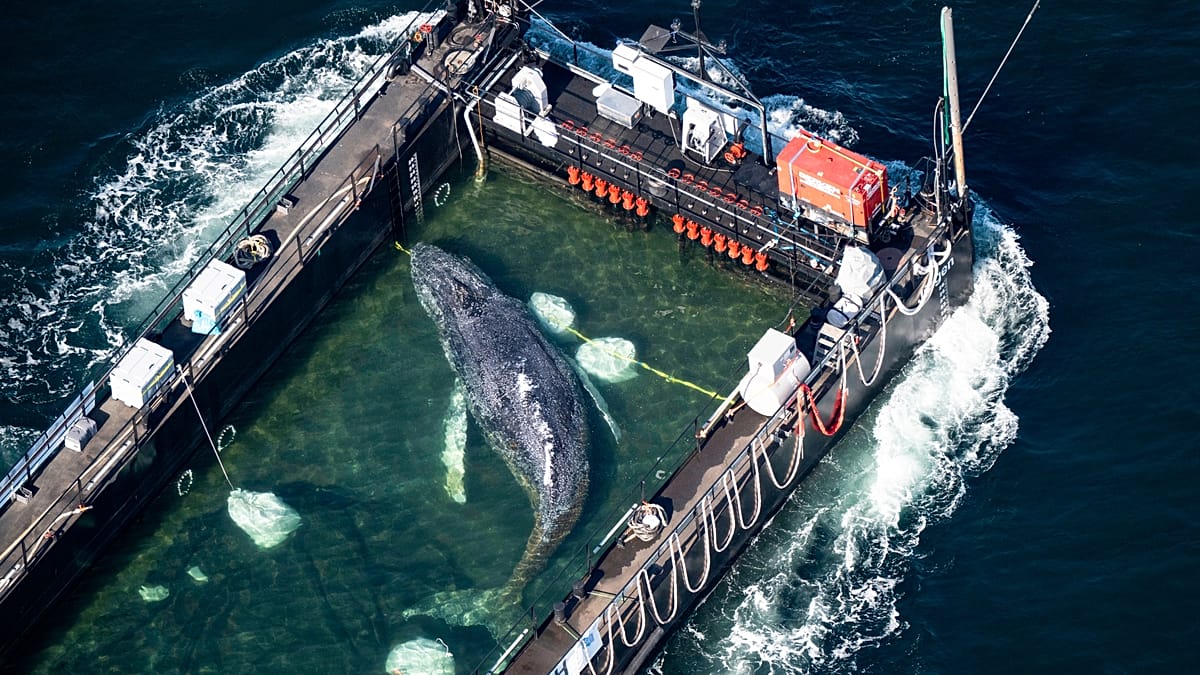
For weeks, a humpback whale stranded in the shallow Baltic Sea off Germany's coast has divided experts and the public: should it be left to die in peace, or is every effort to save it justified? Now, thanks to two entrepreneurs from the region, the whale—named Timmy by German media—is finally on the move toward the North Sea.
The whale became trapped on a sandbank near Lübeck on 3 March, far from its natural habitat in the Atlantic Ocean. Repeated attempts by local authorities to guide it back to deeper waters failed, and the animal's health visibly declined. In early April, officials declared the situation hopeless and abandoned rescue efforts.
That decision sparked public outcry. Activists staged protests on the beach in Wismar, and a private initiative led by entrepreneurs Karin Walter-Mommert and a colleague persuaded authorities to allow a new plan. The entrepreneurs funded the construction of a flooded barge to transport the whale to the North Sea, a journey of roughly 400 kilometers.
“I can't even say how happy I am,” Walter-Mommert told Bild. “You could see that the whale fought and wanted to live. Knowing he's now in the barge is simply wonderful and shows that the fight for Timmy was worth it.”
A Controversial Rescue
The operation has not been without critics. Marine biologist Thilo Maack of Greenpeace told the Associated Press that the repeated interventions have caused the whale severe stress. “I believe the whale will die very soon now. And I would also like to raise the question: What is actually so bad about that? Yes, animals live, animals die. This animal is really, really very, very, very sick. And it has decided to seek rest,” Maack said.
Others, including Till Backhaus, environment minister of Mecklenburg-Vorpommern, the federal state where the whale was stranded, supported the private rescue. Backhaus said he was “on the verge of jumping into the water to help the whale get through the last few metres.” The minister gave the green light despite warnings from some scientists that the transport could be too much for the animal.
The debate reflects a broader tension in wildlife rescue: when does intervention become cruelty? The veterinarians working with the private initiative consider Timmy fit for transport, but scientists remain uncertain whether the whale can survive the three-day journey.
Tracking Timmy's Journey
The barge, pulled initially by a tugboat named Robin Hood, began moving into the Baltic Sea on Tuesday evening. By Wednesday morning, the tug Fortuna B had taken over and was rounding the island of Fehmarn in northern Germany, close to Danish waters. The convoy is expected to travel around the northern tip of Denmark via the Skagerrak strait toward the North Sea.
Fans can track the tugboat's position in real time on Vesselfinder.com. The journey is expected to take several days, and the whale's condition will be monitored throughout.
This story echoes other recent animal rescues in Europe, such as the rare footage revealing complex social cooperation during a sperm whale birth, which highlighted the challenges of marine mammal conservation. Meanwhile, the entrepreneurial spirit behind Timmy's rescue mirrors a broader trend: teen entrepreneurs are surging in the Netherlands and Italy, showing that private initiative can sometimes fill gaps left by public resources.
Whether Timmy ultimately reaches the Atlantic or succumbs to its illness, the rescue has already sparked a continent-wide conversation about the value of individual animal lives and the limits of human intervention. For now, the barge continues its slow progress north, and the world watches.