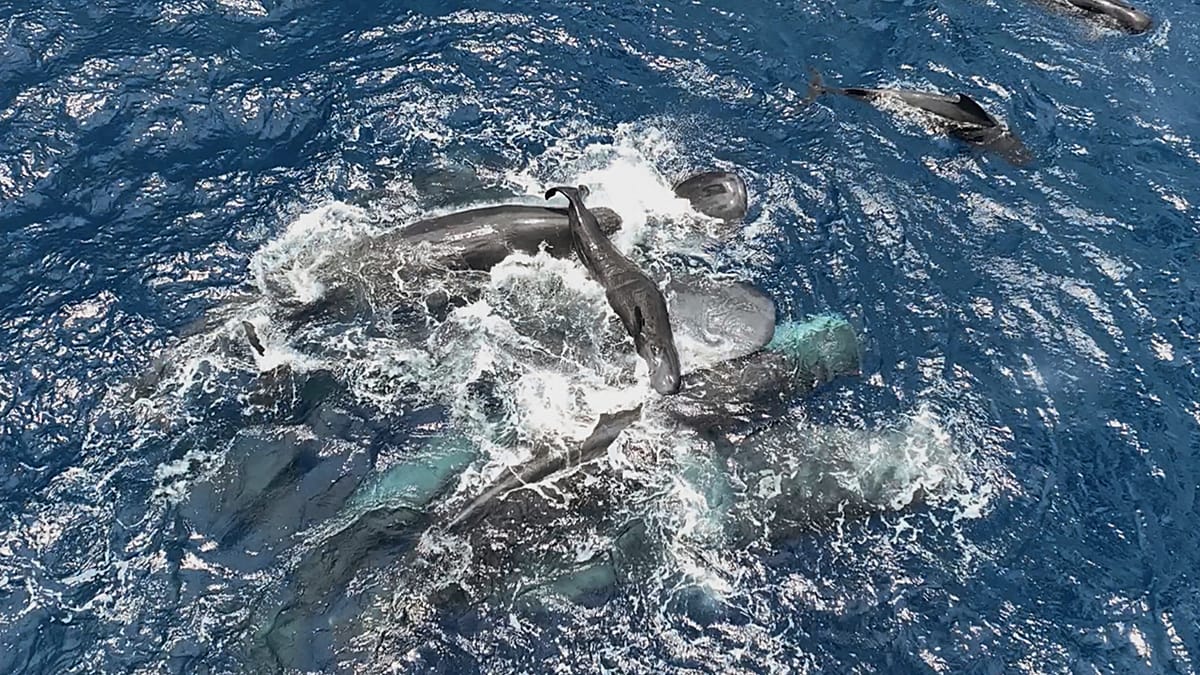
For the first time, scientists have captured detailed footage of a sperm whale giving birth, providing an unprecedented look at the complex social cooperation that defines these deep-dwelling mammals. The 2023 video, recorded off the Caribbean island of Dominica, shows a group of female whales from two distinct family lines working in concert to support the labouring mother and ensure the newborn calf's survival.
A Coordinated Effort in the Deep
The event began when researchers from the Cetacean Translation Initiative (Project CETI) noticed eleven whales—predominantly females—surfacing in an unusual formation. Their heads faced inward as they thrashed and dove around a central point. Recognising something extraordinary was happening, the team deployed drones and underwater microphones.
What they recorded was a full birthing process lasting about thirty minutes, followed by hours of post-natal care. Pairs of whales took turns supporting the newborn calf at the surface until it could swim independently. "The group quite literally helps bring the calf into the world," noted behavioural ecologist Mauricio Cantor of Oregon State University, who was not involved in the research but reviewed the findings.
"This was just really a special event," said study co-author David Gruber of Project CETI. The rarity of such documentation cannot be overstated; there are only a handful of anecdotal records of sperm whale births from the past six decades, many originating from now-defunct whaling operations.
Uncovering Hidden Social Networks
The analysis, detailed in studies published in Scientific Reports and Science, revealed that the assisting whales included mothers, sisters, and daughters—some of whom were not directly related to the newborn. This challenges simpler notions of animal kinship and highlights the sophisticated, female-led social structures of sperm whale pods.
"It's amazing to think about how, when faced with this impossible challenge, these animals come together to succeed," remarked Project CETI's Shane Gero, a co-author of the research. The level of coordination observed is exceptionally uncommon in the animal kingdom, particularly outside primate species.
Acoustic analysis revealed another layer of complexity: the whales produced distinct sounds during critical moments, including slower, longer sets of clicks. Researchers believe these vocalisations helped synchronise the group's efforts, offering a glimpse into the hidden conversations that govern their collective behaviour.
Broader Implications for Science and Conservation
The discovery raises profound questions about how these social groups form and how knowledge is shared within them. Biologist Susan Parks of Syracuse University, who was not involved in the studies, expressed excitement about the window this opens into "the social lives of these animals."
For European marine biologists and conservationists, particularly those at institutions from Bergen to Barcelona studying North Atlantic and Mediterranean cetacean populations, these findings are highly relevant. Understanding the social vulnerabilities of deep-diving species is crucial for crafting effective conservation policies, especially as human activities like shipping and energy infrastructure expand into their habitats.
The research also underscores the value of international scientific collaboration. While the filming occurred in the Caribbean, the analysis involved a global team, and the insights contribute to a broader European and global understanding of marine mammal ecology. This comes at a time when international cooperation is vital for addressing transboundary environmental crises, including those affecting ocean health.
Ultimately, this rare footage does more than document a birth; it reveals a world of intricate social bonds and cooperative intelligence in the ocean's depths. It reminds us that protecting such species requires safeguarding not just individual animals, but the complex social networks that are fundamental to their survival.