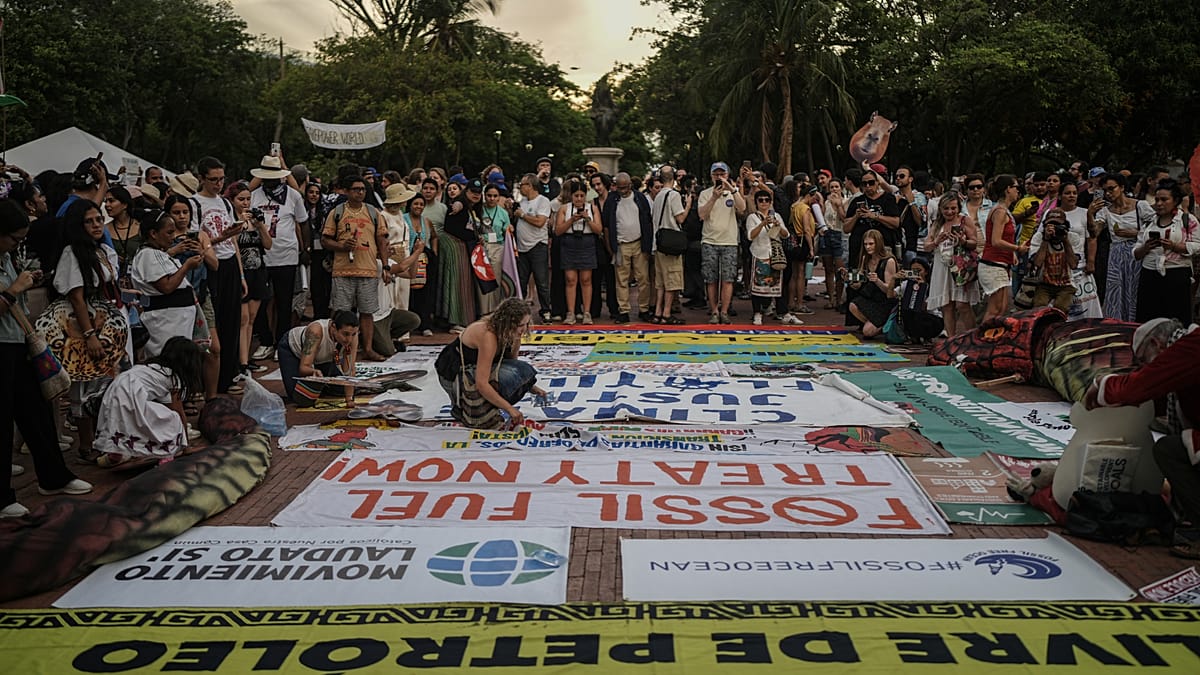
Frustrated by the slow pace of UN climate negotiations, the Netherlands and Colombia have convened a new international gathering in Santa Marta, Colombia, to accelerate the shift away from fossil fuels. The First International Conference on the Just Transition Away from Fossil Fuels, held this week, deliberately excludes the Trump administration, which has withdrawn the US from the Paris Agreement and dismantled climate protections.
Organisers describe the invite list as a 'coalition of do-ers' — governments actively seeking to move beyond fossil fuels. The conference aims to succeed where annual UN climate COPs have repeatedly fallen short, hampered by a consensus rule that allows any single country to block progress. 'Right now, at the UN, we will not make big advancement on anything … because we are under the rule of consensus,' said Jean Lemire, Quebec's climate envoy.
Why Trump Was Not Invited
Despite representing the world's largest economy and a major emitter, the Trump administration was not invited. Since taking office, President Trump has called climate change 'a hoax,' removed climate references from federal websites, gutted the Environmental Protection Agency, and appointed fossil fuel industry insiders to key energy posts. Colombia's Environment Minister, Irene Velez Torres, defended the exclusion: 'When the largest emitters have been present at the COP negotiations, they have been the ones who have pushed for a veto to prevent any discussion of the need to transition beyond fossil fuels.' She added that the 60 participating countries represent nearly 50 per cent of the global population, including consumer, producer, and vulnerable nations from both the Global South and North. 'In that sense, we are a new power today.'
While the US federal government is absent, sub-national actors are stepping up. California, through carbon markets and low-carbon fuel standards, remains committed to carbon neutrality by 2045. 'We remain steadfast in our commitment to carbon neutrality by 2045,' said Sarah Izant, deputy secretary for climate policy at the California Environmental Protection Agency, noting public health and economic co-benefits. Quebec has gone further, passing a law to halt all new fossil fuel exploration and production. 'We decided, with a consensus, to say no to fossil fuel in Quebec,' said Lemire, though he acknowledged pressure over costs and energy policy.
The conference highlights a broader structural challenge: the global financial system still favours fossil fuels. While renewable energy is often cheaper to generate, high borrowing costs in developing countries — averaging about 15 per cent in parts of Africa versus roughly 2 per cent in Europe and North America — make clean energy projects prohibitively expensive to build. 'They aren’t wedded ideologically to fossil fuels,' said Amiera Sawas, head of research and policy at the Fossil Fuel Non-Proliferation Treaty Initiative. 'They can access financing for fossil fuels more easily.'
For Europe, the conference underscores a growing divide between the US and the continent on climate policy. The EU has maintained its commitment to the Paris Agreement and the Green Deal, even as the Copernicus Report: Europe's Climate Crisis Now an Unequivocal Threat to Food, Health, and Economy underscores the urgency. Meanwhile, the Netherlands' co-hosting role reflects a broader European push for more ambitious, non-UN frameworks. Lemire warned that global coordination remains painfully slow: 'There’s a lot of money for war. But there’s one common enemy – climate change – and we don’t find that money.'