More than 6,000 concrete blocks and thousands of synthetic ropes have been hauled from the seabed in Greek waters since 2019, exposing a little-known but persistent source of marine pollution linked to traditional Mediterranean fishing methods.
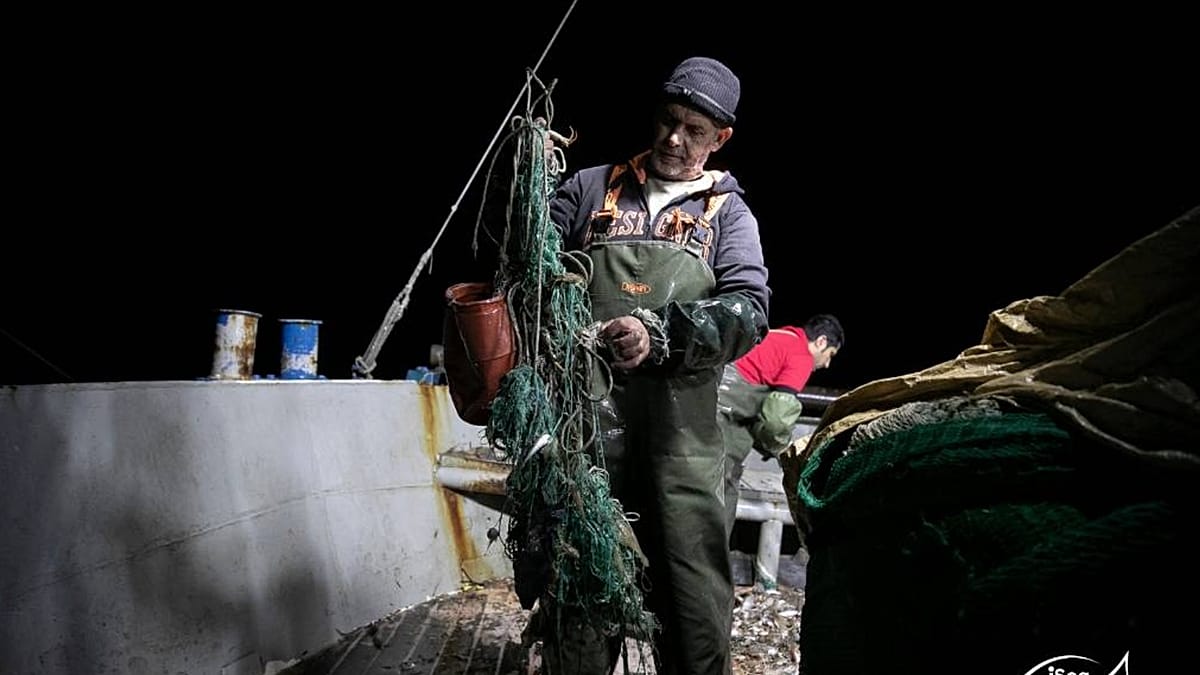
The recovery is part of the Fishing For Litter programme, run by the Athanasios C. Laskaridis Public Benefit Foundation in partnership with the environmental organisation iSea. According to iSea's communications manager, Anastasia Charitou, the initiative has so far recovered 6,278 concrete blocks and around 11,700 ropes associated with fishing boat activity.
“The biggest problem is found in the Euboean Gulf, followed by the Thracian Sea and the Thermaic Gulf,” Charitou told European Pulse. Since the programme began, participating fishers have removed more than 360 tonnes of waste from deep waters, with over 83 per cent of it plastic and 34 per cent consisting of abandoned fishing gear.
How concrete blocks end up on the seabed
The issue stems from a practice used during night-time fishing with gri-gri, traditional fishing boats common in the Mediterranean. After locating a shoal, fishers deploy fish-aggregating light devices known as “robots” – small floating platforms equipped with lamps that attract fish by simulating moonlight. To keep these devices stable, they must be anchored, and port regulations require them to be lifted out of the water once fishing ends.
In theory, the robots are connected to small anchors by chains, and a crew member – the “lampsman” – gradually hauls in the equipment while steering the shoal toward the main vessel. However, according to iSea, this procedure is time-consuming, and some fishers replace it with an illegal shortcut. Instead of proper anchors, they use concrete blocks, usually two per light device, attached with polypropylene ropes – the so-called “gri-gri ropes”. When it is time to recover the robots, the ropes are cut, leaving the blocks and severed lines on the sea floor.
“The concrete blocks are passively fished by the fishers. They get tangled in their nets and are thus removed from great depths. Those that are recovered and recorded in the programme weigh around four to five kilos each,” Charitou explained. Based on the 6,278 blocks recorded to date, that amounts to dozens of tonnes of solid material abandoned at sea.
Impact on ecosystems and navigation
The problem goes beyond sheer volume. Synthetic ropes and concrete blocks accumulate on the seabed, putting pressure on benthic ecosystems and affecting organisms that live in direct contact with the sea floor. Polypropylene ropes, being lightweight, can hang in the water column and wrap around propellers, causing mechanical damage, entangling marine life, and breaking down into toxic microplastics that fish ingest. Concrete blocks caught in nets can damage fishing equipment and destroy part of the catch.
For iSea, this practice is not merely a matter of pollution; it adds another stress factor to marine areas already under pressure from overfishing and waste accumulation. The organisation is calling for stricter and more systematic inspections to enforce existing legislation, including on-the-spot checks at sea and inspections when vessels leave and return to port. It also urges a clearer legal description of gri-gri fishing gear, especially regarding the auxiliary light devices and their anchoring equipment, so that the correct and lawful method is unambiguous.
The programme continues this year across Greece with the participation of 67 fishing vessels and an expanded geographical reach. While the recovery effort is making progress, the underlying practice remains a challenge, highlighting the need for both enforcement and education within the fishing community.