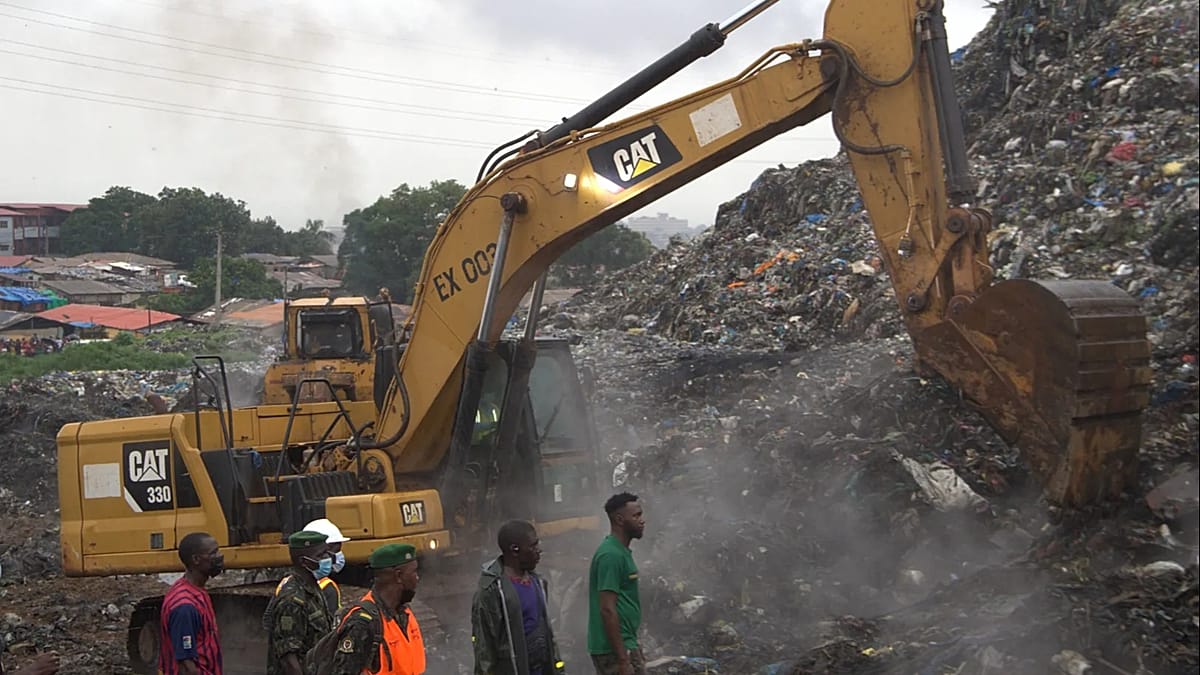
At least 30 people died and several more were injured when a mound of waste collapsed at Dar Es Salam, Conakry's largest open-air dump, in the early hours of Sunday. The landslide, triggered by torrential rain, buried dozens of makeshift homes and destroyed several structures before rescue teams could reach the scene.
Guinea's government confirmed the toll in a statement, adding that six people were seriously injured. Search-and-rescue operations continued through the day, with excavators sifting through the debris in the hope of finding survivors. “Significant material and human resources have been deployed to search for any people who may still be buried, to rescue the victims and to recover the bodies,” the statement said.
The disaster unfolded just as the dump was due to be officially closed. Authorities had announced the closure for the same Sunday, and in the days leading up to the collapse, residents living near the site had been served eviction orders amid fears that the waste mound could give way. Many families left, but local officials acknowledged that a large number remained at the time of the tragedy.
A preventable tragedy?
Residents of the Dar Es Salam neighbourhood say they had repeatedly warned officials about the danger. Activist Abou Hamza told AFP that locals had organised sit-ins and invited government representatives to inspect the site, but their concerns were dismissed. “We organised sit-ins, we invited the officials from the relevant departments, but they didn’t take it seriously. So that’s why today, with this landslide, I blame the State, because it didn’t take the necessary measures to have the dump closed. And yet they had promised us that, it’s been a year now,” he said.
Dienabou Touré, Guinea's minister of territorial administration and decentralisation, visited the scene and pledged to relocate the remaining families. “We will ensure that the remaining families are relocated elsewhere,” she said.
The collapse is the latest in a series of waste-site disasters across West Africa, where rapid urbanisation and weak enforcement have left many communities living on or beside unstable rubbish mounds. In neighbouring Central African Republic, a similar landslide engulfed gold miners earlier this year, underscoring the region's vulnerability to such hazards.
Guinea is one of the world's poorest countries despite its vast mineral wealth. It holds the largest deposits of bauxite, the primary source of aluminium, and also has significant reserves of iron ore, gold, and diamonds. The capital, Conakry, has grown rapidly in recent decades, with informal settlements spreading onto marginal land, including the outskirts of the dump.
The government has promised an investigation and said it would provide medical care for the wounded and assistance for those affected. But for many residents, the promises ring hollow. “They had promised us that, it’s been a year now,” Hamza said, echoing a sentiment of frustration that has become all too familiar in communities living on the edge of disaster.
As rescue efforts continue, the tragedy raises broader questions about urban planning and environmental safety in West Africa's fast-growing cities. For the families who lost loved ones, no amount of official regret can undo the loss. The challenge now is to ensure that such a preventable catastrophe does not happen again.