Bacteriophages—viruses that infect and kill bacteria—are gaining renewed attention as antibiotic resistance spreads across Europe and beyond. A new study published in Nature Microbiology reveals that some phages in the human gut can deliberately generate genetic diversity to outmaneuver bacterial defenses, a discovery that could shape future treatments for drug-resistant infections.
Researchers at Michigan State University identified previously overlooked regions of phage genomes that act as genetic “hotspots,” allowing the viruses to rapidly alter key genes during replication. This enables a single phage population to produce a diverse array of offspring, increasing the odds that some will survive when bacteria mount a counterattack.
“This changes our understanding of how phages evolve,” said co-author Chris Waters, a faculty member in the university’s Ecology, Evolution, and Behavior program. “Instead of hijacking their hosts to mass produce exact copies of themselves, they are actually using these mutation hotspots to make a zoo,” he added, noting that phages are “essentially hedging their bets.”
A genetic escape route
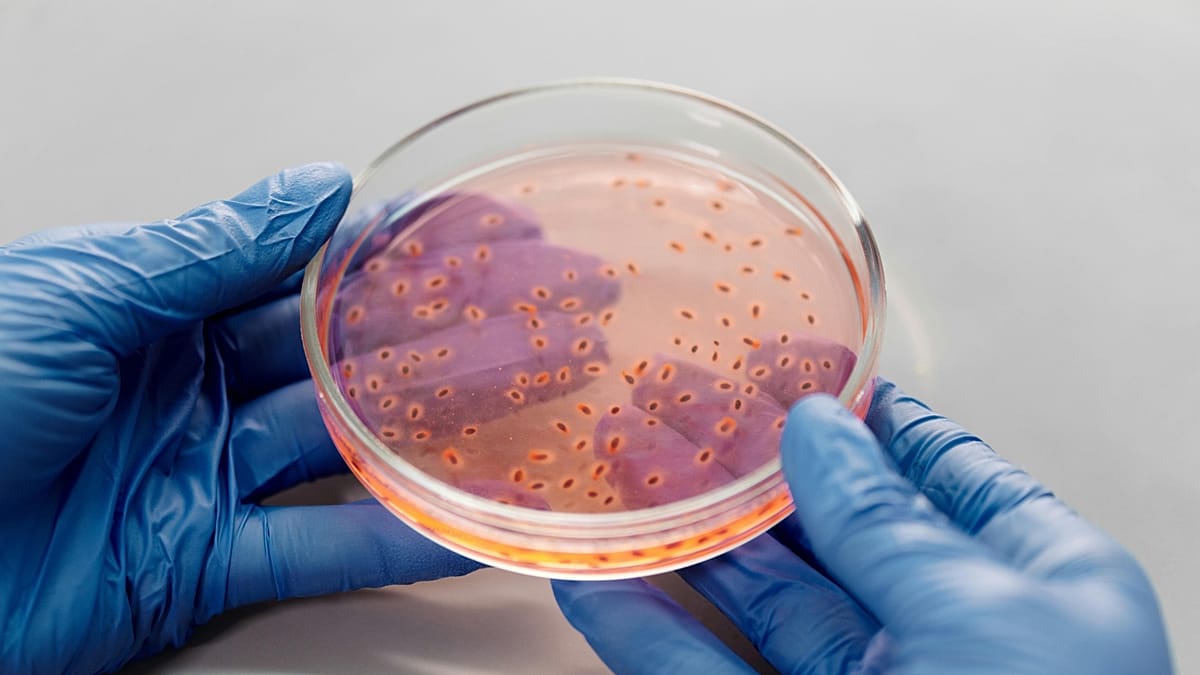
The team focused on bacteriophage T2, which infects E. coli. They introduced a bacterial defense system into the laboratory bacteria and exposed them to the phages. Within hours, the phages began overcoming the defenses—a result that initially puzzled the researchers.
“Within a few hours, the phages always started to win,” Waters said. “We couldn’t understand why.”
Sequencing the resistant viruses revealed repeated mutations in a gene called agt, particularly in a stretch of repetitive DNA. That sequence turned out to be a contingency locus—a highly mutable region where the DNA-copying machinery can slip when replicating repeated sequences. The result is a reversible frameshift mutation that changes how the gene’s instructions are read, producing a mix of phages with different abilities to evade bacterial defenses.
The researchers found that these repetitive regions accumulated mutations thousands of times faster than the rest of the phage genome. They also identified similar contingency loci in another E. coli phage, T4, and found that simple sequence repeats are widespread across diverse E. coli phages, though their abundance varies between genes with different functions.
Could it help treat superbugs?
The research arrives as scientists and policymakers across Europe and globally search for alternatives to antibiotics. Phage therapy is not new—phages were used therapeutically as early as the 1920s—but interest waned after antibiotics like penicillin became widely available. The rise of antimicrobial resistance has now revived attention.
One appeal of phages is their specificity: unlike broad-spectrum antibiotics, which can kill beneficial bacteria, individual phages target particular bacterial species or strains. However, that specificity is also a weakness, as bacteria can evolve resistance to a phage, potentially rendering a treatment ineffective.
The Michigan State findings suggest that scientists might eventually exploit the viruses’ own evolutionary strategies to make phage therapies more resilient. “If we can harness these kinds of evolutionary tricks, we might be able to make more effective phage therapies in response to the antibiotic resistance crisis,” Waters said.
“We’re never going to be able to completely get rid of resistance,” he added. “But if we can better understand how bacteria protect themselves from phage infection and how phages fight back, we might be able to minimize it.”
While the study is based in the United States, its implications resonate in Europe, where the continent's health systems are grappling with rising drug-resistant infections. The European Centre for Disease Prevention and Control has repeatedly warned about the growing threat of antimicrobial resistance, and phage therapy is being explored in several EU member states, including Belgium and France.
As research progresses, the hope is that understanding these microbial arms races could lead to new treatments that work when antibiotics fail—a prospect that would benefit patients from Lisbon to Warsaw.