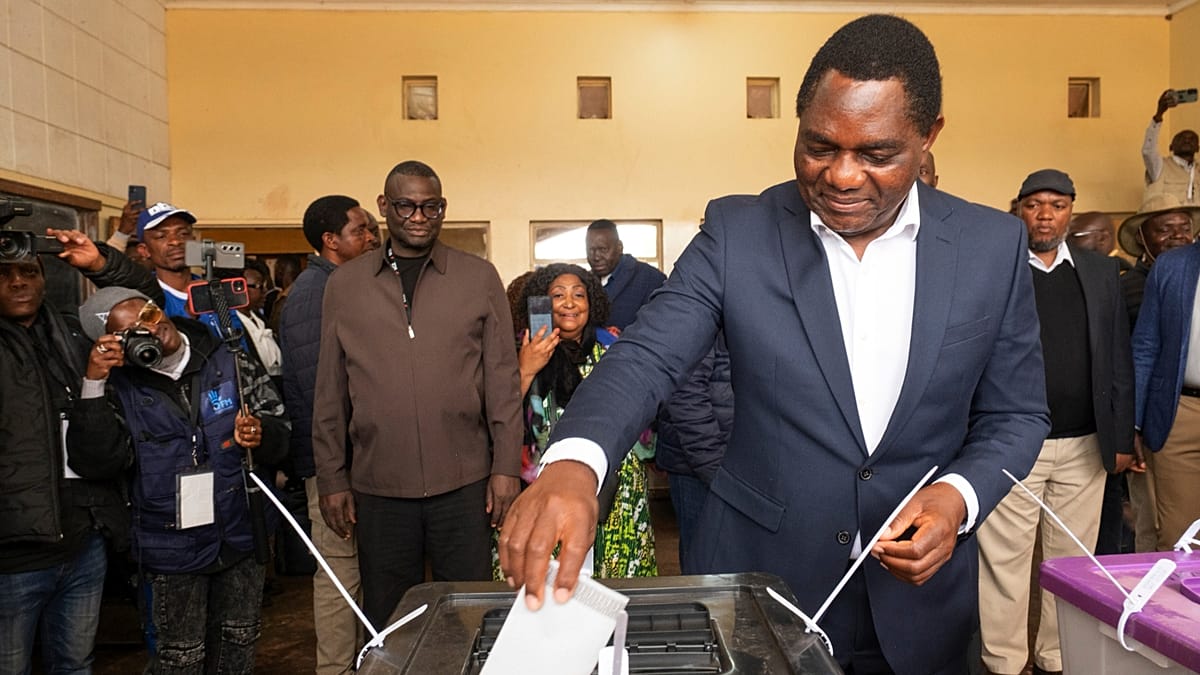
Zambia's President Hakainde Hichilema has secured a second term in office, winning approximately 60% of the vote in last week's election, according to the Electoral Commission of Zambia. The result, announced on Tuesday, was widely anticipated, though the campaign was overshadowed by opposition claims of a tightly managed process and restrictions on political activity.
Hichilema, who first took office in 2021, faced a field of 13 challengers, the most prominent being Brian Mundubile, a former provincial minister making his first presidential bid. Mundubile, 55, garnered nearly 38% of the vote, said Mwangala Zaloumis, chairperson of the electoral commission. With five of the 226 constituencies still uncounted, Zaloumis noted that the outstanding results were unlikely to alter the overall outcome.
The 13 August poll in the copper-rich southern African nation was marred by opposition allegations of fraud and an unprecedented nationwide suspension of vote tallying after attacks on election staff and the theft of marked ballot papers. Tensions escalated further when authorities arrested nearly a dozen people, including senior opposition figures, during a raid that involved an exchange of gunfire. The government claimed those detained were linked to militia or insurgent activity around the election, a charge denied by Mundubile's NRPUP party.
International and domestic observer missions reported over the weekend that the conditions had contributed to an uneven playing field, echoing warnings from opposition parties and civil society groups about a shrinking political space. Restrictions on campaigning were a particular concern.
The election was widely seen as a referendum on Hichilema's first term, during which Zambia's economy returned to growth after years of fiscal distress. His administration has pursued debt restructuring and fiscal reforms, which have won praise from international financial institutions but have also imposed austerity measures on a population still grappling with high inflation and unemployment.
A contested mandate
Despite the clear margin of victory, the opposition's allegations of fraud and the government's heavy-handed response to dissent have cast a shadow over the result. The raid that led to the arrests of opposition figures, which involved gunfire, has raised concerns about the rule of law and the space for political opposition in Zambia.
Mundubile's party has vowed to challenge the outcome, though international observers have not reported widespread irregularities that would change the result. The European Union, which had a mission monitoring the election, has called for calm and for any disputes to be resolved through legal channels.
For Hichilema, the victory provides a mandate to continue his reform agenda, but the challenges ahead are significant. The economy, while growing, remains fragile, and the country's debt burden continues to weigh on public finances. The new term will also be tested by the need to address the concerns of a young population that is increasingly vocal about governance and accountability.
As Zambia moves forward, the international community, including European partners, will be watching closely to see how the government balances its reform commitments with the need to uphold democratic principles. The outcome of this election, and the manner in which it is accepted, will have implications not only for Zambia but for the wider region.