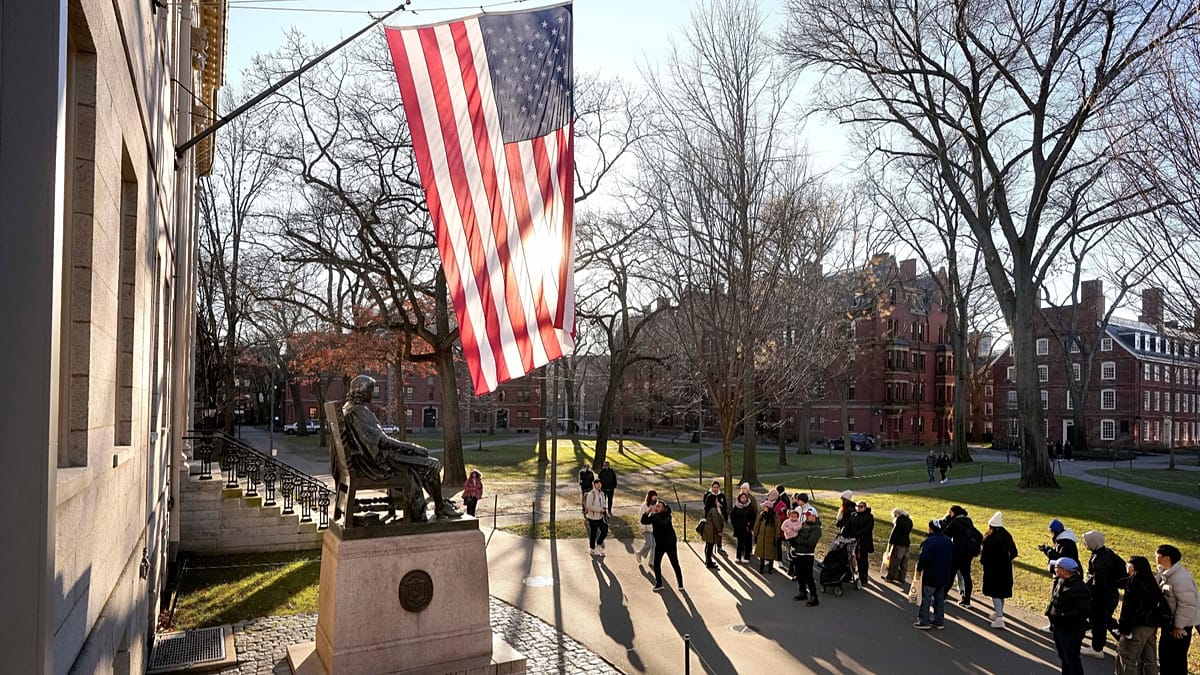
Harvard University has agreed to pay $53 million (€45.5 million) to settle lawsuits stemming from the actions of a former morgue manager who stole and sold human remains donated for medical research. A Boston state court judge gave preliminary approval to the settlement on Tuesday, according to US media, with Harvard saying the distribution of funds is expected to take several months.
Cedric Lodge, who managed the morgue at Harvard Medical School until his dismissal in 2023, was sentenced to eight years in prison in December after pleading guilty to trafficking stolen human remains. His wife, Denise, received a one-year sentence, and six other individuals who purchased remains from him also pleaded guilty and were sentenced.
In a joint letter, Harvard Medical School Dean George Daley and Dean for Medical Education Bernard Chang expressed gratitude for the resolution, stating: "We are grateful to be working together with the plaintiffs to move forward in a way that prioritizes support for families and the (organ donation program) and avoids prolonged litigation." They described Lodge's actions as "despicable, abhorrent, and a flagrant betrayal of our values as a medical community."
Settlement details and impact
Harvard announced on Monday that it would seek court approval to establish "two class action settlement funds totaling $53 million." The funds are intended to compensate families of donors whose remains were affected, as well as to support the body donation program that has been central to medical education and research at the institution.
Investigators found that Lodge and his wife had been removing body parts from the school since 2018 "without the knowledge or permission of his employer, the donor, or the donor's family," before shipping them to buyers in other states. The scheme came to light in 2022, leading to federal charges and a broader review of morgue practices.
As part of the settlement, Harvard Medical School said it would establish an annual financial aid scholarship starting in the 2027-28 academic year "in appreciation and in honor of all of our anatomical donors." This move is seen as an effort to rebuild trust with the public and the medical community, which were shaken by the revelations.
The case has drawn attention beyond the United States, as European institutions that collaborate with Harvard on medical research and organ donation programs may review their own protocols. The scandal underscores the importance of ethical oversight in body donation, a practice that is also vital in many European countries, where similar programs operate under strict regulations.
While the settlement resolves civil claims, the criminal cases have already concluded. The case has prompted discussions about transparency and accountability in medical institutions, with some experts calling for stronger safeguards to prevent such abuses in the future.
Harvard's agreement to pay $53 million is one of the largest settlements of its kind, reflecting the severity of the betrayal and the need to address the harm caused to donor families. The university has said it is committed to ensuring that such an incident never happens again.
For European readers, this story serves as a reminder of the shared ethical responsibilities in medical research. As European institutions continue to collaborate globally, maintaining the highest standards of integrity in handling human remains is paramount.