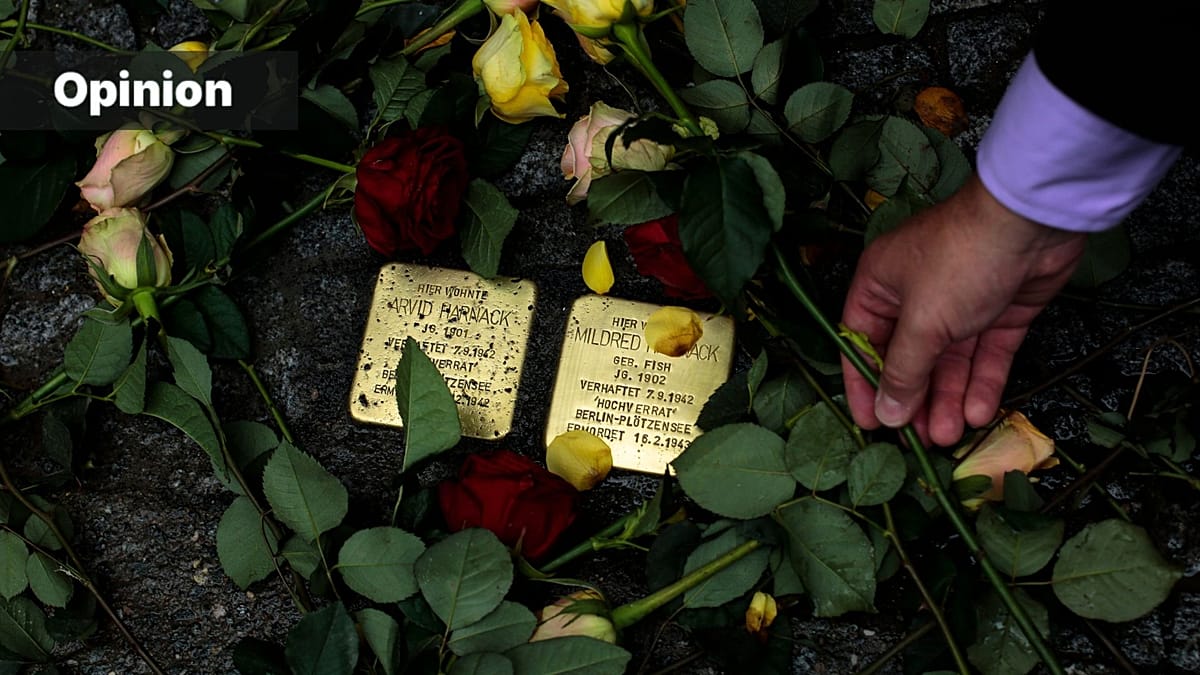
Cultural theorist Aleida Assmann once observed that “communicative memory” — the kind passed directly from those who lived through events — lasts roughly eighty years. For the Holocaust, that window is closing. As survivors age and their numbers dwindle, Europe faces a fundamental shift in how the genocide is remembered.
For decades, survivors provided a human bridge to the past. Their testimonies made the horror feel immediate, personal, and urgent. But that closeness is fading. Memory is no longer being handed down by those who were there; it is now carried by those who were not. This transition raises a pressing question: how does a history so rooted in firsthand experience endure when it must rely entirely on second- and third-hand accounts?
Europe’s Changing Audiences
At the same time, the audiences engaging with Holocaust memory are themselves transforming. Europe in 2025 is not the continent of 1945. It is more diverse, shaped by decades of migration and global exchange. For many residents — including those whose families come from regions where the Holocaust is not a central historical narrative — this is a history encountered later in life, sometimes at a distance, alongside other painful pasts.
This diversity is not a problem, but it changes the terms of remembrance. The assumption that everyone approaches the Holocaust with the same frame of reference no longer holds. People bring their own experiences of conflict and injustice, which shape what resonates and what feels familiar. If Holocaust remembrance is to remain meaningful, it must make space for these different starting points — in practice, not just in principle.
Dialogue Over Assumption
One example of this approach is the work of the Kreuzberg Initiative against Antisemitism (KIgA) in Berlin. For over two decades, KIgA has worked against antisemitism and racism in communities with diverse migration backgrounds. Its chair, Derviş Hızarcı, an IHRA delegate, has emphasized the importance of creating spaces where questions can be asked and trust built, rather than assuming all audiences begin from the same historical reference points.
This is a delicate balance. The Holocaust is a specific, unprecedented event with its own context and mechanisms. Yet shutting down points of connection altogether risks turning remembrance into something static — observed rather than understood. The challenge is to allow different histories to speak to each other without losing their distinctiveness.
As witnesses fade, remembrance must increasingly begin with context. For many adults encountering this history for the first time, it is a first encounter, not a continuation of prior knowledge. That requires approaches that are accessible without being reductive — whether in classrooms, museums, or public commemorations — and that create space for dialogue rather than assuming passive reception.
Educators and guides need to be equipped to engage audiences with diverse perspectives while maintaining historical clarity. They must ask what their audiences already understand, what assumptions are being made about their knowledge, and how different cultural or historical contexts might shape interpretation. Expanding high-quality, multilingual resources and making thoughtful use of digital testimony will be essential in ensuring this history remains both understandable and human in the post-witness era.
Michaela Küchler, Secretary General of the International Holocaust Remembrance Alliance (IHRA), argues that the organization has an important role in navigating this transition. By encouraging reflection on language and audience, and by fostering a culture of listening as well as teaching, IHRA can support approaches that are both historically grounded and responsive to contemporary societies.
Antisemitism Persists
All of this matters not just because of the past, but because of the present. Antisemitism has not disappeared, nor has the potential for misinformation to distort or diminish historical facts. If anything, these challenges have become more complex. Ensuring that people understand not only what happened, but why it still matters, is part of how those challenges are met.
The first eighty years of Holocaust remembrance were shaped by those who bore witness. The next eighty years will be shaped by the rest of us — by how we listen, how we teach, and how willing we are to meet people where they are, rather than where we assume them to be. That is not a lesser form of remembrance. But it is a different one. And it is already underway.
For a deeper look at how memory is being preserved, see our coverage of lost photos from the 1941 Paris roundup that give faces to victims.