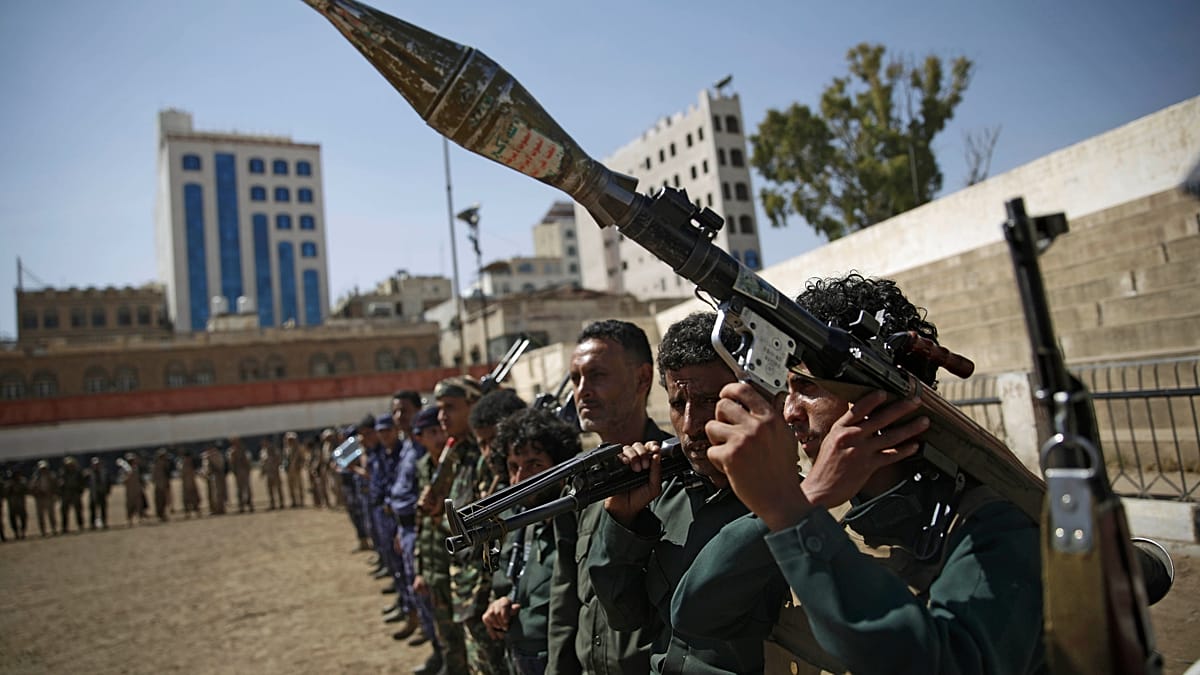
Yemen's Houthi movement, formally known as Ansar Allah, said on Wednesday that it had shot down a Saudi Arabian F-15 fighter jet, using what it described as a locally produced air-to-air missile. The claim, made by Houthi military spokesman Yahya Saree on social media, came amid a sharp escalation in cross-border hostilities between the Iran-aligned group and the Saudi-led coalition.
Saree accused Saudi Arabia of launching 450 strikes against Yemeni territory and insisted that the downing was a legitimate act of self-defence. He also categorically rejected Saudi allegations that the Houthis had targeted Mecca, Islam's holiest city. "Our operations target its oil facilities and military bases, which are far removed from the sacred sites," he said, adding that "fabrications and lies propagated by the criminal al-Saud regime cannot deceive anyone."
The Saudi-led coalition responded with a stark warning, stating that the security of the Two Holy Mosques and the safety of pilgrims were a "red line." In a statement relayed by spokesman Turki al-Maliki on X, the coalition said it "will not hesitate to take the necessary and deterrent measures against the terrorist Houthi militia."
The exchange follows a series of alerts issued by Saudi authorities on Tuesday over possible drone and missile attacks in Mecca and across the kingdom's southern regions, which border Yemen. These alerts, including the first for Mecca since the broader Middle East conflict began in February, came a day after a barrage of ballistic missiles and drones launched from Yemen wounded 13 people in the south.
International condemnation was swift. Pakistani Prime Minister Shehbaz Sharif denounced what he called "the dastardly and heinous" attack on Mecca, while the Organisation of Islamic Cooperation, a bloc of 57 Muslim-majority states, also condemned the alleged assault. Any confirmed strike on Mecca would be seen as an unforgivable act across the Muslim world, transcending sectarian divides.
The Houthis, who follow Zaydi Shia Islam, a branch distinct from both Iran's Twelver Shia tradition and Saudi Arabia's Wahhabi-influenced Sunni school, have been locked in a renewed conflict with Yemen's internationally recognised government since the ceasefire collapsed in July. The UN reports that 82,000 people have been displaced since the start of September, adding to one of the world's worst humanitarian crises.
Bab el-Mandeb under pressure
Beyond the aerial skirmishes, the Houthis have escalated their campaign against Saudi shipping, declaring a maritime blockade and seizing control of Yemen's entire Red Sea coastline, including the strategic Bab el-Mandeb strait. This narrow waterway, through which a significant share of global oil and cargo traffic passes, has become a critical chokepoint as the wider Middle East war disrupts the Strait of Hormuz.
The Houthis insist that navigation through Bab el-Mandeb remains safe except for Saudi vessels, but any attacks in the area are likely to deter shippers and drive up insurance costs. Disruption in the strait also threatens Egypt, which relies on the Suez Canal for vital foreign revenue. Canal revenues are already roughly half of pre-2023 levels, when the Houthis first began targeting Red Sea shipping in solidarity with Palestinians during the Gaza war.
Saudi Crown Prince Mohammed bin Salman and Egyptian President Abdel Fattah al-Sisi spoke on Tuesday about the need to "ensure the freedom and security of maritime navigation" through both Hormuz and Bab el-Mandeb. Qatar warned that closure of the strait would be "catastrophic for the entire world."
US media have reported that the Saudi crown prince made a personal request to President Donald Trump for US intervention, but was turned down. Neither Riyadh nor Washington has confirmed these reports, though a US military task force is reportedly enhancing intelligence-sharing and planning assistance for Saudi forces.
The Houthis have also targeted Saudi oil infrastructure, pushing global crude prices above $100 a barrel. The Saudi-led coalition has vowed to deal with the attacks "firmly to protect the sovereignty of the Kingdom" and to take "all necessary operational measures to deter this hostile and extremist approach."
For Europe, the stakes are high. The Bab el-Mandeb strait is a vital artery for cargo routes to the Mediterranean and European markets, and any sustained disruption could have significant economic consequences. The EU has already been grappling with energy price volatility and supply chain concerns, and a prolonged closure of the strait would exacerbate those pressures. As the conflict deepens, European policymakers are watching closely, mindful that the fallout from the Red Sea could reach their own shores.